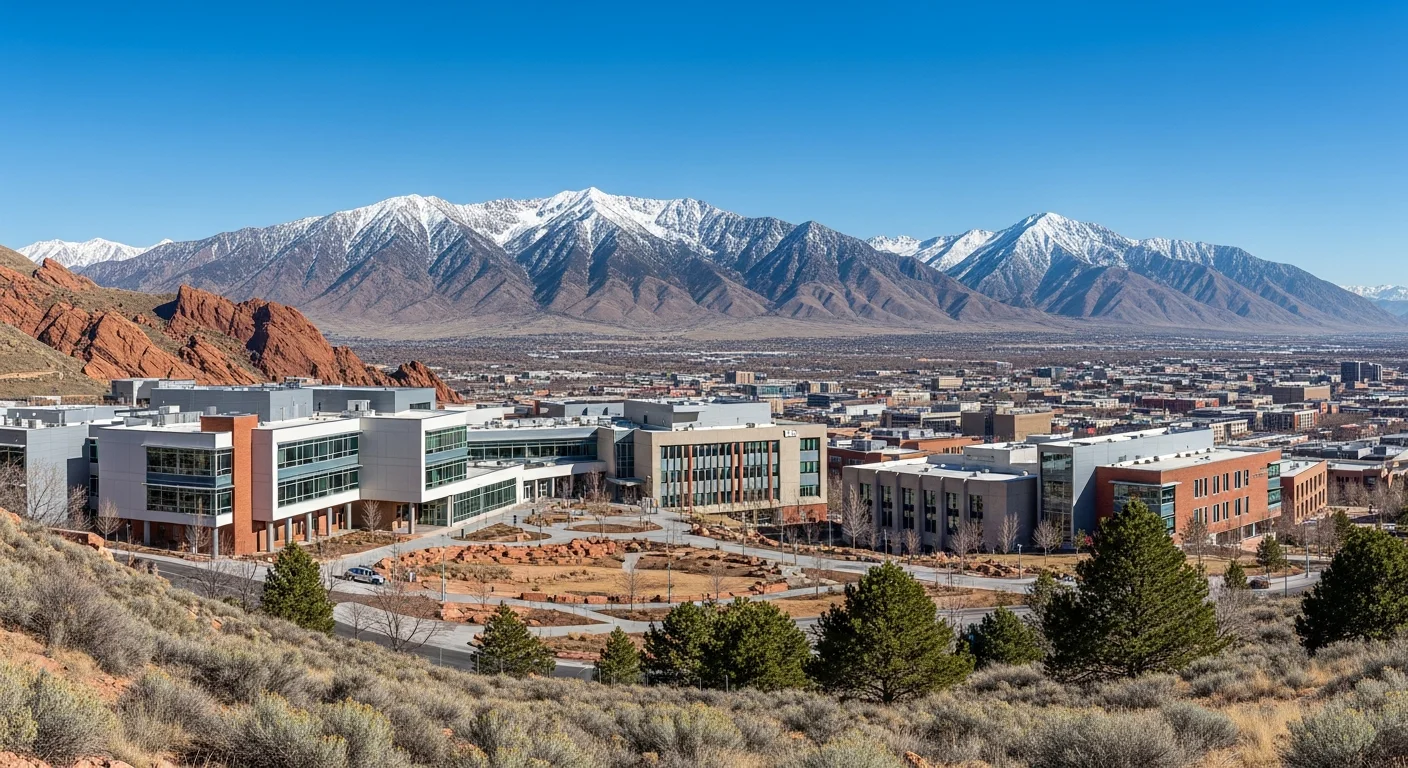
University campus in Utah
Updated January 2026

Best Network Administration Degree Programs in Utah — 2026 Rankings

Compare the top network administration colleges in Utah. 8 accredited network administration schools ranked by graduation rate, career outcomes, and value—from Weber State University to Western Governors University.

#1 ProgramWestern Governors
Avg Salary$108,000
Tuition From$5,471/yr
Job Growth+22%

Key Takeaways

Best network administration degree programs: Western Governors, Utah Valley, Weber State

Ranked by graduation rates, program outcomes, and institutional quality

IPEDS 2023

Tuition ranges from $3,888 to $25,500/year

Weber State offers the most affordable option at $5,471/yr

IPEDS 2023

Network Administration degree programs available: 2 associate's, 4 master's in Utah

From community college pathways to advanced research degrees

IPEDS 2023

Utah community college transfer can save 40-60% on total degree costs

2 associate's programs provide transfer pathways to bachelor's degrees

Education Commission of the States

Major employers: Adobe, Qualtrics, Pluralsight, Domo

Tech hubs in Salt Lake City and Provo

Hakia Research 2026

Network Administration degree programs near 28+ cities across Utah

Search by city to find programs within 200 miles of your location

IPEDS 2023

Updated February 2026

On This Page
$108,000
Are Network Administration Degree Programs in Utah Worth It?
Yes. The best network administration degree programs in Utah deliver strong ROI—graduates earn $108,000 median salary with +22% job growth through 2032. In-state tuition averages $8,608/year.

Source: BLS OEWS May 2024

Best Network Administration Bachelor's Programs in Utah, 2026

7
Programs
$108,000
Median Salary
$8,669/yr
Avg Tuition
89%
Avg Grad Rate

Rankings based on program completions, graduation rates, selectivity, and career outcomes. See our methodology

Program Landscape

Utah ranks among the nation's top destinations for network administration education, with 7 accredited bachelor's degree programs across 3 public and 3 private institutions. The highest-ranked programs are Western Governors, Utah Valley, Weber State, recognized for academic excellence, research opportunities, and strong industry connections.

Career Outcomes

Graduates from Utah network administration programs earn a median salary of $91,800—6% below the national average. The state's robust technology sector, anchored by the Salt Lake City, Provo, Lehi metropolitan areas, provides abundant internship and employment opportunities with companies including Adobe, Qualtrics, Pluralsight.

Costs & Value

Tuition ranges from $3,888 to $25,500 annually, with an average of $8,669/yr. Top programs maintain graduation rates above 89%, with the highest reaching 97%. Many programs hold ABET accreditation, the gold standard for computing education, ensuring curriculum meets rigorous industry standards.

Curriculum & Specializations

Students can choose from specializations including software engineering, cybersecurity, artificial intelligence, data science, and systems architecture. Strong industry partnerships provide access to co-op programs, capstone projects with real companies, and direct recruiting pipelines to Utah's leading technology employers. For students seeking network administration degrees in Utah, these top-ranked network administration schools offer the strongest combination of academic rigor and career preparation.

Earn your bachelor's in Network Administration

(Sponsored)

Loading programs...

🥇

Western Governors University

PrivateNSA CAE
Salt Lake City, UT
$7,710
Tuition/yr
75.9
Score
Website
🥈

Utah Valley University

Public
Orem, UT
$5,614
Tuition/yr
$234
Per Credit
92%
Grad Rate
58.4
Score
Website
🥉

Weber State University

PublicNSA CAE
Ogden, UT
$5,471
Tuition/yr
$228
Per Credit
92%
Grad Rate
51.2
Score
Website
#4

Brigham Young University

PrivateNSA CAE
Provo, UT
$6,496
Tuition/yr
$342
Per Credit
91%
Grad Rate
49.1
Score
Website
#5

Ensign College

Private
Salt Lake City, UT
$3,888
Tuition/yr
$162
Per Credit
76%
Grad Rate
46.5
Score
Website

Best Network Administration Master's Programs in Utah, 2026

4
Programs
$108,000
Median Salary
$6,876/yr
Avg Tuition
83%
Avg Grad Rate

Rankings based on program completions, graduation rates, selectivity, and career outcomes. See our methodology

Program Landscape

Utah offers 4 master's degree programs in network administration, designed for professionals seeking to advance into senior engineering, technical leadership, and specialized roles. The top programs—Western Governors, Utah Valley, Southern Utah—combine advanced technical training with research opportunities and leadership development.

Career Outcomes

Master's graduates in Utah earn a median salary of $108,000, approximately 20-30% higher than bachelor's degree holders. The concentration of technology companies in Salt Lake City, Provo, Lehi creates strong demand for graduate-level talent, with Adobe, Qualtrics, Pluralsight actively recruiting from these programs.

Costs & Value

Program formats include traditional full-time study (typically 2 years), part-time options for working professionals (2-3 years), and accelerated tracks. Tuition averages $6,876/yr, with many employers offering tuition reimbursement for graduate education. Some programs offer thesis and non-thesis tracks, allowing students to focus on research or professional development based on their career goals.

Curriculum & Specializations

Curriculum covers advanced topics including machine learning, distributed systems, software architecture, and technical management. Many programs include practicum experiences, industry capstone projects, or consulting engagements that provide real-world application of advanced concepts. Among Utah's network administration schools at the graduate level, these programs stand out for both academic quality and career outcomes.

Advance your career with a Network Administration master's degree

(Sponsored)

Loading programs...

🥇

Western Governors University

PrivateNSA CAE
Salt Lake City, UT
$7,710
Tuition/yr
75.9
Score
Website
🥈

Utah Valley University

Public
Orem, UT
$5,614
Tuition/yr
$234
Per Credit
92%
Grad Rate
55.9
Score
Website
🥉

Southern Utah University

PublicNSA CAE
Cedar City, UT
$6,006
Tuition/yr
$282
Per Credit
86%
Grad Rate
44.8
Score
Website
#4

University of Utah

Public
Salt Lake City, UT
$8,175
Tuition/yr
$259
Per Credit
72%
Grad Rate
38.9
Score
Website

Best Network Administration Associate's Programs in Utah, 2026

2
Programs
$108,000
Median Salary
$4,680/yr
Avg Tuition
84%
Avg Grad Rate

Rankings based on program completions, graduation rates, selectivity, and career outcomes. See our methodology

Program Landscape

Utah offers 2 accredited associate's degree programs in network administration, providing an affordable entry point into the technology field. The top-ranked programs include Weber State, Ensign College, which combine rigorous technical curriculum with practical skills training.

Costs & Value

Community colleges in Utah offer these two-year programs at an average cost of $4,680/yr—significantly less than four-year university tuition. Students completing associate's degrees can pursue entry-level technical positions and transfer opportunities, with entry-level salaries averaging $59,400 in Utah.

Career Pathways

Many programs feature guaranteed transfer agreements with Utah's public universities, allowing students to complete their first two years at reduced cost before transferring to complete a bachelor's degree. The Salt Lake City, Provo, Lehi areas offer particularly strong job markets for associate's degree holders, with employers like Adobe, Qualtrics, Pluralsight hiring for technical support, junior development, and IT specialist positions.

Curriculum & Specializations

Programs typically include coursework in programming fundamentals, database management, networking basics, and software development. Among network administration schools in Utah, these associate's programs offer the best value for students beginning their network administration degrees in Utah.

Start your Network Administration career with an associate's degree

(Sponsored)

Loading programs...

🥇

Weber State University

PublicNSA CAE
Ogden, UT
$5,471
Tuition/yr
$228
Per Credit
92%
Grad Rate
52.1
Score
Website
🥈

Ensign College

Private
Salt Lake City, UT
$3,888
Tuition/yr
$162
Per Credit
76%
Grad Rate
46.5
Score
Website

Complete Network Administration Degree Program Rankings in Utah

Best Associate's Network Administration Degree Programs in Utah

### Program Landscape Utah offers **2 accredited** associate's degree programs in network administration, providing an affordable entry point into the technology field. The top-ranked programs include **Weber State**, **Ensign College**, which combine rigorous technical curriculum with practical skills training. ### Costs & Value Community colleges in Utah offer these two-year programs at an average cost of **$4,680/yr**—significantly less than four-year university tuition. Students completing associate's degrees can pursue entry-level technical positions and transfer opportunities, with entry-level salaries averaging **$59,400** in Utah. ### Career Pathways Many programs feature guaranteed transfer agreements with Utah's public universities, allowing students to complete their first two years at reduced cost before transferring to complete a bachelor's degree. The Salt Lake City, Provo, Lehi areas offer particularly strong job markets for associate's degree holders, with employers like Adobe, Qualtrics, Pluralsight hiring for technical support, junior development, and IT specialist positions. ### Curriculum & Specializations Programs typically include coursework in programming fundamentals, database management, networking basics, and software development. Among network administration schools in Utah, these associate's programs offer the best value for students beginning their network administration degrees in Utah.

  1. #1. Weber State University

    Hakia ranks Weber State University as the #1 associate's in network administration degree program in Utah. This public institution in Ogden, UT has annual tuition of $5,471 ($228/credit) and a 92% graduation rate. Ranking score: 52.1. NSA/DHS Center of Academic Excellence designation: CAE-CDE.

  2. #2. Ensign College

    Hakia ranks Ensign College as the #2 associate's in network administration degree program in Utah. This private institution in Salt Lake City, UT has annual tuition of $3,888 ($162/credit) and a 76% graduation rate. Ranking score: 46.5.

Best Bachelor's Network Administration Degree Programs in Utah

### Program Landscape Utah ranks among the nation's top destinations for network administration education, with **7 accredited** bachelor's degree programs across **3 public** and **3 private** institutions. The highest-ranked programs are **Western Governors**, **Utah Valley**, **Weber State**, recognized for academic excellence, research opportunities, and strong industry connections. ### Career Outcomes Graduates from Utah network administration programs earn a median salary of **$91,800**—6% below the national average. The state's robust technology sector, anchored by the Salt Lake City, Provo, Lehi metropolitan areas, provides abundant internship and employment opportunities with companies including Adobe, Qualtrics, Pluralsight. ### Costs & Value Tuition ranges from **$3,888** to **$25,500** annually, with an average of **$8,669/yr**. Top programs maintain graduation rates above **89%**, with the highest reaching **97%**. Many programs hold ABET accreditation, the gold standard for computing education, ensuring curriculum meets rigorous industry standards. ### Curriculum & Specializations Students can choose from specializations including software engineering, cybersecurity, artificial intelligence, data science, and systems architecture. Strong industry partnerships provide access to co-op programs, capstone projects with real companies, and direct recruiting pipelines to Utah's leading technology employers. For students seeking network administration degrees in Utah, these top-ranked network administration schools offer the strongest combination of academic rigor and career preparation.

  1. #1. Western Governors University

    Hakia ranks Western Governors University as the #1 bachelor's in network administration degree program in Utah. This private institution in Salt Lake City, UT has annual tuition of $7,710. Ranking score: 75.9. NSA/DHS Center of Academic Excellence designation: CAE-CDE.

    Watch: Welcome to WGU Admissions

  2. #2. Utah Valley University

    Hakia ranks Utah Valley University as the #2 bachelor's in network administration degree program in Utah. This public institution in Orem, UT has annual tuition of $5,614 ($234/credit) and a 92% graduation rate. Ranking score: 58.4.

    Watch: Utah Valley University Campus Tour

  3. #3. Weber State University

    Hakia ranks Weber State University as the #3 bachelor's in network administration degree program in Utah. This public institution in Ogden, UT has annual tuition of $5,471 ($228/credit) and a 92% graduation rate. Ranking score: 51.2. NSA/DHS Center of Academic Excellence designation: CAE-CDE.

    Watch: Weber State University Spirit Squad | The College Tour

  4. #4. Brigham Young University

    Hakia ranks Brigham Young University as the #4 bachelor's in network administration degree program in Utah. This private institution in Provo, UT has annual tuition of $6,496 ($342/credit) and a 91% graduation rate. Ranking score: 49.1. NSA/DHS Center of Academic Excellence designation: CAE-CDE.

    Watch: Welcome to Brigham Young University

  5. #5. Ensign College

    Hakia ranks Ensign College as the #5 bachelor's in network administration degree program in Utah. This private institution in Salt Lake City, UT has annual tuition of $3,888 ($162/credit) and a 76% graduation rate. Ranking score: 46.5.

  6. #6. Neumont College of Computer Science

    Hakia ranks Neumont College of Computer Science as the #6 bachelor's in network administration degree program in Utah. This for-profit institution in Salt Lake City, UT has annual tuition of $25,500 ($708/credit) and a 97% graduation rate. Ranking score: 45.3.

  7. #7. Southern Utah University

    Hakia ranks Southern Utah University as the #7 bachelor's in network administration degree program in Utah. This public institution in Cedar City, UT has annual tuition of $6,006 ($282/credit) and a 86% graduation rate. Ranking score: 42.7. NSA/DHS Center of Academic Excellence designation: CAE-CDE.

Best Master's Network Administration Degree Programs in Utah

### Program Landscape Utah offers **4** master's degree programs in network administration, designed for professionals seeking to advance into senior engineering, technical leadership, and specialized roles. The top programs—**Western Governors**, **Utah Valley**, **Southern Utah**—combine advanced technical training with research opportunities and leadership development. ### Career Outcomes Master's graduates in Utah earn a median salary of **$108,000**, approximately **20-30% higher** than bachelor's degree holders. The concentration of technology companies in Salt Lake City, Provo, Lehi creates strong demand for graduate-level talent, with Adobe, Qualtrics, Pluralsight actively recruiting from these programs. ### Costs & Value Program formats include traditional full-time study (typically 2 years), part-time options for working professionals (2-3 years), and accelerated tracks. Tuition averages **$6,876/yr**, with many employers offering tuition reimbursement for graduate education. Some programs offer thesis and non-thesis tracks, allowing students to focus on research or professional development based on their career goals. ### Curriculum & Specializations Curriculum covers advanced topics including machine learning, distributed systems, software architecture, and technical management. Many programs include practicum experiences, industry capstone projects, or consulting engagements that provide real-world application of advanced concepts. Among Utah's network administration schools at the graduate level, these programs stand out for both academic quality and career outcomes.

  1. #1. Western Governors University

    Hakia ranks Western Governors University as the #1 master's in network administration degree program in Utah. This private institution in Salt Lake City, UT has annual tuition of $7,710. Ranking score: 75.9. NSA/DHS Center of Academic Excellence designation: CAE-CDE.

    Watch: Welcome to WGU Admissions

  2. #2. Utah Valley University

    Hakia ranks Utah Valley University as the #2 master's in network administration degree program in Utah. This public institution in Orem, UT has annual tuition of $5,614 ($234/credit) and a 92% graduation rate. Ranking score: 55.9.

    Watch: Utah Valley University Campus Tour

  3. #3. Southern Utah University

    Hakia ranks Southern Utah University as the #3 master's in network administration degree program in Utah. This public institution in Cedar City, UT has annual tuition of $6,006 ($282/credit) and a 86% graduation rate. Ranking score: 44.8. NSA/DHS Center of Academic Excellence designation: CAE-CDE.

  4. #4. University of Utah

    Hakia ranks University of Utah as the #4 master's in network administration degree program in Utah. This public institution in Salt Lake City, UT has annual tuition of $8,175 ($259/credit) and a 72% graduation rate. Ranking score: 38.9.

    Watch: University of Utah Campus Tour 2024

Network Administration Degree Costs & Tuition in Utah

MetricValue
Average in-state tuition$8,608/year
Average out-of-state tuition$21,520/year
Community college tuition$2,152/year
4-year savings for residents$51,648
2+2 transfer pathway savings$12,912

Source: IPEDS 2023

Financial Aid & Scholarships for Network Administration Students in Utah

State Aid Programs

Utah residents pursuing Network Administration degrees have access to multiple financial aid pathways designed to reduce educational costs. The Utah Opportunity Scholarship (https://ushe.edu/) provides both need-based and merit-based awards specifically for Utah residents attending institutions within the Utah System of Higher Education. This state-specific program complements federal aid options, making higher education more accessible for in-state students. Additionally, prospective students should complete the Free Application for Federal Student Aid (FAFSA) through (Federal Student Aid), which determines eligibility for Pell Grants, Direct Loans, and Work-Study programs. These federal resources are available to all eligible students regardless of state residency, providing a foundation for financing a Network Administration degree.

Key Programs & Amounts

Individual institutions offering Network Administration programs also provide institutional scholarships and assistantship opportunities. Many of Utah's 13 institutions offering Network Administration credentials ((IPEDS)) offer merit scholarships based on academic achievement, standardized test scores, and professional experience. Students should contact their institution's financial aid office to explore scholarships specific to information technology and network administration fields. Beyond traditional grants and scholarships, students may qualify for employer sponsorship programs through Utah's major technology employers, including Goldman Sachs, Adobe, and the University of Utah. Federal Student Aid resources at studentaid.gov provide comprehensive information about loan consolidation, repayment plans, and income-driven repayment options that can reduce long-term debt burden for Network Administration graduates entering the field.

Network Administration Degree ROI Calculator — Utah

Use our interactive ROI calculator to estimate your return on investment for a network administration degree in Utah. Enter your expected tuition costs, financial aid, and career goals to see projected payback periods and lifetime earnings. The calculator uses current salary data from BLS and tuition data from IPEDS to provide accurate estimates.

Network Administration Degree ROI Calculator
Estimate your return on investment for a network administration degree
$

Leave blank to use average cost for selected program type

20 years
10 years20 years30 years
20-Year ROI

+907%

Net gain divided by total investment. ROI above 200% is considered excellent for education investments.

Net Gain

$1,677,254

Your additional lifetime earnings with this degree vs. working without one, minus the total investment.

Break-Even

5 years

Years until your cumulative earnings exceed total investment. Shorter programs often break even faster due to lower opportunity cost.

COL-Adjusted Salary

$133,333

Your starting salary adjusted for local cost of living. This shows real purchasing power compared to a $100K national baseline.

Why does break-even change with program type? Your "total investment" includes both tuition AND opportunity cost (foregone earnings while in school). A 4-year full-time public university (in-state) means 4 years of not earning a salary ($140,000 in opportunity cost). Shorter full-time programs may have higher tuition but lower total investment because you return to the workforce sooner.

Detailed Breakdown
How we calculate your degree ROI using real salary data
Total Investment$185,000

Tuition plus opportunity cost (earnings you miss while in school)

Program Cost (Tuition)$45,000

Direct cost of the degree program

Opportunity Cost$140,000

4 years × $35K/year foregone salary while studying full-time

20-Year Earnings (with degree)$2,712,662

Projected career earnings starting after graduation, with salary growth

20-Year Earnings (without degree)$850,408

What you'd earn working at $35K/year with 2% annual growth

Starting Salary (Austin, TX)$140,000

Median salary for this role in your selected location (BLS 2024)

Annualized Return4.9%

Your investment's compound annual growth rate (similar to stock market returns)

Data sources: BLS OEWS May 2024, IPEDS 2023. Calculations use median salaries, 3% discount rate, and assume salary growth declines from 6% to 2% over career. Individual results will vary. | Powered by Hakia.com

Network Administration Salaries by Metro Area

Median annual salary in Utah metro areas

Hakia.com
View data table
Categoryvalue
Salt Lake City$119K
Provo$113K
Lehi$108K

Source: BLS OEWS May 2024

Hakia.com

Top Employers Hiring Network Administration Graduates in Utah

Find network administration jobs in Utah. These major employers across Utah metro areas are actively hiring network administration degree holders. Click employer names to view current job openings.

Network Administration Jobs in Salt Lake City

UT
Adobe
tech
Goldman Sachs
finance
Pluralsight
edtech
Overstock.com
ecommerce

Network Administration Jobs in Provo

UT
Qualtrics
tech
Vivint
iot
Ancestry.com
tech

Network Administration Jobs in Lehi

UT
Domo
tech
MX Technologies
fintech
Podium
tech

Transfer Pathways for Network Administration Degrees in Utah

State Transfer System

Utah's higher education system facilitates seamless transfers between two-year and four-year institutions through structured pathways and articulation agreements. The Utah Transfer Guides system provides major-specific pathways enabling students to complete associate's degrees at 2 community colleges and transfer credits to bachelor's degree programs at four-year universities without loss of academic credit or progress. These guides outline which courses transfer, how credits apply toward bachelor's degree requirements, and what additional coursework students must complete after transferring. Students can begin their network administration education at institutions like Weber State University or Utah Valley University's community college divisions, then transition to their respective university campuses or other four-year institutions across the Utah System of Higher Education.

How Transfers Work

Starting at a two-year institution offers significant financial advantages, as community college tuition averages considerably less than four-year university rates, with institutions like Salt Lake Community College charging around $3,778 annually. The Utah transfer system is designed to minimize delays and ensure that credits earned at community colleges directly count toward bachelor's degree completion at universities. Students should consult academic advisors at their community college and target four-year institution to confirm that their specific course sequence aligns with transfer requirements (Utah Transfer Guides). The Utah Opportunity Scholarship provides need- and merit-based financial aid to Utah residents, supporting affordability throughout the transfer pathway. Many employers in Utah's tech sectors, including Goldman Sachs, Adobe, and Intermountain Healthcare, actively hire graduates who complete transfer pathways, recognizing the quality of preparation provided by the Utah System of Higher Education.

Why Pursue a Network Administration Degree in Utah?

Industry & Workforce

Utah offers a strong ecosystem for network administration education, with 13 institutions currently offering programs across multiple degree levels (IPEDS). The state's higher education system produced 3,160 network administration completions in 2023, demonstrating strong institutional commitment to the discipline. Utah's tech-forward economy spans major metropolitan areas including Salt Lake City, Provo-Orem, and Ogden-Clearfield, each serving as regional hubs for employers seeking skilled IT professionals. Leading institutions like Brigham Young University, Utah State University, and Weber State University rank among the nation's best programs, offering quality education at competitive costs.

Salary Outlook

The state's economic advantages extend beyond education. Utah's major employers, including Intermountain Healthcare, University of Utah, Goldman Sachs, and Adobe, actively recruit network administration professionals, creating abundant career opportunities upon graduation. The average public four-year institution charges just $6,014 for in-state tuition, making Utah's programs among the most affordable in the nation (College Scorecard). Students can explore related technical fields through programs in cloud computing, cybersecurity, and information technology to build comprehensive IT expertise. The combination of accessible education, strong employers, and multiple degree pathways makes Utah an ideal location for aspiring network administrators.

8 Programs
Network Administration Program Availability in Utah
Utah offers 8 accredited network administration programs across public universities, private colleges, and community colleges. Top tech hubs include Salt Lake City, Provo, Lehi.

Source: IPEDS 2023

Network Administration Job Market & Salary Data in Utah

Employment Outlook

Utah's network administration job market is experiencing strong growth, with strong demand across multiple metropolitan areas and industry sectors. The state's major employment hubs include the Salt Lake City metro area, the Provo-Orem corridor, and the Ogden-Clearfield region, all of which have established tech sectors and growing digital infrastructure needs. According to the Bureau of Labor Statistics, Utah's technology sector continues to expand, creating opportunities for network administrators across diverse industries. The Salt Lake Valley in particular is a significant tech hub, attracting both established companies and startups seeking skilled IT professionals.

Salaries by Metro

Network administration positions in Utah span multiple industry sectors and employment sizes. Major employers actively recruiting network administrators include Intermountain Healthcare, University of Utah, Brigham Young University, Goldman Sachs, and Adobe. These organizations operate across Salt Lake City, Provo, and surrounding areas, offering entry-level through advanced positions. For job seekers exploring career pathways, the College Scorecard and BLS occupational data provide detailed salary and growth projections. Students interested in related fields should explore Cloud Computing in Utah and Cybersecurity in Utah programs, which often share employer networks and career trajectories with network administration roles.

Entry-Level (0-2 yrs)

New graduates and career changers

Senior (8+ yrs)

Technical leads and architects

Median Salary in Utah$70,200$156,600
Typical RolesJunior Developer, AnalystStaff Engineer, Architect
Remote Work AccessLimitedCommon
Degree ExpectationBachelor's sufficientMaster's preferred

Online vs On-Campus Network Administration Programs in Utah

Online Programs

0 available in Utah

On-Campus Programs

Traditional classroom experience

Typical Tuition$7,747/yr$8,608/yr
Schedule FlexibilitySelf-paced or asyncFixed schedule
NetworkingVirtual cohortsIn-person, career fairs
Best ForWorking professionalsTraditional students
Completion Time2-4 years (flexible)4 years (standard)

Best Network Administration Degree Programs in Other States

StateTotal ProgramsMedian TuitionTop Program
Best Network Administration Degree Programs in California3$14,392Ashford University
Best Network Administration Degree Programs in Texas11$7,637The University of Texas at San Antonio
Best Network Administration Degree Programs in New York23$18,950CUNY John Jay College of Criminal Justice
Best Network Administration Degree Programs in Florida17$14,274University of South Florida
Best Network Administration Degree Programs in Washington9$4,306Green River College
Best Network Administration Degree Programs in Massachusetts5$48,552Wentworth Institute of Technology
Best Network Administration Degree Programs in Illinois16$36,950Illinois State University
Best Network Administration Degree Programs in Georgia9$6,892University of North Georgia

Network Administration Degree Programs in Utah: FAQ

How We Rank Network Administration Degree Programs

Based on 8 programs from IPEDS 2023

We analyzed 8 network administration degree programs in Utah using IPEDS 2023 data and BLS labor statistics. Our rankings are produced algorithmically without editorial intervention, ensuring objectivity and reproducibility.

Ranking Factors

Program Completions35%

Number of graduates per year in this specific field (CIP code). Larger programs indicate established departments with more resources, course offerings, and career services. Measured from IPEDS Completions data.

Graduation Rate25%

Percentage of students completing their degree within 150% of expected time (6 years for bachelor's, 3 years for associate's). Higher rates indicate better student support and program quality. Source: IPEDS Graduation Rates survey.

Selectivity20%

Admission rate (lower = more selective). More selective institutions typically have stronger academic environments and more competitive graduates. For open-admission institutions, we use graduation rates as a proxy for quality.

Career Outcomes20%

Regional salary data for network administration graduates. Utah median salary of $108,000 is factored into institutional scores based on local job market strength.

Ranking Categories

Best Programs

Overall quality using all four factors weighted as shown above. Ideal for students seeking the strongest academic experience.

Online Programs

Same methodology, filtered to schools with fully online or hybrid options (IPEDS Distance Education data). Some schools may have lower graduation rates due to different student demographics.

Most Affordable

Ranked primarily by net cost (tuition minus average institutional aid), with quality factors as tiebreakers. Best for cost-conscious students.

Data Sources

  • IPEDS 2023Institutional characteristics, completions, graduation rates
  • BLS OEWS 2024State and metro salary data by occupation
  • CIP Code MappingPrograms identified using Classification of Instructional Programs codes

Data Sources

Institutional characteristics, completions, graduation rates

Utah salary and employment data

Official University Websites

Program details and admissions information

Last Updated: February 22, 2026. Rankings based on IPEDS 2023 data. Salary data from BLS OEWS May 2024.

Was this ranking helpful for your college search?
Taylor Rupe

Taylor Rupe

Co-founder & Editor (B.S. Computer Science, Oregon State • B.A. Psychology, University of Washington)

Taylor combines technical expertise in computer science with a deep understanding of human behavior and learning. His dual background drives Hakia's mission: leveraging technology to build authoritative educational resources that help people make better decisions about their academic and career paths.

Network Administration Degree Programs in Utah — Detailed School Profiles

Best Associate's Network Administration Degree Programs in Utah

Weber State University — Ogden, UT

Key Distinction: Weber State combines rigorous networking labs with accessible regional connections and balanced technical breadth, ideal for students seeking both immediate operations roles and foundation for IT leadership.

Hakia Insight: Weber State's CAE designation and partnerships with Hill Air Force Base create a direct pipeline to federal IT operations roles, a credential advantage at the associate level that most programs don't offer until bachelor's completion.

At the associate's level, weber State's networking and systems administration program integrates hands-on lab experience with foundational computer science theory, preparing students for both immediate IT operations roles and potential graduate study or specialization. Students work extensively in dedicated networking labs where they configure enterprise switches, design network topologies, implement security controls, and troubleshoot real-world scenarios using Cisco and open-source networking tools. The curriculum balances breadth—operating systems, database fundamentals, cybersecurity principles—with depth in network design and administration, enabling graduates to understand how networks fit into larger IT ecosystems. Faculty members maintain active connections to Northern Utah's growing tech corridor, particularly companies in software development, web services, and manufacturing IT operations, creating internship pathways and guest lecture opportunities. The program emphasizes certifications aligned with career entry points: students are prepared for CompTIA Network+, Cisco CCNA, and security certifications by the time they graduate. Weber State's moderate tuition and location in the Ogden metropolitan area—part of the larger Wasatch Front tech region—make it accessible to local students while attracting others seeking a traditional campus experience with practical IT training. Graduates find roles in network operations, systems administration, and IT support across the region's diverse employers, from small businesses to larger enterprises.

Programs Offered
  • Associate of Science in Network Administration — 2 years, on-campus
  • Associate of Applied Science in Network Administration — 2 years, online
Research Labs and Institutes
  • National Center of Academic Excellence in Cyber Defense
Industry Partners
  • American Technology (employer)
  • ATK (employer)
  • Comcast (employer)
  • Hill Air Force Base (employer)
  • Intermountain Healthcare (employer)
  • MarketStar (employer)
  • Ogden City (employer)
  • Utah Highway Patrol (employer)
Notable Faculty
  • Dr. Mark L. Huson — Cybersecurity and Network Management Program Coordinator
  • Dr. Zahraddeen Gwarzo — Cybersecurity and Network Management
  • Andrew Drake — Cybersecurity and Network Management
  • AJ Hepler — Cybersecurity and Network Management instruction
Accreditations and Certifications
  • CompTIA Network+
  • Cisco CCNA

Location Advantages: Wasatch Front tech corridorNorthern Utah regional tech companiesAccess to Ogden area IT operations jobs

Ensign College — Salt Lake City, UT

Hakia Insight: Ensign College's faith-based integration into a technical curriculum is pedagogically distinct, though program-specific data on lab facilities, industry partnerships, or regional placement outcomes wasn't provided for meaningful comparison.

At the associate's level, ensign College integrates faith-based values into a focused technology curriculum where networking fundamentals connect directly to real-world IT infrastructure problems students solve in labs and internships. The college emphasizes personal mentorship and a supportive learning community, which helps non-traditional and transfer students gain the confidence they need to earn entry-level IT certifications and secure their first tech job. Ensign's smaller cohorts mean instructors actively help you map your path—whether that's moving into help desk roles at local employers or continuing to a four-year degree at University of Utah or Brigham Young University.

Programs Offered
  • Associate of Science in Network Administration — 2 years, on-campus
  • Associate of Applied Science in Network Administration — 2 years, online
Top Transfer Destinations
  • Brigham Young University
  • University of Utah
  • Utah State University
Entry-Level Career Paths
  • Help Desk Technician
  • IT Support Specialist
  • Desktop Support Technician
Included Certifications
  • CompTIA A+
  • CompTIA Network+

Location Advantages:

Best Bachelor's Network Administration Degree Programs in Utah

Western Governors University — Salt Lake City, UT

Key Distinction: WGU's competency-based, fully online network administration specialization uniquely allows working professionals to earn credentials and degree simultaneously without fixed semester schedules.

Hakia Insight: WGU's competency-based model lets students earn Cisco, CompTIA, and Microsoft credentials *within* their degree simultaneously, compressing what typically takes five years into two or three for professionals willing to accelerate.

At the bachelor's level, WGU's Bachelor of Science in Information Technology with a Network Administration specialization operates on a competency-based model that appeals to working professionals and career-changers: you progress by demonstrating mastery of specific skills, not by sitting through a fixed number of semesters. The network administration specialization covers enterprise networking architecture, security implementation, cloud infrastructure management, and hands-on labs using industry-standard tools—all delivered through an online platform with asynchronous coursework that fits around existing schedules. This structure is especially valuable for IT help desk staff or junior technicians already in the field who need to upskill without pausing their careers. WGU's partnerships with CompTIA, Cisco, and Microsoft mean students often work toward recognized certifications (A+, Security+, Network+, CCNA) as they complete degree coursework, creating a double-credential pathway. The program maintains active relationships with major employers in data centers, cloud providers, and enterprises seeking operations staff, which translates to strong job placement for graduates. Alumni networks in tech hubs across the country—particularly in the intermountain West and beyond—create ongoing peer-to-peer learning and job-referral opportunities. The affordable tuition structure combined with rapid degree completion (often 2–3 years for transfer students) makes this a pragmatic choice for those balancing work and education.

Programs Offered
  • Bachelor of Science in Network Administration — 4 years, on-campus
  • Bachelor of Arts in Network Administration — 4 years, online
Industry Partners
  • Cisco (corporate)
  • CompTIA (nonprofit)
  • Microsoft (corporate)
Accreditations and Certifications
  • CompTIA A+
  • CompTIA Security+
  • CompTIA Network+
  • Cisco CCNA

Location Advantages: Online accessibilityStrong alumni networks across US tech hubs

Utah Valley University — Orem, UT

Key Distinction: UVU's stackable credential pathways—from certificates through bachelor's degrees—uniquely enable students to progress at their own pace while gaining immediately employable network administration skills.

Hakia Insight: Unlike most programs that gate certificates behind coursework, UVU's ladder pathway lets students earn a job-ready network fundamentals certificate in year one, then return for the associate or bachelor's degree while already employed—turning education into a side-step rather than a leap.

UVU's network and systems administration program takes a ladder-pathway approach: students can begin with a one-year certificate in network fundamentals, then stack credentials toward an associate degree and ultimately a bachelor's degree—ideal for students uncertain about full four-year commitment or those working while studying. The core curriculum emphasizes hands-on networking labs, Linux and Windows administration, network security implementation, and cloud computing infrastructure, with real equipment where students configure routers, switches, and virtualized environments. The program maintains strong ties to Utah County's growing tech ecosystem and regional employers in software, manufacturing, and service industries, creating consistent internship and job placement opportunities. Faculty include IT professionals with active industry roles, bringing current best practices and real-world perspectives into the classroom. The program's hybrid and evening course options accommodate working students, making it accessible to career-changers and those upskilling while employed. Graduates pursue roles as junior network administrators, help desk specialists, and IT support technicians in organizations across the region. UVU's affordability and focus on job-ready skills—rather than theoretical computer science—attract pragmatic learners seeking quick pathways into IT operations roles. The stackable credential model also allows students to test their commitment level before investing in a full four-year degree.

Programs Offered
  • Bachelor of Science in Network Administration — 4 years, on-campus
  • Bachelor of Arts in Network Administration — 4 years, online

Location Advantages: Utah County tech ecosystemRegional employer connectionsProximity to growing software and tech companies

Weber State University — Ogden, UT

Key Distinction: Mandatory internship with corporate network departments. Hands-on training with enterprise-grade network equipment

Hakia Insight: Weber State's mandatory internship with corporate network departments paired with the National Center of Academic Excellence in Cyber Defense designation means students don't just *practice* on enterprise equipment; they solve actual problems for employers like Hill Air Force Base and Comcast.

Weber State's Bachelor of Science in Cybersecurity and Network Management provides tech-savvy students with hands-on training using enterprise-grade network equipment to solve complex IT systems and network problems. The curriculum begins with cybersecurity and data networking fundamentals in the first two years, then advances to specialized topics including virtualization, cloud administration, wireless technologies, protocol analysis, server administration, scripting and automation, business communication, policy and compliance, and network security. Students gain valuable real-world experience through mandatory internships with corporate network departments, working with organizations like Hill Air Force Base, Intermountain Healthcare, Comcast, and Utah Highway Patrol. The program emphasizes practical, hands-on skills with continuous industry feedback to ensure workplace readiness. Classes are offered days, nights, and online at both Ogden and Davis campuses. Students can join the cybersecurity club and participate in CTF and cyber defense challenges. Graduates are prepared for roles as network administrators, network security analysts, cloud administrators, system administrators, and positions in policy compliance and training.

Programs Offered
  • Bachelor of Science in Cybersecurity and Network Management — 4 years, on-campus. BS
Research Labs and Institutes
  • National Center of Academic Excellence in Cyber Defense
Industry Partners
  • American Technology (employer)
  • ATK (employer)
  • Comcast (employer)
  • Hill Air Force Base (employer)
  • Intermountain Healthcare (employer)
  • MarketStar (employer)
  • Ogden City (employer)
  • Utah Highway Patrol (employer)
Notable Faculty
  • Dr. Mark L. Huson — Cybersecurity and Network Management Program Coordinator
  • Dr. Zahraddeen Gwarzo — Cybersecurity and Network Management
  • Andrew Drake — Cybersecurity and Network Management
  • AJ Hepler — Cybersecurity and Network Management instruction
Accreditations and Certifications
  • CompTIA Network+
  • Cisco CCNA

Location Advantages: Wasatch Front tech corridorNorthern Utah regional tech companiesAccess to Ogden area IT operations jobs

Brigham Young University — Provo, UT

Key Distinction: Top 10 nationally ranked program. Faculty-monitored curriculum updates to meet industry needs

Hakia Insight: BYU's top-10 national ranking in Information Systems stems not from brand alone but from continuous faculty-monitored curriculum updates tied to Google, Microsoft, and Apple partnerships—ensuring what you learn in year two hasn't already been obsoleted by the time you graduate.

The Bachelor of Science in Information Systems at BYU is a top 10 ranked program that bridges technical and business expertise. Students complete 64 credit hours with a curriculum that includes project management, database systems, programming, data communications, security, and machine learning. The program offers a specialized Network Administration elective among 16 capstone options. Faculty continuously update curriculum to meet industry needs, emphasizing both technical skills and business acumen. Students gain hands-on experience through enterprise application development and security management coursework. The program maintains strong industry connections, with nearly 100% job placement rates and starting salaries around $75,000. Graduates are well-prepared for management advancement and many pursue graduate studies including the MISM program or PhD programs nationally.

Programs Offered
  • Bachelor of Science in Information Systems — 4 years, on-campus. BS
Research Labs and Institutes
  • Computer Systems Lab
Industry Partners
  • Adobe (corporate)
  • Google (corporate)
  • Microsoft (corporate)
  • Apple (corporate)
Career Outcomes

Median Salary: $NaN.

Accreditations and Certifications
  • National Center of Academic Excellence in Cyber Defense by the NSA/DHS

Location Advantages: Silicon Slope (Provo tech corridor)Close proximity to major tech company officesAccess to internships at Fortune 500 tech firms

Ensign College — Salt Lake City, UT

Hakia Insight: Ensign College's integration of faith-based values into its networking curriculum creates an unusual cultural fit for students seeking both technical rigor and institutional values alignment in a field that often treats them as mutually exclusive.

At the bachelor's level, ensign College integrates faith-based values into a focused technology curriculum where networking fundamentals connect directly to real-world IT infrastructure problems students solve in labs and internships. The college emphasizes personal mentorship and a supportive learning community, which helps non-traditional and transfer students gain the confidence they need to earn entry-level IT certifications and secure their first tech job. Ensign's smaller cohorts mean instructors actively help you map your path—whether that's moving into help desk roles at local employers or continuing to a four-year degree at University of Utah or Brigham Young University.

Programs Offered
  • Bachelor of Science in Network Administration — 4 years, on-campus
  • Bachelor of Arts in Network Administration — 4 years, online
Top Transfer Destinations
  • Brigham Young University
  • University of Utah
  • Utah State University
Entry-Level Career Paths
  • Help Desk Technician
  • IT Support Specialist
  • Desktop Support Technician
Included Certifications
  • CompTIA A+
  • CompTIA Network+

Location Advantages:

Neumont College of Computer Science — Salt Lake City, UT

Key Distinction: Neumont's accelerated, hands-on-first approach to network administration prioritizes immediate skill development and industry placement over breadth, ideal for motivated students seeking rapid entry into IT operations roles.

Hakia Insight: Neumont's day-one hands-on lab approach sacrifices general education breadth for compressed networking mastery, making it ideal for candidates who've already discovered their IT operations passion and want to land an NOC role 6-12 months faster than traditional four-year programs allow.

At the bachelor's level, neumont's network administration curriculum prioritizes hands-on lab work from day one, with students building and managing actual network infrastructure rather than studying theory in isolation. The program emphasizes systems administration fundamentals—routing, switching, security protocols, and cloud infrastructure—through a project-based learning model where students tackle real-world scenarios in the college's dedicated networking labs. What sets this program apart is its intensive, accelerated format: students progress through material quickly with small cohorts, receiving direct mentorship from instructors with active industry experience. Graduates emerge with practical skills in Windows and Linux administration, network security implementation, and cloud platform management (AWS, Azure). The school's location in the tech-forward Salt Lake City market provides networking opportunities with regional IT operations teams and infrastructure companies. Career services actively connect students to internships and entry-level positions in network operations centers, where many Neumont graduates launch their careers. The program's focus on immediate employability—rather than research or theoretical depth—makes it particularly strong for students seeking direct entry into NOC or infrastructure roles within 12-18 months of graduation.

Programs Offered
  • Bachelor of Science in Network Administration — 4 years, on-campus
  • Bachelor of Arts in Network Administration — 4 years, online

Location Advantages: Salt Lake City tech marketProximity to regional IT operations centers

Southern Utah University — Cedar City, UT

Key Distinction: Southern Utah University teaches network administration through applied, problem-first scenarios tailored to regional business needs and small-cohort mentoring.

Hakia Insight: Southern Utah's problem-first, small-cohort mentoring approach optimizes for regional small-to-medium businesses—meaning your case studies aren't Fortune 500 scenarios but actual infrastructure challenges facing the employers most likely to hire you locally.

At the bachelor's level, southern Utah University's information technology program, serving the Dixie region, takes a teaching-first approach where network administration concepts are introduced through applied, scenario-based learning. Rather than starting with theory, students engage with realistic problems—configuring routers for a small business, diagnosing connectivity issues, managing a multi-office LAN—and build understanding backward to foundational principles. This inductive teaching style works well for students who learn by doing. The program maintains lean but strong partnerships with regional employers, creating internship pathways and ensuring curriculum stays relevant to local hiring. Class cohorts are intimate, fostering peer learning and close faculty relationships. While the program doesn't claim cutting-edge research or Silicon Valley connections, it delivers solid fundamentals and practical competencies valued by small-to-medium-sized businesses throughout the region.

Programs Offered
  • Bachelor of Science in Network Administration — 4 years, on-campus
  • Bachelor of Arts in Network Administration — 4 years, online
Career Outcomes

Top Employers: Regional small-to-medium businesses.

Location Advantages: Serves regional business community in Dixie/southern Utah

Best Master's Network Administration Degree Programs in Utah

Western Governors University — Salt Lake City, UT

Key Distinction: WGU's competency-based, fully online network administration specialization uniquely allows working professionals to earn credentials and degree simultaneously without fixed semester schedules.

Hakia Insight: WGU's master's-level competency model lets experienced IT professionals compress a two-year degree into 12-18 months while holding full-time NOC roles, a timeline most Cisco- and Microsoft-partnered programs simply cannot match without sacrificing rigor.

At the master's level, WGU's Bachelor of Science in Information Technology with a Network Administration specialization operates on a competency-based model that appeals to working professionals and career-changers: you progress by demonstrating mastery of specific skills, not by sitting through a fixed number of semesters. The network administration specialization covers enterprise networking architecture, security implementation, cloud infrastructure management, and hands-on labs using industry-standard tools—all delivered through an online platform with asynchronous coursework that fits around existing schedules. This structure is especially valuable for IT help desk staff or junior technicians already in the field who need to upskill without pausing their careers. WGU's partnerships with CompTIA, Cisco, and Microsoft mean students often work toward recognized certifications (A+, Security+, Network+, CCNA) as they complete degree coursework, creating a double-credential pathway. The program maintains active relationships with major employers in data centers, cloud providers, and enterprises seeking operations staff, which translates to strong job placement for graduates. Alumni networks in tech hubs across the country—particularly in the intermountain West and beyond—create ongoing peer-to-peer learning and job-referral opportunities. The affordable tuition structure combined with rapid degree completion (often 2–3 years for transfer students) makes this a pragmatic choice for those balancing work and education.

Programs Offered
  • Master of Science in Network Administration — 1-2 years, on-campus
  • Master of Arts in Network Administration — 1-2 years, online
Industry Partners
  • Cisco (corporate)
  • CompTIA (nonprofit)
  • Microsoft (corporate)
Accreditations and Certifications
  • CompTIA A+
  • CompTIA Security+
  • CompTIA Network+
  • Cisco CCNA

Location Advantages: Online accessibilityStrong alumni networks across US tech hubs

Utah Valley University — Orem, UT

Key Distinction: UVU's stackable credential pathways—from certificates through bachelor's degrees—uniquely enable students to progress at their own pace while gaining immediately employable network administration skills.

Hakia Insight: UVU's stackable master's pathway leverages the Utah County tech ecosystem to let practitioners earn credentials at multiple tiers without restarting—a structural advantage for network administrators seeking advancement without the financial or temporal cliff of traditional graduate programs.

At the master's level, UVU's network and systems administration program takes a ladder-pathway approach: students can begin with a one-year certificate in network fundamentals, then stack credentials toward an associate degree and ultimately a bachelor's degree—ideal for students uncertain about full four-year commitment or those working while studying. The core curriculum emphasizes hands-on networking labs, Linux and Windows administration, network security implementation, and cloud computing infrastructure, with real equipment where students configure routers, switches, and virtualized environments. The program maintains strong ties to Utah County's growing tech ecosystem and regional employers in software, manufacturing, and service industries, creating consistent internship and job placement opportunities. Faculty include IT professionals with active industry roles, bringing current best practices and real-world perspectives into the classroom. The program's hybrid and evening course options accommodate working students, making it accessible to career-changers and those upskilling while employed. Graduates pursue roles as junior network administrators, help desk specialists, and IT support technicians in organizations across the region. UVU's affordability and focus on job-ready skills—rather than theoretical computer science—attract pragmatic learners seeking quick pathways into IT operations roles. The stackable credential model also allows students to test their commitment level before investing in a full four-year degree.

Programs Offered
  • Master of Science in Network Administration — 1-2 years, on-campus
  • Master of Arts in Network Administration — 1-2 years, online

Location Advantages: Utah County tech ecosystemRegional employer connectionsProximity to growing software and tech companies

Southern Utah University — Cedar City, UT

Key Distinction: Southern Utah University teaches network administration through applied, problem-first scenarios tailored to regional business needs and small-cohort mentoring.

Hakia Insight: Southern Utah's master's program extends its problem-first philosophy to advanced students, teaching enterprise-scale network design through applied scenarios rooted in regional business realities rather than theoretical case studies.

At the master's level, southern Utah University's information technology program, serving the Dixie region, takes a teaching-first approach where network administration concepts are introduced through applied, scenario-based learning. Rather than starting with theory, students engage with realistic problems—configuring routers for a small business, diagnosing connectivity issues, managing a multi-office LAN—and build understanding backward to foundational principles. This inductive teaching style works well for students who learn by doing. The program maintains lean but strong partnerships with regional employers, creating internship pathways and ensuring curriculum stays relevant to local hiring. Class cohorts are intimate, fostering peer learning and close faculty relationships. While the program doesn't claim cutting-edge research or Silicon Valley connections, it delivers solid fundamentals and practical competencies valued by small-to-medium-sized businesses throughout the region.

Programs Offered
  • Master of Science in Network Administration — 1-2 years, on-campus
  • Master of Arts in Network Administration — 1-2 years, online
Career Outcomes

Top Employers: Regional small-to-medium businesses.

Location Advantages: Serves regional business community in Dixie/southern Utah

University of Utah — Salt Lake City, UT

Key Distinction: University of Utah's network program leverages a major research institution's complex infrastructure and Salt Lake City tech ecosystem to teach enterprise-scale network design and operations.

Hakia Insight: University of Utah's master's program sits within a major research institution managing complex university and healthcare IT infrastructure—meaning your capstone isn't simulated; it's scoped from real enterprise-scale network design challenges already embedded in your faculty's operational life.

At the master's level, the University of Utah's network administration education sits within a comprehensive computer science and information technology ecosystem that spans research, enterprise operations, and industry partnerships. The flagship institution's advantage is access to large-scale, complex network infrastructure—the university manages networks across a major medical center, research institutions, and thousands of endpoints, creating authentic learning environments for advanced troubleshooting and enterprise design. Students work with cutting-edge technologies including SDN (software-defined networking), network security automation, and cloud-native architectures. The program benefits from proximity to Salt Lake City's thriving tech community and relationships with companies like Adobe, Google, and numerous smaller firms actively recruiting graduates. Faculty often engage in both teaching and research, meaning network administration coursework occasionally intersects with cybersecurity research initiatives. Graduates frequently move into network engineering, infrastructure architect, or cloud operations roles—positions requiring the deeper technical foundation a research-intensive university provides.

Programs Offered
  • Master of Science in Network Administration — 1-2 years, on-campus
  • Master of Arts in Network Administration — 1-2 years, online
Research Labs and Institutes
  • Flux Research Group
  • Utah Arch Lab
  • Data Management Research Center
  • Scientific Computing and Imaging Institute
  • Utah Robotics Center
Industry Partners
  • Adobe (corporate)
  • Google (corporate)
  • AMD Research (employer)
  • Meta (employer)
  • NVIDIA (employer)
  • Google Research (employer)
  • Amazon (employer)
  • Yahoo Research (employer)
  • Imagination Technologies (employer)
  • KPMG (collaborator)
  • Layton Construction (collaborator)
Career Outcomes

Top Employers: Adobe, Google, local healthcare and financial services IT.

Notable Faculty
  • Dr. E. Eide — Networking, Operating Systems, Scalable Systems
  • Dr. S. Kasera — Networking and Security
  • Dr. R. Ricci — Networking and Scalable Systems
  • Dr. R. Stutsman — Operating Systems and Storage Systems
  • Dr. K. Van der Merwe — Networking and Scalable Systems

Location Advantages: Located in Salt Lake City tech hub; proximity to major tech employers and innovation centers