University campus in Nebraska
Updated January 2026

Best Information Technology Degree Programs in Nebraska — 2026 Rankings

Compare the top information technology colleges in Nebraska. 14 accredited information technology schools ranked by graduation rate, career outcomes, and value—from Metropolitan Community College Area to Bellevue University.

#1 ProgramBellevue
Avg Salary$91,560
Tuition From$3,060/yr
Job Growth+22%

Key Takeaways

Best information technology degree programs: Bellevue, U of Nebraska at Omaha, Wayne State College

Ranked by graduation rates, program outcomes, and institutional quality

IPEDS 2023

Tuition ranges from $2,568 to $39,336/year

Metropolitan Community Co... offers the most affordable option at $3,060/yr

IPEDS 2023

Information Technology degree programs available: 7 associate's, 2 master's, 1 doctoral in Nebraska

From community college pathways to advanced research degrees

IPEDS 2023

1 online information technology degree programs in Nebraska

Flexible scheduling for working professionals

IPEDS 2023

Nebraska community college transfer can save 40-60% on total degree costs

7 associate's programs provide transfer pathways to bachelor's degrees

Education Commission of the States

Major employers: Mutual of Omaha, First Data, TD Ameritrade, Gallup

Tech hubs in Omaha and Lincoln

Hakia Research 2026

Information Technology degree programs near 20+ cities across Nebraska

Search by city to find programs within 200 miles of your location

IPEDS 2023

Updated February 2026

On This Page
$91,560
Are Information Technology Degree Programs in Nebraska Worth It?
Yes. The best information technology degree programs in Nebraska deliver strong ROI—graduates earn $91,560 median salary with +22% job growth through 2032. In-state tuition averages $8,702/year.

Source: BLS OEWS May 2024

Best Information Technology Bachelor's Programs in Nebraska, 2026

7
Programs
$91,560
Median Salary
$14,093/yr
Avg Tuition
73%
Avg Grad Rate

Rankings based on program completions, graduation rates, selectivity, and career outcomes. See our methodology

Program Landscape

Nebraska ranks among the nation's top destinations for information technology education, with 7 accredited bachelor's degree programs across 4 public and 3 private institutions. The highest-ranked programs are Bellevue, U of Nebraska at Omaha, Wayne State College, recognized for academic excellence, research opportunities, and strong industry connections.

Career Outcomes

Graduates from Nebraska information technology programs earn a median salary of $77,826—21% below the national average. The state's robust technology sector, anchored by the Omaha, Lincoln, Bellevue metropolitan areas, provides abundant internship and employment opportunities with companies including Mutual of Omaha, First Data, TD Ameritrade.

Costs & Value

Tuition ranges from $5,760 to $39,336 annually, with an average of $14,093/yr. Top programs maintain graduation rates above 73%, with the highest reaching 100%. Many programs hold ABET accreditation, the gold standard for computing education, ensuring curriculum meets rigorous industry standards.

Curriculum & Specializations

Students can choose from specializations including software engineering, cybersecurity, artificial intelligence, data science, and systems architecture. Strong industry partnerships provide access to co-op programs, capstone projects with real companies, and direct recruiting pipelines to Nebraska's leading technology employers. For students seeking information technology degrees in Nebraska, these top-ranked information technology schools offer the strongest combination of academic rigor and career preparation.

Earn your bachelor's in Information Technology

(Sponsored)

Loading programs...

🥇

Bellevue University

PrivateNSA CAE
Bellevue, NE
$8,136
Tuition/yr
$339
Per Credit
12%
Grad Rate
63.5
Score
Website
🥈

University of Nebraska at Omaha

PublicNSA CAE
Omaha, NE
$6,536
Tuition/yr
$243
Per Credit
97%
Grad Rate
62.9
Score
Website
🥉

Wayne State College

Public
Wayne, NE
$5,760
Tuition/yr
$192
Per Credit
83%
Grad Rate
59.8
Score
Website
#4

University of Nebraska at Kearney

Public
Kearney, NE
$6,480
Tuition/yr
$216
Per Credit
100%
Grad Rate
55.2
Score
Website
#5

Peru State College

Public
Peru, NE
$5,760
Tuition/yr
$192
Per Credit
45.4
Score
Website

Best Information Technology Master's Programs in Nebraska, 2026

2
Programs
$91,560
Median Salary
$7,336/yr
Avg Tuition
54%
Avg Grad Rate

Rankings based on program completions, graduation rates, selectivity, and career outcomes. See our methodology

Program Landscape

Nebraska offers 2 master's degree programs in information technology, designed for professionals seeking to advance into senior engineering, technical leadership, and specialized roles. The top programs—U of Nebraska at Omaha, Bellevue—combine advanced technical training with research opportunities and leadership development.

Career Outcomes

Master's graduates in Nebraska earn a median salary of $91,560, approximately 20-30% higher than bachelor's degree holders. The concentration of technology companies in Omaha, Lincoln, Bellevue creates strong demand for graduate-level talent, with Mutual of Omaha, First Data, TD Ameritrade actively recruiting from these programs.

Costs & Value

Program formats include traditional full-time study (typically 2 years), part-time options for working professionals (2-3 years), and accelerated tracks. Tuition averages $7,336/yr, with many employers offering tuition reimbursement for graduate education. Some programs offer thesis and non-thesis tracks, allowing students to focus on research or professional development based on their career goals.

Curriculum & Specializations

Curriculum covers advanced topics including machine learning, distributed systems, software architecture, and technical management. Many programs include practicum experiences, industry capstone projects, or consulting engagements that provide real-world application of advanced concepts. Among Nebraska's information technology schools at the graduate level, these programs stand out for both academic quality and career outcomes.

Advance your career with a Information Technology master's degree

(Sponsored)

Loading programs...

🥇

University of Nebraska at Omaha

PublicNSA CAE
Omaha, NE
$6,536
Tuition/yr
$243
Per Credit
97%
Grad Rate
59.7
Score
Website
🥈

Bellevue University

PrivateNSA CAE
Bellevue, NE
$8,136
Tuition/yr
$339
Per Credit
12%
Grad Rate
55.0
Score
Website

Best Information Technology Associate's Programs in Nebraska, 2026

7
Programs
$91,560
Median Salary
$3,311/yr
Avg Tuition

Rankings based on program completions, graduation rates, selectivity, and career outcomes. See our methodology

Program Landscape

Nebraska offers 7 accredited associate's degree programs in information technology, providing an affordable entry point into the technology field. The top-ranked programs include Metropolitan Community Co..., Southeast Community Colle..., Central Community College, which combine rigorous technical curriculum with practical skills training.

Costs & Value

Community colleges in Nebraska offer these two-year programs at an average cost of $3,311/yr—significantly less than four-year university tuition. Students completing associate's degrees can pursue entry-level technical positions and transfer opportunities, with entry-level salaries averaging $50,358 in Nebraska.

Career Pathways

Many programs feature guaranteed transfer agreements with Nebraska's public universities, allowing students to complete their first two years at reduced cost before transferring to complete a bachelor's degree. The Omaha, Lincoln, Bellevue areas offer particularly strong job markets for associate's degree holders, with employers like Mutual of Omaha, First Data, TD Ameritrade hiring for technical support, junior development, and IT specialist positions.

Curriculum & Specializations

Programs typically include coursework in programming fundamentals, database management, networking basics, and software development. Among information technology schools in Nebraska, these associate's programs offer the best value for students beginning their information technology degrees in Nebraska.

Start your Information Technology career with an associate's degree

(Sponsored)

Loading programs...

🥇

Metropolitan Community College Area

Public
Omaha, NE
$3,060
Tuition/yr
$68
Per Credit
62.5
Score
Website
🥈

Southeast Community College Area

Public
Lincoln, NE
$2,912
Tuition/yr
$104
Per Credit
53.5
Score
Website
🥉

Central Community College

Public
Grand Island, NE
$2,880
Tuition/yr
$96
Per Credit
40.4
Score
Website
#4

Northeast Community College

Public
Norfolk, NE
$3,240
Tuition/yr
$108
Per Credit
40.4
Score
Website
#5

Western Nebraska Community College

Public
Scottsbluff, NE
$2,568
Tuition/yr
$107
Per Credit
38.2
Score
Website

Best Information Technology Doctoral Programs in Nebraska, 2026

1
Programs
$91,560
Median Salary
$6,536/yr
Avg Tuition
97%
Avg Grad Rate

Rankings based on program completions, graduation rates, selectivity, and career outcomes. See our methodology

Program Landscape

Nebraska is home to 1 doctoral programs in information technology, preparing students for research positions, faculty appointments, and executive technical roles. Leading programs at U of Nebraska at Omaha are recognized for cutting-edge research, strong faculty publications, and competitive funding packages.

Career Outcomes

Doctoral graduates command premium salaries, with Nebraska PhD holders earning a median of $114,450—reflecting the advanced expertise required for research and executive positions. The Omaha, Lincoln, Bellevue region's research universities and corporate R&D centers provide extensive collaboration opportunities with industry leaders like Mutual of Omaha, First Data, TD Ameritrade.

Costs & Value

PhD programs typically require 4-6 years of full-time study, including coursework, qualifying examinations, and original dissertation research. Many programs offer full funding through teaching or research assistantships, covering tuition and providing stipends of $25,000–$40,000 annually.

Curriculum & Specializations

Research strengths across Nebraska programs include artificial intelligence, cybersecurity, human-computer interaction, systems, and theoretical computer science. For aspiring researchers pursuing information technology degrees in Nebraska, graduates go on to careers as university faculty, industry research scientists, or technical executives, contributing to advances in technology that impact millions of users worldwide.

Reach the top of your field with a Information Technology doctorate

(Sponsored)

Loading programs...

🥇

University of Nebraska at Omaha

PublicNSA CAE
Omaha, NE
$6,536
Tuition/yr
$243
Per Credit
97%
Grad Rate
60.7
Score
Website

Complete Information Technology Degree Program Rankings in Nebraska

Best Associate's Information Technology Degree Programs in Nebraska

### Program Landscape Nebraska offers **7 accredited** associate's degree programs in information technology, providing an affordable entry point into the technology field. The top-ranked programs include **Metropolitan Community Co...**, **Southeast Community Colle...**, **Central Community College**, which combine rigorous technical curriculum with practical skills training. ### Costs & Value Community colleges in Nebraska offer these two-year programs at an average cost of **$3,311/yr**—significantly less than four-year university tuition. Students completing associate's degrees can pursue entry-level technical positions and transfer opportunities, with entry-level salaries averaging **$50,358** in Nebraska. ### Career Pathways Many programs feature guaranteed transfer agreements with Nebraska's public universities, allowing students to complete their first two years at reduced cost before transferring to complete a bachelor's degree. The Omaha, Lincoln, Bellevue areas offer particularly strong job markets for associate's degree holders, with employers like Mutual of Omaha, First Data, TD Ameritrade hiring for technical support, junior development, and IT specialist positions. ### Curriculum & Specializations Programs typically include coursework in programming fundamentals, database management, networking basics, and software development. Among information technology schools in Nebraska, these associate's programs offer the best value for students beginning their information technology degrees in Nebraska.

  1. #1. Metropolitan Community College Area

    Hakia ranks Metropolitan Community College Area as the #1 associate's in information technology degree program in Nebraska. This public institution in Omaha, NE has annual tuition of $3,060 ($68/credit). Ranking score: 62.5.

  2. #2. Southeast Community College Area

    Hakia ranks Southeast Community College Area as the #2 associate's in information technology degree program in Nebraska. This public institution in Lincoln, NE has annual tuition of $2,912 ($104/credit). Ranking score: 53.5.

  3. #3. Central Community College

    Hakia ranks Central Community College as the #3 associate's in information technology degree program in Nebraska. This public institution in Grand Island, NE has annual tuition of $2,880 ($96/credit). Ranking score: 40.4.

  4. #4. Northeast Community College

    Hakia ranks Northeast Community College as the #4 associate's in information technology degree program in Nebraska. This public institution in Norfolk, NE has annual tuition of $3,240 ($108/credit). Ranking score: 40.4.

  5. #5. Western Nebraska Community College

    Hakia ranks Western Nebraska Community College as the #5 associate's in information technology degree program in Nebraska. This public institution in Scottsbluff, NE has annual tuition of $2,568 ($107/credit). Ranking score: 38.2.

  6. #6. Mid-Plains Community College

    Hakia ranks Mid-Plains Community College as the #6 associate's in information technology degree program in Nebraska. This public institution in North Platte, NE has annual tuition of $3,120 ($104/credit). Ranking score: 33.5.

  7. #7. Little Priest Tribal College

    Hakia ranks Little Priest Tribal College as the #7 associate's in information technology degree program in Nebraska. This public institution in Winnebago, NE has annual tuition of $5,400 ($180/credit). Ranking score: 38.2.

Online Associate's Information Technology Degree Programs in Nebraska

### Online Program Options Nebraska's community colleges offer 1 online associate's information technology programs, providing flexible pathways for students balancing education with work or family responsibilities. Top-ranked online programs include **Mid-Plains Community College**, all regionally accredited and recognized by Nebraska employers. ### Costs & Employer Recognition Online associate's programs average **$3,120/yr**—often comparable to or less than on-campus tuition. Nebraska-based employers including Mutual of Omaha, First Data, TD Ameritrade value online credentials from accredited institutions, recognizing that program quality matters more than delivery format. The Omaha, Lincoln, Bellevue job market actively recruits graduates from online programs. ### Program Format These programs feature asynchronous coursework for maximum flexibility, with some offering synchronous sessions for collaborative learning. Students can typically complete **60 credit hours** in 2 years while working full-time. ### Technology & Flexibility Technology requirements include reliable internet access and a modern computer. Programs provide virtual labs, online tutoring, career services, and networking opportunities. Many offer start dates throughout the year and accelerated course formats for motivated students. Graduates earn the same degree as on-campus students, with no distinction on transcripts or diplomas. For students pursuing online information technology degrees in Nebraska, these accredited information technology schools offer the flexibility and quality that today's learners demand.

  • Mid-Plains Community College - North Platte, NE - Tuition: $3,120/year

Best Bachelor's Information Technology Degree Programs in Nebraska

### Program Landscape Nebraska ranks among the nation's top destinations for information technology education, with **7 accredited** bachelor's degree programs across **4 public** and **3 private** institutions. The highest-ranked programs are **Bellevue**, **U of Nebraska at Omaha**, **Wayne State College**, recognized for academic excellence, research opportunities, and strong industry connections. ### Career Outcomes Graduates from Nebraska information technology programs earn a median salary of **$77,826**—21% below the national average. The state's robust technology sector, anchored by the Omaha, Lincoln, Bellevue metropolitan areas, provides abundant internship and employment opportunities with companies including Mutual of Omaha, First Data, TD Ameritrade. ### Costs & Value Tuition ranges from **$5,760** to **$39,336** annually, with an average of **$14,093/yr**. Top programs maintain graduation rates above **73%**, with the highest reaching **100%**. Many programs hold ABET accreditation, the gold standard for computing education, ensuring curriculum meets rigorous industry standards. ### Curriculum & Specializations Students can choose from specializations including software engineering, cybersecurity, artificial intelligence, data science, and systems architecture. Strong industry partnerships provide access to co-op programs, capstone projects with real companies, and direct recruiting pipelines to Nebraska's leading technology employers. For students seeking information technology degrees in Nebraska, these top-ranked information technology schools offer the strongest combination of academic rigor and career preparation.

  1. #1. Bellevue University

    Hakia ranks Bellevue University as the #1 bachelor's in information technology degree program in Nebraska. This private institution in Bellevue, NE has annual tuition of $8,136 ($339/credit) and a 12% graduation rate. Ranking score: 63.5. NSA/DHS Center of Academic Excellence designation: CAE-CDE.

    Watch: Bellevue University Campus Tour 2025

  2. #2. University of Nebraska at Omaha

    Hakia ranks University of Nebraska at Omaha as the #2 bachelor's in information technology degree program in Nebraska. This public institution in Omaha, NE has annual tuition of $6,536 ($243/credit) and a 97% graduation rate. Ranking score: 62.9. NSA/DHS Center of Academic Excellence designation: CAE-CDE.

    Watch: UNO Campus Tour

  3. #3. Wayne State College

    Hakia ranks Wayne State College as the #3 bachelor's in information technology degree program in Nebraska. This public institution in Wayne, NE has annual tuition of $5,760 ($192/credit) and a 83% graduation rate. Ranking score: 59.8.

  4. #4. University of Nebraska at Kearney

    Hakia ranks University of Nebraska at Kearney as the #4 bachelor's in information technology degree program in Nebraska. This public institution in Kearney, NE has annual tuition of $6,480 ($216/credit) and a 100% graduation rate. Ranking score: 55.2.

  5. #5. Peru State College

    Hakia ranks Peru State College as the #5 bachelor's in information technology degree program in Nebraska. This public institution in Peru, NE has annual tuition of $5,760 ($192/credit). Ranking score: 45.4.

  6. #6. Doane University

    Hakia ranks Doane University as the #6 bachelor's in information technology degree program in Nebraska. This private institution in Crete, NE has annual tuition of $39,336 ($1311/credit). Ranking score: 37.4.

  7. #7. Union Adventist University

    Hakia ranks Union Adventist University as the #7 bachelor's in information technology degree program in Nebraska. This private institution in Lincoln, NE has annual tuition of $26,640 ($1110/credit). Ranking score: 31.3.

Best Master's Information Technology Degree Programs in Nebraska

### Program Landscape Nebraska offers **2** master's degree programs in information technology, designed for professionals seeking to advance into senior engineering, technical leadership, and specialized roles. The top programs—**U of Nebraska at Omaha**, **Bellevue**—combine advanced technical training with research opportunities and leadership development. ### Career Outcomes Master's graduates in Nebraska earn a median salary of **$91,560**, approximately **20-30% higher** than bachelor's degree holders. The concentration of technology companies in Omaha, Lincoln, Bellevue creates strong demand for graduate-level talent, with Mutual of Omaha, First Data, TD Ameritrade actively recruiting from these programs. ### Costs & Value Program formats include traditional full-time study (typically 2 years), part-time options for working professionals (2-3 years), and accelerated tracks. Tuition averages **$7,336/yr**, with many employers offering tuition reimbursement for graduate education. Some programs offer thesis and non-thesis tracks, allowing students to focus on research or professional development based on their career goals. ### Curriculum & Specializations Curriculum covers advanced topics including machine learning, distributed systems, software architecture, and technical management. Many programs include practicum experiences, industry capstone projects, or consulting engagements that provide real-world application of advanced concepts. Among Nebraska's information technology schools at the graduate level, these programs stand out for both academic quality and career outcomes.

  1. #1. University of Nebraska at Omaha

    Hakia ranks University of Nebraska at Omaha as the #1 master's in information technology degree program in Nebraska. This public institution in Omaha, NE has annual tuition of $6,536 ($243/credit) and a 97% graduation rate. Ranking score: 59.7. NSA/DHS Center of Academic Excellence designation: CAE-CDE.

    Watch: UNO Campus Tour

  2. #2. Bellevue University

    Hakia ranks Bellevue University as the #2 master's in information technology degree program in Nebraska. This private institution in Bellevue, NE has annual tuition of $8,136 ($339/credit) and a 12% graduation rate. Ranking score: 55.0. NSA/DHS Center of Academic Excellence designation: CAE-CDE.

    Watch: Bellevue University Campus Tour 2025

Best Doctoral Information Technology Degree Programs in Nebraska

### Program Landscape Nebraska is home to **1** doctoral programs in information technology, preparing students for research positions, faculty appointments, and executive technical roles. Leading programs at **U of Nebraska at Omaha** are recognized for cutting-edge research, strong faculty publications, and competitive funding packages. ### Career Outcomes Doctoral graduates command premium salaries, with Nebraska PhD holders earning a median of **$114,450**—reflecting the advanced expertise required for research and executive positions. The Omaha, Lincoln, Bellevue region's research universities and corporate R&D centers provide extensive collaboration opportunities with industry leaders like Mutual of Omaha, First Data, TD Ameritrade. ### Costs & Value PhD programs typically require 4-6 years of full-time study, including coursework, qualifying examinations, and original dissertation research. Many programs offer full funding through teaching or research assistantships, covering tuition and providing stipends of **$25,000–$40,000** annually. ### Curriculum & Specializations Research strengths across Nebraska programs include artificial intelligence, cybersecurity, human-computer interaction, systems, and theoretical computer science. For aspiring researchers pursuing information technology degrees in Nebraska, graduates go on to careers as university faculty, industry research scientists, or technical executives, contributing to advances in technology that impact millions of users worldwide.

  1. #1. University of Nebraska at Omaha

    Hakia ranks University of Nebraska at Omaha as the #1 doctoral in information technology degree program in Nebraska. This public institution in Omaha, NE has annual tuition of $6,536 ($243/credit) and a 97% graduation rate. Ranking score: 60.7. NSA/DHS Center of Academic Excellence designation: CAE-CDE.

Information Technology Degree Costs & Tuition in Nebraska

MetricValue
Average in-state tuition$8,702/year
Average out-of-state tuition$21,755/year
Community college tuition$2,176/year
4-year savings for residents$52,212
2+2 transfer pathway savings$13,052

Source: IPEDS 2023

Financial Aid & Scholarships for Information Technology Students in Nebraska

State Aid Programs

Nebraska residents pursuing Information Technology degrees have access to multiple financial aid pathways at the state and federal levels. The Nebraska Opportunity Grant is a need-based grant program administered through the Nebraska Coordinating Commission for Postsecondary Education that provides direct financial assistance to eligible Nebraska residents attending approved institutions. This grant program supplements federal aid and is a critical resource for students at both public universities and community colleges throughout the state. Additionally, all students should complete the Free Application for Federal Student Aid (FAFSA) to determine eligibility for federal grants, loans, and work-study opportunities. Detailed guidance on completing the FAFSA and understanding federal student aid is available through Federal Student Aid.

Key Programs & Amounts

Beyond state grants and federal aid, Nebraska's Information Technology programs offer institutional scholarships and merit-based opportunities. Prospective students should contact their chosen institution's financial aid office to inquire about IT-specific scholarships, departmental awards, and employer-sponsored tuition assistance. Many of Nebraska's top IT employers, including Nebraska Medicine, Union Pacific, and Berkshire Hathaway, offer educational benefits to employees and their families. Students at University of Nebraska at Omaha and Bellevue University should explore both institutional and regional scholarship databases. The College Scorecard provides transparency on average aid packages and net price calculators for specific institutions, allowing students to estimate their actual cost of attendance before enrolling.

Information Technology Degree ROI Calculator — Nebraska

Use our interactive ROI calculator to estimate your return on investment for a information technology degree in Nebraska. Enter your expected tuition costs, financial aid, and career goals to see projected payback periods and lifetime earnings. The calculator uses current salary data from BLS and tuition data from IPEDS to provide accurate estimates.

Information Technology Degree ROI Calculator
Estimate your return on investment for a information technology degree
$

Leave blank to use average cost for selected program type

20 years
10 years20 years30 years
20-Year ROI

+692%

Net gain divided by total investment. ROI above 200% is considered excellent for education investments.

Net Gain

$1,279,487

Your additional lifetime earnings with this degree vs. working without one, minus the total investment.

Break-Even

6 years

Years until your cumulative earnings exceed total investment. Shorter programs often break even faster due to lower opportunity cost.

COL-Adjusted Salary

$114,286

Your starting salary adjusted for local cost of living. This shows real purchasing power compared to a $100K national baseline.

Why does break-even change with program type? Your "total investment" includes both tuition AND opportunity cost (foregone earnings while in school). A 4-year full-time public university (in-state) means 4 years of not earning a salary ($140,000 in opportunity cost). Shorter full-time programs may have higher tuition but lower total investment because you return to the workforce sooner.

Detailed Breakdown
How we calculate your degree ROI using real salary data
Total Investment$185,000

Tuition plus opportunity cost (earnings you miss while in school)

Program Cost (Tuition)$45,000

Direct cost of the degree program

Opportunity Cost$140,000

4 years × $35K/year foregone salary while studying full-time

20-Year Earnings (with degree)$2,314,895

Projected career earnings starting after graduation, with salary growth

20-Year Earnings (without degree)$850,408

What you'd earn working at $35K/year with 2% annual growth

Starting Salary (Austin, TX)$120,000

Median salary for this role in your selected location (BLS 2024)

Annualized Return4.1%

Your investment's compound annual growth rate (similar to stock market returns)

Data sources: BLS OEWS May 2024, IPEDS 2023. Calculations use median salaries, 3% discount rate, and assume salary growth declines from 6% to 2% over career. Individual results will vary. | Powered by Hakia.com

Information Technology Salaries by Metro Area

Median annual salary in Nebraska metro areas

Hakia.com
View data table
Categoryvalue
Omaha$101K
Lincoln$96K
Bellevue$92K

Source: BLS OEWS May 2024

Hakia.com

Top Employers Hiring Information Technology Graduates in Nebraska

Find information technology jobs in Nebraska. These major employers across Nebraska metro areas are actively hiring information technology degree holders. Click employer names to view current job openings.

Information Technology Jobs in Omaha

NE
Mutual of Omaha
insurance
Kiewit
construction
PayPal/Venmo
fintech
Buildertrend
tech
Union Pacific
railroad

Information Technology Jobs in Lincoln

NE
Hudl
tech
Nelnet
fintech
University of Nebraska-Lincoln
education

Transfer Pathways for Information Technology Degrees in Nebraska

State Transfer System

Nebraska's community college system provides excellent pathways to four-year IT degrees through the Nebraska Transfer Initiative, which facilitates credit transfer among public institutions. The state operates 16 two-year institutions offering 8 associate's degree programs in Information Technology. Top community colleges like Metropolitan Community College Area (127 completions annually), Southeast Community College Area (64 completions), and Central Community College provide strong foundational coursework in networking, databases, and systems administration that transfers seamlessly to bachelor's programs.

How Transfers Work

Students completing associate's degrees can transfer to institutions like University of Nebraska at Omaha, University of Nebraska at Kearney, and Wayne State College with guaranteed credit acceptance under statewide articulation agreements. This pathway reduces both time-to-degree and cost, making it especially attractive given community college tuitions range from $2,568–$3,240 annually. The Nebraska Transfer Initiative maintains detailed transfer guides and course equivalency information. For financial support, Nebraska residents may qualify for the Nebraska Opportunity Grant, a need-based program available at eligible community colleges and universities. Explore related transfer-friendly programs like Cloud Computing in Nebraska and Cybersecurity in Nebraska.

Why Pursue an Information Technology Degree in Nebraska?

Industry & Workforce

Nebraska offers a strong pathway into Information Technology careers with 18 institutions offering IT programs across all degree levels, according to IPEDS data. Students can choose from 8 associate's programs, 7 bachelor's programs, 2 master's programs, and 1 doctoral program, with 623 total completions annually. The state's strong commitment to IT education is evident in its flagship universities and community colleges, which collectively produce skilled graduates ready for the tech industry.

Salary Outlook

Nebraska's tech hubs, centered in Omaha, Lincoln, and Bellevue, host major employers including Nebraska Medicine, Union Pacific, and Berkshire Hathaway, creating abundant internship and career opportunities. Public four-year institutions offer exceptional affordability with an average in-state tuition of just $6,668, compared to the national average. Top-ranked programs like University of Nebraska at Omaha (ranked #1 for bachelor's) and University of Nebraska at Kearney combine quality education with accessibility. For more information on national comparisons, explore the best information technology bachelor's programs nationwide and best affordable IT programs.

14 Programs
Information Technology Program Availability in Nebraska
Nebraska offers 14 accredited information technology programs across public universities, private colleges, and community colleges. Top tech hubs include Omaha, Lincoln, Bellevue.

Source: IPEDS 2023

Information Technology Job Market & Salary Data in Nebraska

Employment Outlook

Nebraska's information technology job market is strong and growing, with significant opportunities across the state's major metropolitan areas. The Omaha-Council Bluffs and Lincoln metro areas represent the primary employment hubs for IT professionals, offering competitive salaries and diverse career pathways. According to the Bureau of Labor Statistics, Nebraska continues to see steady demand for skilled IT workers across multiple sectors. The state's economy benefits from a mix of healthcare, finance, telecommunications, and manufacturing industries, all of which require strong information technology infrastructure and expertise.

Salaries by Metro

Educational pathways in Nebraska are well-aligned with market demands. The state's institutions award 236 associate's degrees, 223 bachelor's degrees, and 118 master's degrees annually in information technology, according to IPEDS data. Top completion leaders include Bellevue University with 181 completions, Metropolitan Community College Area with 127 completions, and University of Nebraska at Omaha with 93 completions. For prospective students, Nebraska's public four-year institutions average just $6,668 in in-state tuition, making it an affordable option compared to national standards. Those considering advanced degrees can explore programs at University of Nebraska at Omaha's master's program or investigate related specializations like cybersecurity in Nebraska for targeted career advancement.

Entry-Level (0-2 yrs)

New graduates and career changers

Senior (8+ yrs)

Technical leads and architects

Median Salary in Nebraska$59,514$132,762
Typical RolesJunior Developer, AnalystStaff Engineer, Architect
Remote Work AccessLimitedCommon
Degree ExpectationBachelor's sufficientMaster's preferred

Online vs On-Campus Information Technology Programs in Nebraska

Online Programs

1 available in Nebraska

On-Campus Programs

Traditional classroom experience

Typical Tuition$7,832/yr$8,702/yr
Schedule FlexibilitySelf-paced or asyncFixed schedule
NetworkingVirtual cohortsIn-person, career fairs
Best ForWorking professionalsTraditional students
Completion Time2-4 years (flexible)4 years (standard)

Best Information Technology Degree Programs in Other States

StateTotal ProgramsMedian TuitionTop Program
Best Information Technology Degree Programs in California29$14,392University of the People
Best Information Technology Degree Programs in Texas52$8,606The University of Texas at Dallas
Best Information Technology Degree Programs in New York66$36,122New York University
Best Information Technology Degree Programs in Florida38$12,240University of Central Florida
Best Information Technology Degree Programs in Washington16$7,997University of Washington-Seattle Campus
Best Information Technology Degree Programs in Massachusetts24$40,410Northeastern University
Best Information Technology Degree Programs in Illinois30$29,850DeVry University-Illinois
Best Information Technology Degree Programs in Georgia31$7,158Georgia Institute of Technology-Main Campus

Information Technology Degree Programs in Nebraska: FAQ

How We Rank Information Technology Degree Programs

Based on 14 programs from IPEDS 2023

We analyzed 14 information technology degree programs in Nebraska using IPEDS 2023 data and BLS labor statistics. Our rankings are produced algorithmically without editorial intervention, ensuring objectivity and reproducibility.

Ranking Factors

Program Completions35%

Number of graduates per year in this specific field (CIP code). Larger programs indicate established departments with more resources, course offerings, and career services. Measured from IPEDS Completions data.

Graduation Rate25%

Percentage of students completing their degree within 150% of expected time (6 years for bachelor's, 3 years for associate's). Higher rates indicate better student support and program quality. Source: IPEDS Graduation Rates survey.

Selectivity20%

Admission rate (lower = more selective). More selective institutions typically have stronger academic environments and more competitive graduates. For open-admission institutions, we use graduation rates as a proxy for quality.

Career Outcomes20%

Regional salary data for information technology graduates. Nebraska median salary of $91,560 is factored into institutional scores based on local job market strength.

Ranking Categories

Best Programs

Overall quality using all four factors weighted as shown above. Ideal for students seeking the strongest academic experience.

Online Programs

Same methodology, filtered to schools with fully online or hybrid options (IPEDS Distance Education data). Some schools may have lower graduation rates due to different student demographics.

Most Affordable

Ranked primarily by net cost (tuition minus average institutional aid), with quality factors as tiebreakers. Best for cost-conscious students.

Data Sources

  • IPEDS 2023Institutional characteristics, completions, graduation rates
  • BLS OEWS 2024State and metro salary data by occupation
  • CIP Code MappingPrograms identified using Classification of Instructional Programs codes

Data Sources

Institutional characteristics, completions, graduation rates

Nebraska salary and employment data

Official University Websites

Program details and admissions information

Last Updated: February 22, 2026. Rankings based on IPEDS 2023 data. Salary data from BLS OEWS May 2024.

Was this ranking helpful for your college search?
Taylor Rupe

Taylor Rupe

Co-founder & Editor (B.S. Computer Science, Oregon State • B.A. Psychology, University of Washington)

Taylor combines technical expertise in computer science with a deep understanding of human behavior and learning. His dual background drives Hakia's mission: leveraging technology to build authoritative educational resources that help people make better decisions about their academic and career paths.

Information Technology Degree Programs in Nebraska — Detailed School Profiles

Best Associate's Information Technology Degree Programs in Nebraska

Metropolitan Community College Area — Omaha, NE

Hakia Insight: Metropolitan Community College's Omaha location puts graduates directly in the pipeline for healthcare IT infrastructure roles—a sector facing acute staffing shortages—where associate's degree holders command salaries closer to bachelor's-level peers due to specialized certification demand in EHR systems and HIPAA compliance.

At the associate's level, if you're looking to dive straight into hands-on IT work without getting lost in theory, Metropolitan Community College's information technology program puts you in front of real systems from day one. You'll work with current networking equipment, cybersecurity tools, and cloud platforms that employers actually use—giving you a genuine competitive edge when interviewing for help desk and junior admin roles. The program's location in the Omaha metro area means strong connections to local tech employers, and many graduates land positions with regional healthcare systems, financial institutions, and tech companies before they even complete their associate degree. The program emphasizes both CompTIA certifications and hands-on lab experience, so you graduate with credentials employers recognize and practical skills that prove you can do the work.

Programs Offered
  • Associate of Science in Information Technology — 2 years, on-campus
  • Associate of Applied Science in Information Technology — 2 years, online
Career Outcomes

Top Employers: Omaha area healthcare systems, Regional financial institutions, Tech consulting firms, Insurance companies, State government agencies.

Top Transfer Destinations
  • University of Nebraska–Lincoln
  • University of Nebraska–Omaha
  • University of Nebraska–Kearney
Entry-Level Career Paths
  • Help Desk Technician
  • IT Support Specialist
  • Junior Network Administrator
  • Desktop Support Technician
  • Technical Support Analyst
Included Certifications
  • CompTIA A+
  • CompTIA Network+
  • CompTIA Security+
  • Cisco CCNA
  • AWS Cloud Practitioner

Location Advantages:

Southeast Community College Area — Lincoln, NE

Hakia Insight: Southeast Community College's deliberate cybersecurity emphasis at the associate's level is unusual—most community colleges treat it as a specialization, not a core curriculum—positioning graduates for rapid advancement into security operations or compliance roles that typically require bachelor's degrees elsewhere.

At the associate's level, strong cybersecurity emphasis sets Southeast Community College apart—you'll spend significant time learning defensive practices, threat identification, and compliance frameworks that reflect real-world IT concerns. Rather than treating security as an add-on topic, the program weaves it throughout your coursework in networking, systems administration, and helpdesk support. Graduates typically move into help desk roles, junior admin positions, and some directly into junior security analyst tracks with larger employers in the Lincoln and surrounding region. The program's advisory board includes working IT professionals who ensure the curriculum stays aligned with what hiring managers actually need, so you're not learning yesterday's technology. A solid transfer pathway exists if you later want to pursue a four-year cybersecurity or IT management degree.

Programs Offered
  • Associate of Science in Information Technology — 2 years, on-campus
  • Associate of Applied Science in Information Technology — 2 years, online
Career Outcomes

Top Employers: University of Nebraska–Lincoln, Lincoln-area healthcare networks, State government IT departments, Regional financial services, Technology consulting firms.

Top Transfer Destinations
  • University of Nebraska–Lincoln
  • University of Nebraska–Omaha
  • Creighton University
Entry-Level Career Paths
  • Help Desk Technician
  • IT Support Specialist
  • Junior Systems Administrator
  • Network Technician
  • Junior Security Analyst
Included Certifications
  • CompTIA A+
  • CompTIA Network+
  • CompTIA Security+
  • Cisco CCNA Introduction

Location Advantages:

Central Community College — Grand Island, NE

Hakia Insight: Central Community College's commitment to enterprise system experience rather than simulations gives students portfolio artifacts (actual configurations, documented troubleshooting) that dramatically outweigh generic certifications on job applications in the Grand Island manufacturing and logistics sector.

At the associate's level, central Community College's information technology program takes a practical, skill-building approach where you work on actual enterprise systems rather than simulations for most of your coursework. The program serves the Grand Island region—home to multiple manufacturing, healthcare, and logistics companies actively hiring IT support staff—which means your instructors have direct connections to local employers and genuinely understand what skills make you hireable in your market. You'll complete your associate degree with industry certifications in hand and a track record of hands-on projects that you can discuss confidently in interviews. Graduates typically transition into help desk, junior network roles, or systems support positions within a year of completing the degree, with some earning promotions within their first 18 months based on the solid technical foundation the program provides.

Programs Offered
  • Associate of Science in Information Technology — 2 years, on-campus
  • Associate of Applied Science in Information Technology — 2 years, online
Career Outcomes

Top Employers: Grand Island-area hospitals and healthcare systems, Manufacturing companies, Logistics and distribution firms, Agricultural technology companies, Local government agencies.

Top Transfer Destinations
  • University of Nebraska–Lincoln
  • University of Nebraska–Kearney
  • University of Nebraska–Omaha
Entry-Level Career Paths
  • Help Desk Technician
  • IT Support Specialist
  • Junior Network Administrator
  • Technical Support Specialist
  • Desktop Support Technician
Included Certifications
  • CompTIA A+
  • CompTIA Network+
  • Microsoft Windows Server

Location Advantages:

Northeast Community College — Norfolk, NE

Hakia Insight: Northeast Community College's philosophy of building problem-solvers over certification-collectors means graduates can articulate *why* they solved a problem, not just *how*—a distinction that matters in technical interviews and translates to faster salary progression in their first two years.

At the associate's level, what makes Northeast Community College's IT program distinctive is its commitment to building problem-solvers rather than just certification-collectors—you'll spend time troubleshooting real scenarios, not just memorizing facts for exams. The program draws heavily on input from employers across rural and small-town Nebraska, where IT generalists who can wear multiple hats are highly valued. You'll graduate with CompTIA credentials and the confidence to handle help desk roles, junior admin positions, and technical support positions across healthcare, agriculture, small business IT, and government sectors. Many graduates stay in the Norfolk area or move to similar-sized communities where their broad skill set makes them essential to local IT operations. The program also maintains strong pathways to four-year institutions if you decide to pursue further education after your associate degree.

Programs Offered
  • Associate of Science in Information Technology — 2 years, on-campus
  • Associate of Applied Science in Information Technology — 2 years, online
Career Outcomes

Top Employers: Norfolk-area healthcare facilities, Agricultural organizations, Small business IT services, Government agencies, School district IT departments.

Top Transfer Destinations
  • University of Nebraska–Lincoln
  • University of Nebraska–Kearney
  • University of Nebraska–Omaha
Entry-Level Career Paths
  • Help Desk Technician
  • IT Support Specialist
  • Junior Network Administrator
  • Technical Support Analyst
  • Systems Support Specialist
Included Certifications
  • CompTIA A+
  • CompTIA Network+
  • Microsoft certifications

Location Advantages:

Western Nebraska Community College — Scottsbluff, NE

Hakia Insight: Western Nebraska Community College's explicit design around agricultural technology and rural employer needs creates a genuine local competitive advantage: graduates understand precision farming systems and county infrastructure that off-campus hires must learn from scratch, making them immediately productive hires.

At the associate's level, you'll find Western Nebraska Community College's IT program uniquely attuned to the needs of rural and small-town Nebraska employers—think agricultural tech companies, county government offices, and regional healthcare systems that need IT professionals who can think independently and solve problems with limited resources. The program builds that self-sufficiency through hands-on labs, real-world case studies, and instruction from faculty with active industry experience. Graduates move into help desk, junior admin, and technical support roles where their ability to troubleshoot independently and manage multiple systems makes them immediately valuable. Because the region has fewer IT professionals per capita, community college IT graduates from Western Nebraska often find strong demand and growth opportunities in their local job markets. If you later decide to transfer, the program has clear pathways to bachelor's degree programs at larger Nebraska institutions.

Programs Offered
  • Associate of Science in Information Technology — 2 years, on-campus
  • Associate of Applied Science in Information Technology — 2 years, online
Career Outcomes

Top Employers: Regional healthcare systems, Agricultural technology companies, County government IT departments, School districts, Small business IT providers.

Top Transfer Destinations
  • University of Nebraska–Lincoln
  • University of Nebraska–Kearney
  • University of Nebraska–Omaha
Entry-Level Career Paths
  • Help Desk Technician
  • IT Support Specialist
  • Junior Network Administrator
  • Technical Support Specialist
  • Systems Support Technician
Included Certifications
  • CompTIA A+
  • CompTIA Network+
  • Microsoft Windows Server

Location Advantages:

Mid-Plains Community College — North Platte, NE

Key Distinction: Mid-Plains Community College provides affordable Information Technology education with flexible scheduling and transfer pathways to four-year universities.

Hakia Insight: Mid-Plains Community College's intentional transfer pathway design to four-year universities means students can earn an associate's degree in North Platte for under $8,000, then seamlessly continue a bachelor's at UNK or UNO without transcript gaps or major-switching delays.

Mid-Plains Community College offers Information Technology programs in North Platte, NE. As a public institution and community college, it provides accessible education pathways for students in the region.

Little Priest Tribal College — Winnebago, NE

Key Distinction: Little Priest Tribal College offers comprehensive Information Technology programs preparing students for careers in technology.

Hakia Insight: Little Priest Tribal College's IT program serves as a direct feeder into tribal government and tribal enterprise IT roles, where cultural competency and understanding of tribal sovereignty frameworks are non-negotiable—creating employment pathways that national institutions simply cannot replicate.

Little Priest Tribal College offers Information Technology programs in Winnebago, NE. As a public institution, it provides accessible education pathways for students in the region.

Best Bachelor's Information Technology Degree Programs in Nebraska

Bellevue University — Bellevue, NE

Key Distinction: Bellevue specializes in flexible, practitioner-focused IT education designed for working adults and career-changers seeking rapid job readiness.

Hakia Insight: Bellevue's proximity to Offutt Air Force Base creates an unusual pipeline for students seeking security clearances—a credential that can add $15K–$25K annually to entry-level IT salaries and opens doors to federal contracting roles most bachelor's programs never access.

At the bachelor's level, bellevue University has built its information technology and cybersecurity programs around the accelerating demand for security professionals and IT leaders, with curriculum explicitly designed for working adults and career-switchers who need flexibility alongside rigor. The program's standout feature is its online and hybrid delivery options, allowing students to complete degrees while maintaining full-time employment—a model that has proven especially successful for military personnel transitioning to civilian IT careers (Bellevue's Omaha location near Offutt Air Force Base creates natural pipeline advantages). The cybersecurity concentration has gained particular prominence, with courses covering threat analysis, compliance frameworks (HIPAA, PCI-DSS), incident response, and security architecture, taught by faculty with backgrounds in government and enterprise security roles. Bellevue emphasizes certifications alongside degree completion, with curriculum aligned to CompTIA Security+, Certified Ethical Hacker (CEH), and other industry-recognized credentials, meaning graduates often enter the job market already cert-ready. The university's partnership ecosystem includes regional healthcare organizations and financial institutions that actively recruit Bellevue graduates, and the program maintains strong connections to the Omaha tech community, which has seen significant growth in fintech, health IT, and business services. This is a program where working professionals and non-traditional students thrive, and where practical cybersecurity and IT operations knowledge takes priority over academic publishing.

Programs Offered
  • Bachelor of Science in Information Technology — 4 years, on-campus
  • Bachelor of Arts in Information Technology — 4 years, online
Research Labs and Institutes
  • Natural Science Center of Excellence
  • Science Lab
  • MathX Interactive Lab
  • Sustainability Lab
  • Courtnage Intelligence Systems Lab
Industry Partners
  • Keurig Green Mountain (employer)
  • Cisco (partner)
  • Microsoft (partner)
  • CompTIA (partner)
  • Linux Professional Institute (partner)
  • Certiport (partner)
Career Outcomes

Median Salary: $NaN.

Notable Faculty
  • Professor John Kyndt — Science education and laboratory research
  • Dr. Scott Pinkerton — Science education
  • David Petty — Information systems and technology
Accreditations and Certifications
  • Security+ aligned
  • CEH-aligned coursework

Location Advantages: Proximity to Offutt Air Force Base and military IT recruitmentAccess to Omaha fintech and healthcare IT sectorRegional headquarters for multiple financial services companies
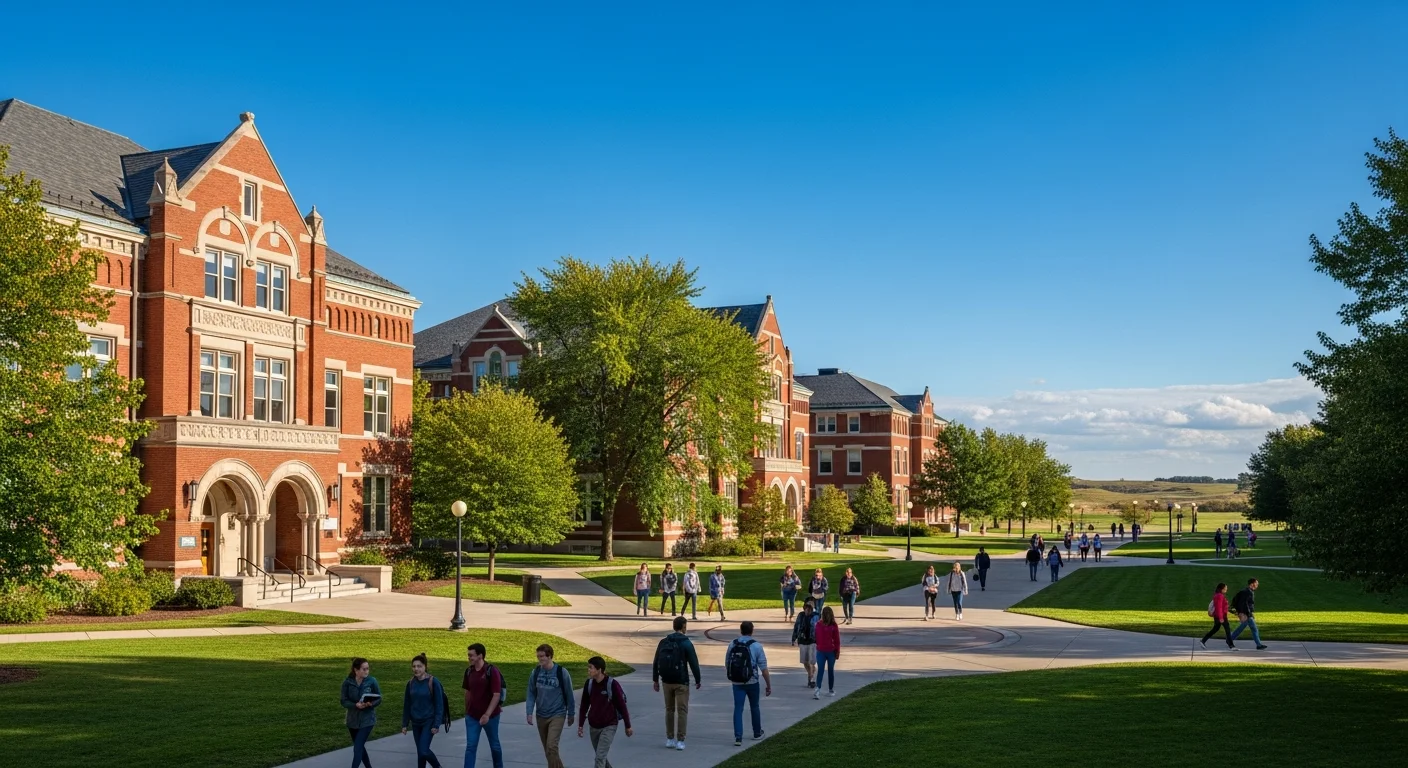

University of Nebraska at Omaha — Omaha, NE

Key Distinction: UNO combines cybersecurity research infrastructure, a thriving Omaha tech ecosystem, and both undergraduate and graduate IT pathways.

Hakia Insight: UNO's National Cybersecurity Center of Excellence isn't just a recruiting line; undergraduates can contribute to active CISA-funded research projects, meaning your degree work directly influences national cybersecurity standards rather than staying confined to coursework.

UNO's information technology and computer science programs leverage Omaha's emergence as a serious tech corridor, with particular strength in cybersecurity, data science, and enterprise systems. The university has invested heavily in research infrastructure and industry partnerships, creating opportunities for students to engage with real-world problems through capstone projects, internships, and collaborative labs. The National Cybersecurity Center of Excellence (operating across the NU system) brings research visibility and recruitment pipelines into UNO's IT student pipeline. Faculty blend academic rigor with hands-on industry experience, and the program benefits from proximity to major employers including First Data, Mutual of Omaha, and growing software development firms. Students pursuing advanced technical careers will find robust options in systems engineering, cloud infrastructure, and cybersecurity roles. UNO's size and resources enable it to offer both bachelor's and master's-level pathways, making it an ideal choice for students planning to pursue both career advancement and graduate study without changing institutions.

Programs Offered
  • Bachelor of Science in Information Technology — 4 years, on-campus
  • Bachelor of Arts in Information Technology — 4 years, online
Research Labs and Institutes
  • National Cybersecurity Center of Excellence
Industry Partners
  • First Data (corporate)
  • Mutual of Omaha (corporate)
Career Outcomes

Top Employers: First Data, Mutual of Omaha.

Location Advantages: Omaha's growing tech sector with major employers nearbyAccess to National Cybersecurity Center of Excellence research

Wayne State College — Wayne, NE

Key Distinction: Wayne State College's IT program uniquely combines traditional education with a year-long paid cooperative education experience in Nebraska communities, providing students up to $33,000 in scholarships while guaranteeing real-world professional experience before graduation.

Hakia Insight: Wayne State's paid co-op model ($33K in scholarships plus salary) flips the typical internship math—you graduate debt-reduced with 12 months of documented professional IT experience, while peers at similarly-priced schools are still scrambling for entry-level roles.

Wayne State College operates as a four-year institution rather than a traditional community college, so while it offers information technology education, its structure and program focus differ from community college models—most students here are pursuing bachelor's degrees rather than two-year associate degrees. If you're looking for a community college pathway specifically, the other institutions listed may better match your needs. That said, Wayne State does offer IT-related coursework and can be a viable option if you're seeking a four-year degree in computer science, information systems, or a related field with a smaller campus environment. The college maintains partnerships with Nebraska's larger universities for student transitions and has connections to regional employers in the Wayne area and beyond.

Programs Offered
  • Bachelor of Science in Information Technology — 4 years, on-campus
  • Bachelor of Arts in Information Technology — 4 years, online
Notable Faculty
  • Dr. Christian Legler — Associate Dean, School of Education and Behavioral Sciences
  • Dr. Katie Machovsky — Executive Director of Cooperative Education and Industry Liaison
Accreditations and Certifications
  • Council of Accreditation for Educator Preparation (CAEP)
Transfer Agreements
  • Central Community College — articulation
  • Western Iowa Tech Community College — articulation
Entry-Level Career Paths
  • Help Desk Technician
  • Desktop Support Specialist
  • Junior Systems Administrator
  • IT Support Specialist
Included Certifications
  • CompTIA A+
  • CompTIA Network+
  • Cisco CCNA Fundamentals

Location Advantages: Norfolk business partnershipsGrand Island employer connections$40 million downtown Norfolk investmentStrong labor force in participating communities

Time to Completion: 4 years full-time

University of Nebraska at Kearney — Kearney, NE

Key Distinction: UNK combines a flexible, well-rounded IT curriculum with strong regional employer relationships and modern lab infrastructure.

Hakia Insight: UNK's regional positioning in central Nebraska—paired with direct partnerships to state agencies and healthcare systems—creates a labor shortage advantage: employers actively recruit from campus because local IT talent is scarce, not abundant.

At the bachelor's level, UNK's computer science and information technology programs benefit from the university's commitment to undergraduate research and experiential learning, with students engaging in capstone projects and applied research that directly address industry needs. The program structure allows students to explore multiple specializations—from software development to data analytics to cybersecurity—through a flexible upper-level elective system rather than rigid tracks. Faculty actively involve undergraduates in research initiatives and have secured grants for projects in areas like embedded systems and network security, creating opportunities for students to co-author papers and present at conferences. What sets UNK apart is the intentional bridge between theoretical computer science and immediate workforce readiness: students work on real client projects through senior capstone courses, collaborate with regional businesses on problem-solving initiatives, and benefit from professors who maintain active connections to industry through consulting and advisory board roles. The university's location in Kearney positions graduates well for opportunities in the Great Plains technology sector, with strong placement records at regional tech companies, healthcare IT departments, and financial services firms. UNK also emphasizes the human side of technology through courses in technology ethics and IT leadership, recognizing that technical skills alone don't guarantee career success.

Programs Offered
  • Bachelor of Science in Information Technology — 4 years, on-campus
  • Bachelor of Arts in Information Technology — 4 years, online
Accreditations and Certifications
  • ALA/AASL
  • CAEP

Location Advantages: Central Nebraska positioning as regional tech hubPartnerships with state agencies and healthcare systems

Peru State College — Peru, NE

Hakia Insight: Peru State College's IT program operates within a four-year institution model that prioritizes direct faculty mentorship over scale, a structure that historically produces stronger placement outcomes in rural and small-metro IT markets than larger regional competitors.

Peru State College, like Wayne State College, is a four-year institution focused on bachelor's degree programs rather than community college associate degrees. If you're specifically seeking a two-year IT associate degree followed by workforce entry or transfer to a university, Peru State's four-year structure may not be the best fit for your timeline and goals. However, Peru State does offer computer science and information systems coursework within its bachelor's degree framework, and it can be a solid option if you're committed to a four-year degree from the start or if you're transferring from a community college to complete your bachelor's. The college's location in southeast Nebraska provides connections to regional employers, and graduates have pursued careers in IT support, systems administration, and software development roles throughout Nebraska and beyond.

Programs Offered
  • Bachelor of Science in Information Technology — 4 years, on-campus
  • Bachelor of Arts in Information Technology — 4 years, online
Entry-Level Career Paths
  • Help Desk Technician
  • Junior Systems Administrator
  • Desktop Support Specialist
  • IT Support Technician
Included Certifications
  • CompTIA A+
  • CompTIA Network+
  • CompTIA Security+

Location Advantages:

Doane University — Crete, NE

Key Distinction: Doane prioritizes hands-on IT operations and cybersecurity training with a small-cohort model designed for direct workforce entry.

Hakia Insight: Doane's small-cohort approach to IT operations and cybersecurity means you're not competing for lab access or instructor attention—a tangible advantage for hands-on certifications (CompTIA, Cisco) where mentorship density directly correlates to first-attempt pass rates.

At the bachelor's level, doane's information technology program emphasizes practical, hands-on learning through a curriculum built around real-world problem-solving rather than pure theory. The program centers on systems administration, network infrastructure, and cybersecurity fundamentals, with students gaining direct experience managing campus IT systems and supporting live technical environments. Faculty bring industry experience from telecommunications and enterprise IT backgrounds, and the small class sizes characteristic of Doane allow for mentorship that larger programs cannot replicate. The program's strength lies in its ability to prepare students for immediate entry into IT operations and support roles, with graduates frequently landing positions at regional healthcare systems, financial institutions, and state government agencies within Nebraska and the surrounding region. Internship opportunities are tightly integrated into the curriculum, with partnerships placing students in settings where they manage helpdesk operations, configure enterprise networks, and troubleshoot infrastructure issues. The Lincoln location provides access to a growing tech corridor, and Doane's connections with local employers mean students often transition directly from internships into full-time roles. This is a program that prioritizes making students immediately job-ready rather than delaying practical skills until advanced coursework.

Programs Offered
  • Bachelor of Science in Information Technology — 4 years, on-campus
  • Bachelor of Arts in Information Technology — 4 years, online

Location Advantages: Access to Lincoln regional tech employersProximity to Nebraska state government IT operations

Union Adventist University — Lincoln, NE

Key Distinction: Union Adventist University offers comprehensive Information Technology programs preparing students for careers in technology.

Hakia Insight: Union Adventist University's IT curriculum in Lincoln positions graduates to fill the state capital's government and healthcare IT roles, sectors where institutional familiarity and local networks outweigh prestige in hiring decisions.

Union Adventist University offers Information Technology programs in Lincoln, NE. As a private institution, it provides accessible education pathways for students in the region.

Best Master's Information Technology Degree Programs in Nebraska

University of Nebraska at Omaha — Omaha, NE

Key Distinction: UNO combines cybersecurity research infrastructure, a thriving Omaha tech ecosystem, and both undergraduate and graduate IT pathways.

Hakia Insight: UNO's doctoral and master's pipeline through the National Cybersecurity Center of Excellence means research-active faculty supervise your graduate work while industry partners (First Data, Mutual of Omaha) actively recruit from your cohort—a rare alignment of academic rigor and immediate employment traction.

UNO's information technology and computer science programs leverage Omaha's emergence as a serious tech corridor, with particular strength in cybersecurity, data science, and enterprise systems. The university has invested heavily in research infrastructure and industry partnerships, creating opportunities for students to engage with real-world problems through capstone projects, internships, and collaborative labs. The National Cybersecurity Center of Excellence (operating across the NU system) brings research visibility and recruitment pipelines into UNO's IT student pipeline. Faculty blend academic rigor with hands-on industry experience, and the program benefits from proximity to major employers including First Data, Mutual of Omaha, and growing software development firms. Students pursuing advanced technical careers will find robust options in systems engineering, cloud infrastructure, and cybersecurity roles. UNO's size and resources enable it to offer both bachelor's and master's-level pathways, making it an ideal choice for students planning to pursue both career advancement and graduate study without changing institutions.

Programs Offered
  • Master of Science in Information Technology — 1-2 years, on-campus
  • Master of Arts in Information Technology — 1-2 years, online
Research Labs and Institutes
  • National Cybersecurity Center of Excellence
Industry Partners
  • First Data (corporate)
  • Mutual of Omaha (corporate)
Career Outcomes

Top Employers: First Data, Mutual of Omaha.

Location Advantages: Omaha's growing tech sector with major employers nearbyAccess to National Cybersecurity Center of Excellence research

Bellevue University — Bellevue, NE

Key Distinction: Coursework-only track with extensive e-portfolio development. Cohort model - take one course at a time with single registration

Hakia Insight: Bellevue's cohort-based, one-course-at-a-time master's model in Instructional Design and Technology was designed for military and corporate IT training professionals, so your peers are practicing instructional technologists, not theoretical students—your network becomes your postgrad advantage.

The Master of Science in Instructional Design and Technology is a 36-credit online program designed for working professionals, featuring a cohort model where students take one course at a time and register once for the entire program. This coursework-only program includes extensive e-portfolio development throughout multiple courses (IDT 616, 631, 646, 661, 676) where students create professional artifacts in audio, graphics, video, print, and interactive media. The program integrates Project Management Institute (PMI) knowledge areas through IDT 655, providing embedded project management skills valuable for career advancement. As a fully online program, it offers maximum flexibility for working professionals. Graduates are prepared for leadership roles in educational technology, corporate training, higher education, and K-12 settings. The program emphasizes practical application with hands-on experience in learning management systems like Blackboard, Moodle, and Canvas, plus emerging technologies evaluation and integration.

Programs Offered
  • Master of Science in Instructional Design and Technology — 1-2 years, on-campus. MS
Research Labs and Institutes
  • Natural Science Center of Excellence
  • Science Lab
  • MathX Interactive Lab
  • Sustainability Lab
  • Courtnage Intelligence Systems Lab
Industry Partners
  • Keurig Green Mountain (employer)
  • Cisco (partner)
  • Microsoft (partner)
  • CompTIA (partner)
  • Linux Professional Institute (partner)
  • Certiport (partner)
Notable Faculty
  • Professor John Kyndt — Science education and laboratory research
  • Dr. Scott Pinkerton — Science education
  • David Petty — Information systems and technology
Accreditations and Certifications
  • Security+ aligned
  • CEH-aligned coursework

Location Advantages: Proximity to Offutt Air Force Base and military IT recruitmentAccess to Omaha fintech and healthcare IT sectorRegional headquarters for multiple financial services companies

Best Doctoral Information Technology Degree Programs in Nebraska

University of Nebraska at Omaha — Omaha, NE

Key Distinction: UNO combines cybersecurity research infrastructure, a thriving Omaha tech ecosystem, and both undergraduate and graduate IT pathways.

Hakia Insight: UNO's doctoral programs in IT sit inside an active National Cybersecurity Center of Excellence, making your dissertation work immediately relevant to First Data and Mutual of Omaha's real infrastructure challenges, shortening the gap between PhD completion and industry-leading research roles.

At the doctoral level, UNO's information technology and computer science programs leverage Omaha's emergence as a serious tech corridor, with particular strength in cybersecurity, data science, and enterprise systems. The university has invested heavily in research infrastructure and industry partnerships, creating opportunities for students to engage with real-world problems through capstone projects, internships, and collaborative labs. The National Cybersecurity Center of Excellence (operating across the NU system) brings research visibility and recruitment pipelines into UNO's IT student pipeline. Faculty blend academic rigor with hands-on industry experience, and the program benefits from proximity to major employers including First Data, Mutual of Omaha, and growing software development firms. Students pursuing advanced technical careers will find robust options in systems engineering, cloud infrastructure, and cybersecurity roles. UNO's size and resources enable it to offer both bachelor's and master's-level pathways, making it an ideal choice for students planning to pursue both career advancement and graduate study without changing institutions.

Programs Offered
  • Doctor of Philosophy in Information Technology — 4-6 years, on-campus
  • Doctor of Science in Information Technology — 4-6 years, online
Research Labs and Institutes
  • National Cybersecurity Center of Excellence
Industry Partners
  • First Data (corporate)
  • Mutual of Omaha (corporate)
Career Outcomes

Top Employers: First Data, Mutual of Omaha.

Location Advantages: Omaha's growing tech sector with major employers nearbyAccess to National Cybersecurity Center of Excellence research