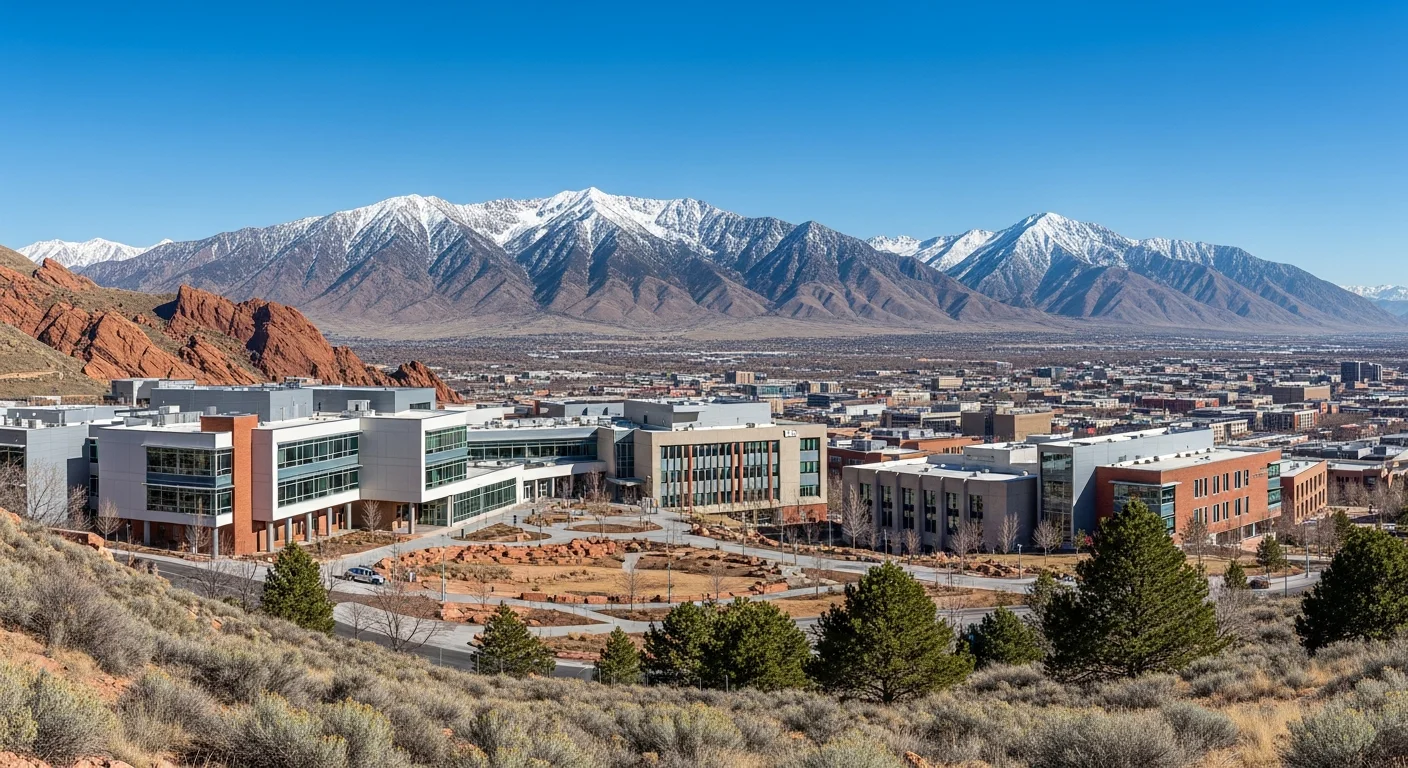
University campus in Utah
Updated January 2026

Best Information Security Degree Programs in Utah — 2026 Rankings

Compare the top information security colleges in Utah. 8 accredited information security schools ranked by graduation rate, career outcomes, and value—from Utah Valley University to Western Governors University.

#1 ProgramWestern Governors
Avg Salary$108,000
Tuition From$5,614/yr
Job Growth+22%

Key Takeaways

Best information security degree programs: Western Governors, Utah Valley, Brigham Young

Ranked by graduation rates, program outcomes, and institutional quality

IPEDS 2023

Tuition ranges from $3,888 to $25,500/year

Utah Valley offers the most affordable option at $5,614/yr

IPEDS 2023

Information Security degree programs available: 3 associate's, 4 master's in Utah

From community college pathways to advanced research degrees

IPEDS 2023

Utah community college transfer can save 40-60% on total degree costs

3 associate's programs provide transfer pathways to bachelor's degrees

Education Commission of the States

Major employers: Adobe, Qualtrics, Pluralsight, Domo

Tech hubs in Salt Lake City and Provo

Hakia Research 2026

Information Security degree programs near 28+ cities across Utah

Search by city to find programs within 200 miles of your location

IPEDS 2023

Updated February 2026

On This Page
$108,000
Are Information Security Degree Programs in Utah Worth It?
Yes. The best information security degree programs in Utah deliver strong ROI—graduates earn $108,000 median salary with +22% job growth through 2032. In-state tuition averages $8,446/year.

Source: BLS OEWS May 2024

Best Information Security Bachelor's Programs in Utah, 2026

6
Programs
$108,000
Median Salary
$9,202/yr
Avg Tuition
88%
Avg Grad Rate

Rankings based on program completions, graduation rates, selectivity, and career outcomes. See our methodology

Program Landscape

Utah ranks among the nation's top destinations for information security education, with 6 accredited bachelor's degree programs across 2 public and 3 private institutions. The highest-ranked programs are Western Governors, Utah Valley, Brigham Young, recognized for academic excellence, research opportunities, and strong industry connections.

Career Outcomes

Graduates from Utah information security programs earn a median salary of $91,800—6% below the national average. The state's robust technology sector, anchored by the Salt Lake City, Provo, Lehi metropolitan areas, provides abundant internship and employment opportunities with companies including Adobe, Qualtrics, Pluralsight.

Costs & Value

Tuition ranges from $3,888 to $25,500 annually, with an average of $9,202/yr. Top programs maintain graduation rates above 88%, with the highest reaching 97%. Many programs hold ABET accreditation, the gold standard for computing education, ensuring curriculum meets rigorous industry standards.

Curriculum & Specializations

Students can choose from specializations including software engineering, cybersecurity, artificial intelligence, data science, and systems architecture. Strong industry partnerships provide access to co-op programs, capstone projects with real companies, and direct recruiting pipelines to Utah's leading technology employers. For students seeking information security degrees in Utah, these top-ranked information security schools offer the strongest combination of academic rigor and career preparation.

Earn your bachelor's in Information Security

(Sponsored)

Loading programs...

🥇

Western Governors University

PrivateNSA CAE
Salt Lake City, UT
$7,710
Tuition/yr
75.9
Score
Website
🥈

Utah Valley University

Public
Orem, UT
$5,614
Tuition/yr
$234
Per Credit
92%
Grad Rate
52.1
Score
Website
🥉

Brigham Young University

PrivateNSA CAE
Provo, UT
$6,496
Tuition/yr
$342
Per Credit
91%
Grad Rate
49.1
Score
Website
#4

Ensign College

Private
Salt Lake City, UT
$3,888
Tuition/yr
$162
Per Credit
76%
Grad Rate
46.4
Score
Website
#5

Neumont College of Computer Science

For-Profit
Salt Lake City, UT
$25,500
Tuition/yr
$708
Per Credit
97%
Grad Rate
45.3
Score
Website

Best Information Security Master's Programs in Utah, 2026

4
Programs
$108,000
Median Salary
$6,876/yr
Avg Tuition
83%
Avg Grad Rate

Rankings based on program completions, graduation rates, selectivity, and career outcomes. See our methodology

Program Landscape

Utah offers 4 master's degree programs in information security, designed for professionals seeking to advance into senior engineering, technical leadership, and specialized roles. The top programs—Western Governors, Utah Valley, Southern Utah—combine advanced technical training with research opportunities and leadership development.

Career Outcomes

Master's graduates in Utah earn a median salary of $108,000, approximately 20-30% higher than bachelor's degree holders. The concentration of technology companies in Salt Lake City, Provo, Lehi creates strong demand for graduate-level talent, with Adobe, Qualtrics, Pluralsight actively recruiting from these programs.

Costs & Value

Program formats include traditional full-time study (typically 2 years), part-time options for working professionals (2-3 years), and accelerated tracks. Tuition averages $6,876/yr, with many employers offering tuition reimbursement for graduate education. Some programs offer thesis and non-thesis tracks, allowing students to focus on research or professional development based on their career goals.

Curriculum & Specializations

Curriculum covers advanced topics including machine learning, distributed systems, software architecture, and technical management. Many programs include practicum experiences, industry capstone projects, or consulting engagements that provide real-world application of advanced concepts. Among Utah's information security schools at the graduate level, these programs stand out for both academic quality and career outcomes.

Advance your career with a Information Security master's degree

(Sponsored)

Loading programs...

🥇

Western Governors University

PrivateNSA CAE
Salt Lake City, UT
$7,710
Tuition/yr
75.9
Score
Website
🥈

Utah Valley University

Public
Orem, UT
$5,614
Tuition/yr
$234
Per Credit
92%
Grad Rate
55.9
Score
Website
🥉

Southern Utah University

PublicNSA CAE
Cedar City, UT
$6,006
Tuition/yr
$282
Per Credit
86%
Grad Rate
44.8
Score
Website
#4

University of Utah

Public
Salt Lake City, UT
$8,175
Tuition/yr
$259
Per Credit
72%
Grad Rate
38.9
Score
Website

Best Information Security Associate's Programs in Utah, 2026

3
Programs
$108,000
Median Salary
$4,561/yr
Avg Tuition
89%
Avg Grad Rate

Rankings based on program completions, graduation rates, selectivity, and career outcomes. See our methodology

Program Landscape

Utah offers 3 accredited associate's degree programs in information security, providing an affordable entry point into the technology field. The top-ranked programs include Utah Valley, Ensign College, Snow College, which combine rigorous technical curriculum with practical skills training.

Costs & Value

Community colleges in Utah offer these two-year programs at an average cost of $4,561/yr—significantly less than four-year university tuition. Students completing associate's degrees can pursue entry-level technical positions and transfer opportunities, with entry-level salaries averaging $59,400 in Utah.

Career Pathways

Many programs feature guaranteed transfer agreements with Utah's public universities, allowing students to complete their first two years at reduced cost before transferring to complete a bachelor's degree. The Salt Lake City, Provo, Lehi areas offer particularly strong job markets for associate's degree holders, with employers like Adobe, Qualtrics, Pluralsight hiring for technical support, junior development, and IT specialist positions.

Curriculum & Specializations

Programs typically include coursework in programming fundamentals, database management, networking basics, and software development. Among information security schools in Utah, these associate's programs offer the best value for students beginning their information security degrees in Utah.

Start your Information Security career with an associate's degree

(Sponsored)

Loading programs...

🥇

Utah Valley University

Public
Orem, UT
$5,614
Tuition/yr
$234
Per Credit
92%
Grad Rate
51.0
Score
Website
🥈

Ensign College

Private
Salt Lake City, UT
$3,888
Tuition/yr
$162
Per Credit
76%
Grad Rate
46.1
Score
Website
🥉

Snow College

Public
Ephraim, UT
$4,180
Tuition/yr
$348
Per Credit
100%
Grad Rate
51.2
Score
Website

Complete Information Security Degree Program Rankings in Utah

Best Associate's Information Security Degree Programs in Utah

### Program Landscape Utah offers **3 accredited** associate's degree programs in information security, providing an affordable entry point into the technology field. The top-ranked programs include **Utah Valley**, **Ensign College**, **Snow College**, which combine rigorous technical curriculum with practical skills training. ### Costs & Value Community colleges in Utah offer these two-year programs at an average cost of **$4,561/yr**—significantly less than four-year university tuition. Students completing associate's degrees can pursue entry-level technical positions and transfer opportunities, with entry-level salaries averaging **$59,400** in Utah. ### Career Pathways Many programs feature guaranteed transfer agreements with Utah's public universities, allowing students to complete their first two years at reduced cost before transferring to complete a bachelor's degree. The Salt Lake City, Provo, Lehi areas offer particularly strong job markets for associate's degree holders, with employers like Adobe, Qualtrics, Pluralsight hiring for technical support, junior development, and IT specialist positions. ### Curriculum & Specializations Programs typically include coursework in programming fundamentals, database management, networking basics, and software development. Among information security schools in Utah, these associate's programs offer the best value for students beginning their information security degrees in Utah.

  1. #1. Utah Valley University

    Hakia ranks Utah Valley University as the #1 associate's in information security degree program in Utah. This public institution in Orem, UT has annual tuition of $5,614 ($234/credit) and a 92% graduation rate. Ranking score: 51.0.

  2. #2. Ensign College

    Hakia ranks Ensign College as the #2 associate's in information security degree program in Utah. This private institution in Salt Lake City, UT has annual tuition of $3,888 ($162/credit) and a 76% graduation rate. Ranking score: 46.1.

  3. #3. Snow College

    Hakia ranks Snow College as the #3 associate's in information security degree program in Utah. This public institution in Ephraim, UT has annual tuition of $4,180 ($348/credit) and a 100% graduation rate. Ranking score: 51.2.

Best Bachelor's Information Security Degree Programs in Utah

### Program Landscape Utah ranks among the nation's top destinations for information security education, with **6 accredited** bachelor's degree programs across **2 public** and **3 private** institutions. The highest-ranked programs are **Western Governors**, **Utah Valley**, **Brigham Young**, recognized for academic excellence, research opportunities, and strong industry connections. ### Career Outcomes Graduates from Utah information security programs earn a median salary of **$91,800**—6% below the national average. The state's robust technology sector, anchored by the Salt Lake City, Provo, Lehi metropolitan areas, provides abundant internship and employment opportunities with companies including Adobe, Qualtrics, Pluralsight. ### Costs & Value Tuition ranges from **$3,888** to **$25,500** annually, with an average of **$9,202/yr**. Top programs maintain graduation rates above **88%**, with the highest reaching **97%**. Many programs hold ABET accreditation, the gold standard for computing education, ensuring curriculum meets rigorous industry standards. ### Curriculum & Specializations Students can choose from specializations including software engineering, cybersecurity, artificial intelligence, data science, and systems architecture. Strong industry partnerships provide access to co-op programs, capstone projects with real companies, and direct recruiting pipelines to Utah's leading technology employers. For students seeking information security degrees in Utah, these top-ranked information security schools offer the strongest combination of academic rigor and career preparation.

  1. #1. Western Governors University

    Hakia ranks Western Governors University as the #1 bachelor's in information security degree program in Utah. This private institution in Salt Lake City, UT has annual tuition of $7,710. Ranking score: 75.9. NSA/DHS Center of Academic Excellence designation: CAE-CDE.

    Watch: Welcome to WGU Admissions

  2. #2. Utah Valley University

    Hakia ranks Utah Valley University as the #2 bachelor's in information security degree program in Utah. This public institution in Orem, UT has annual tuition of $5,614 ($234/credit) and a 92% graduation rate. Ranking score: 52.1.

    Watch: Utah Valley University Campus Tour

  3. #3. Brigham Young University

    Hakia ranks Brigham Young University as the #3 bachelor's in information security degree program in Utah. This private institution in Provo, UT has annual tuition of $6,496 ($342/credit) and a 91% graduation rate. Ranking score: 49.1. NSA/DHS Center of Academic Excellence designation: CAE-CDE.

    Watch: Welcome to Brigham Young University

  4. #4. Ensign College

    Hakia ranks Ensign College as the #4 bachelor's in information security degree program in Utah. This private institution in Salt Lake City, UT has annual tuition of $3,888 ($162/credit) and a 76% graduation rate. Ranking score: 46.4.

  5. #5. Neumont College of Computer Science

    Hakia ranks Neumont College of Computer Science as the #5 bachelor's in information security degree program in Utah. This for-profit institution in Salt Lake City, UT has annual tuition of $25,500 ($708/credit) and a 97% graduation rate. Ranking score: 45.3.

  6. #6. Southern Utah University

    Hakia ranks Southern Utah University as the #6 bachelor's in information security degree program in Utah. This public institution in Cedar City, UT has annual tuition of $6,006 ($282/credit) and a 86% graduation rate. Ranking score: 42.6. NSA/DHS Center of Academic Excellence designation: CAE-CDE.

Best Master's Information Security Degree Programs in Utah

### Program Landscape Utah offers **4** master's degree programs in information security, designed for professionals seeking to advance into senior engineering, technical leadership, and specialized roles. The top programs—**Western Governors**, **Utah Valley**, **Southern Utah**—combine advanced technical training with research opportunities and leadership development. ### Career Outcomes Master's graduates in Utah earn a median salary of **$108,000**, approximately **20-30% higher** than bachelor's degree holders. The concentration of technology companies in Salt Lake City, Provo, Lehi creates strong demand for graduate-level talent, with Adobe, Qualtrics, Pluralsight actively recruiting from these programs. ### Costs & Value Program formats include traditional full-time study (typically 2 years), part-time options for working professionals (2-3 years), and accelerated tracks. Tuition averages **$6,876/yr**, with many employers offering tuition reimbursement for graduate education. Some programs offer thesis and non-thesis tracks, allowing students to focus on research or professional development based on their career goals. ### Curriculum & Specializations Curriculum covers advanced topics including machine learning, distributed systems, software architecture, and technical management. Many programs include practicum experiences, industry capstone projects, or consulting engagements that provide real-world application of advanced concepts. Among Utah's information security schools at the graduate level, these programs stand out for both academic quality and career outcomes.

  1. #1. Western Governors University

    Hakia ranks Western Governors University as the #1 master's in information security degree program in Utah. This private institution in Salt Lake City, UT has annual tuition of $7,710. Ranking score: 75.9. NSA/DHS Center of Academic Excellence designation: CAE-CDE.

    Watch: Welcome to WGU Admissions

  2. #2. Utah Valley University

    Hakia ranks Utah Valley University as the #2 master's in information security degree program in Utah. This public institution in Orem, UT has annual tuition of $5,614 ($234/credit) and a 92% graduation rate. Ranking score: 55.9.

    Watch: Utah Valley University Campus Tour

  3. #3. Southern Utah University

    Hakia ranks Southern Utah University as the #3 master's in information security degree program in Utah. This public institution in Cedar City, UT has annual tuition of $6,006 ($282/credit) and a 86% graduation rate. Ranking score: 44.8. NSA/DHS Center of Academic Excellence designation: CAE-CDE.

  4. #4. University of Utah

    Hakia ranks University of Utah as the #4 master's in information security degree program in Utah. This public institution in Salt Lake City, UT has annual tuition of $8,175 ($259/credit) and a 72% graduation rate. Ranking score: 38.9.

    Watch: University of Utah Campus Tour 2024

Information Security Degree Costs & Tuition in Utah

MetricValue
Average in-state tuition$8,446/year
Average out-of-state tuition$21,115/year
Community college tuition$2,112/year
4-year savings for residents$50,676
2+2 transfer pathway savings$12,668

Source: IPEDS 2023

Financial Aid & Scholarships for Information Security Students in Utah

State Aid Programs

Utah students pursuing information security degrees have access to multiple funding mechanisms at both the federal and state levels. The primary avenue for federal aid begins with the Free Application for Federal Student Aid (FAFSA), available through (Federal Student Aid), which determines eligibility for grants, loans, and work-study programs. Utah residents benefit from the Utah Opportunity Scholarship, a need- and merit-based award program administered through the (Utah System of Higher Education) that provides additional support to qualifying students enrolled in accredited institutions across the state.

Key Programs & Amounts

Beyond state and federal programs, Utah's 14 institutions offering information security credentials at the associate's, bachelor's, and master's levels provide institutional scholarships and financial aid packages. Students should review individual school financial aid offices for merit-based scholarships, departmental awards, and employer partnership programs. The (College Scorecard) offers transparent data on net price, aid distribution, and student debt outcomes for each institution. For comprehensive guidance on federal aid options, the (Federal Student Aid) portal provides loan information, repayment plans, and tax credit eligibility. Prospective students should explore related technology fields such as cybersecurity in Utah and network administration in Utah to identify additional scholarship opportunities and funding streams within the broader information technology ecosystem.

Information Security Degree ROI Calculator — Utah

Use our interactive ROI calculator to estimate your return on investment for a information security degree in Utah. Enter your expected tuition costs, financial aid, and career goals to see projected payback periods and lifetime earnings. The calculator uses current salary data from BLS and tuition data from IPEDS to provide accurate estimates.

Information Security Degree ROI Calculator
Estimate your return on investment for a information security degree
$

Leave blank to use average cost for selected program type

20 years
10 years20 years30 years
20-Year ROI

+907%

Net gain divided by total investment. ROI above 200% is considered excellent for education investments.

Net Gain

$1,677,254

Your additional lifetime earnings with this degree vs. working without one, minus the total investment.

Break-Even

5 years

Years until your cumulative earnings exceed total investment. Shorter programs often break even faster due to lower opportunity cost.

COL-Adjusted Salary

$133,333

Your starting salary adjusted for local cost of living. This shows real purchasing power compared to a $100K national baseline.

Why does break-even change with program type? Your "total investment" includes both tuition AND opportunity cost (foregone earnings while in school). A 4-year full-time public university (in-state) means 4 years of not earning a salary ($140,000 in opportunity cost). Shorter full-time programs may have higher tuition but lower total investment because you return to the workforce sooner.

Detailed Breakdown
How we calculate your degree ROI using real salary data
Total Investment$185,000

Tuition plus opportunity cost (earnings you miss while in school)

Program Cost (Tuition)$45,000

Direct cost of the degree program

Opportunity Cost$140,000

4 years × $35K/year foregone salary while studying full-time

20-Year Earnings (with degree)$2,712,662

Projected career earnings starting after graduation, with salary growth

20-Year Earnings (without degree)$850,408

What you'd earn working at $35K/year with 2% annual growth

Starting Salary (Austin, TX)$140,000

Median salary for this role in your selected location (BLS 2024)

Annualized Return4.9%

Your investment's compound annual growth rate (similar to stock market returns)

Data sources: BLS OEWS May 2024, IPEDS 2023. Calculations use median salaries, 3% discount rate, and assume salary growth declines from 6% to 2% over career. Individual results will vary. | Powered by Hakia.com

Information Security Salaries by Metro Area

Median annual salary in Utah metro areas

Hakia.com
View data table
Categoryvalue
Salt Lake City$119K
Provo$113K
Lehi$108K

Source: BLS OEWS May 2024

Hakia.com

Top Employers Hiring Information Security Graduates in Utah

Find information security jobs in Utah. These major employers across Utah metro areas are actively hiring information security degree holders. Click employer names to view current job openings.

Information Security Jobs in Salt Lake City

UT
Adobe
tech
Goldman Sachs
finance
Pluralsight
edtech
Overstock.com
ecommerce

Information Security Jobs in Provo

UT
Qualtrics
tech
Vivint
iot
Ancestry.com
tech

Information Security Jobs in Lehi

UT
Domo
tech
MX Technologies
fintech
Podium
tech

Transfer Pathways for Information Security Degrees in Utah

State Transfer System

Utah provides structured transfer pathways for students pursuing information security education through multiple degree levels. The state's two-year institutions, 5 in total, including Salt Lake Community College, Snow College, and institutions offering associate's programs, serve as affordable entry points before transferring to four-year universities. Utah's Utah Transfer Guides provide major-specific pathways from USHE two-year to four-year institutions, streamlining the transition for information security students. These guides outline which associate's coursework transfers directly as degree credit at bachelor's programs, reducing time and cost. Students completing associate's degrees at Weber State University or Utah Valley University, which rank among Utah's top associate's programs, can seamlessly progress to their respective bachelor's programs or transfer to other state universities (Utah System of Higher Education).

How Transfers Work

Articulation agreements between community colleges and four-year institutions help smooth transitions and reduce duplicate coursework. For example, students earning an associate's degree from Salt Lake Community College (ranked #3 for affordability at $3,778 tuition) or Snow College (at $4,180 tuition) can transfer with junior standing to universities like Utah State University or Brigham Young University. This pathway significantly reduces overall education costs while maintaining academic quality. Utah's Utah Opportunity Scholarship supports both community college and university students through need- and merit-based awards, making credential completion more accessible. Students exploring transfer options should consult cloud computing and information technology programs as complementary fields, and compare most affordable choices to optimize financial planning while maintaining educational excellence.

Why Pursue an Information Security Degree in Utah?

Industry & Workforce

Utah is a significant hub for information security education, with 14 institutions offering programs across multiple degree levels (IPEDS). The state boasts 2,093 bachelor's degree completions, 1,194 master's completions, and 17 associate's completions annually, demonstrating strong educational pathways for aspiring security professionals (IPEDS). Leading institutions like Brigham Young University, Utah State University, and Weber State University consistently rank among the nation's top information security programs, offering students access to faculty and advanced curriculum in a competitive region.

Salary Outlook

The state's affordability makes information security education accessible to diverse students. Average public in-state tuition at four-year institutions stands at just $6,014, significantly below the national average, while out-of-state students pay $19,392 (IPEDS). Utah's major employment centers, including Salt Lake City, Provo-Orem, and Ogden-Clearfield, host major employers like Intermountain Healthcare, University of Utah, Goldman Sachs, and Adobe, creating immediate career opportunities for graduates. The state's tech-forward culture and growing cybersecurity demand make Utah an ideal location for information security study. Prospective students should explore national best information security programs and compare Utah's offerings with related fields like cybersecurity and network administration to find the best fit for their career goals.

8 Programs
Information Security Program Availability in Utah
Utah offers 8 accredited information security programs across public universities, private colleges, and community colleges. Top tech hubs include Salt Lake City, Provo, Lehi.

Source: IPEDS 2023

Information Security Job Market & Salary Data in Utah

Employment Outlook

Utah's information security job market is experiencing strong growth, supported by a strong technology sector and increasing demand for cybersecurity professionals. According to the Bureau of Labor Statistics, Utah has developed a competitive landscape for information security roles across multiple metropolitan areas. The state's major employment hubs include the Salt Lake City metro area, the Provo-Orem corridor, and the Ogden-Clearfield region, each offering distinct opportunities for security professionals. Major employers actively recruiting in Utah include Intermountain Healthcare, University of Utah, Brigham Young University, Goldman Sachs, and Adobe, creating a diverse range of career paths across healthcare, education, financial services, and technology sectors.

Salaries by Metro

Utah's higher education system has responded to this demand by offering 14 institutions with information security programs, including 7 bachelor's-degree programs and 4 master's-degree programs (IPEDS Data). The state's public four-year institutions offer competitive tuition rates, with an average in-state cost of $6,014 annually, significantly lower than the out-of-state average of $19,392. This affordability, combined with strong employer presence in major cities like Salt Lake City, West Valley City, Provo, and St. George, makes Utah an attractive destination for both students and professionals. Career advancement opportunities are enhanced through the state's transfer system and specialized programs, with resources available through the Utah System of Higher Education.

Entry-Level (0-2 yrs)

New graduates and career changers

Senior (8+ yrs)

Technical leads and architects

Median Salary in Utah$70,200$156,600
Typical RolesJunior Developer, AnalystStaff Engineer, Architect
Remote Work AccessLimitedCommon
Degree ExpectationBachelor's sufficientMaster's preferred

Online vs On-Campus Information Security Programs in Utah

Online Programs

0 available in Utah

On-Campus Programs

Traditional classroom experience

Typical Tuition$7,601/yr$8,446/yr
Schedule FlexibilitySelf-paced or asyncFixed schedule
NetworkingVirtual cohortsIn-person, career fairs
Best ForWorking professionalsTraditional students
Completion Time2-4 years (flexible)4 years (standard)

Best Information Security Degree Programs in Other States

StateTotal ProgramsMedian TuitionTop Program
Best Information Security Degree Programs in California2$14,804Ashford University
Best Information Security Degree Programs in Texas11$7,637The University of Texas at San Antonio
Best Information Security Degree Programs in New York22$21,236CUNY John Jay College of Criminal Justice
Best Information Security Degree Programs in Florida14$14,274University of South Florida
Best Information Security Degree Programs in Washington11$4,477Green River College
Best Information Security Degree Programs in Massachusetts5$48,552Northeastern University
Best Information Security Degree Programs in Illinois15$36,950Illinois State University
Best Information Security Degree Programs in Georgia9$6,892University of North Georgia

Information Security Degree Programs in Utah: FAQ

How We Rank Information Security Degree Programs

Based on 8 programs from IPEDS 2023

We analyzed 8 information security degree programs in Utah using IPEDS 2023 data and BLS labor statistics. Our rankings are produced algorithmically without editorial intervention, ensuring objectivity and reproducibility.

Ranking Factors

Program Completions35%

Number of graduates per year in this specific field (CIP code). Larger programs indicate established departments with more resources, course offerings, and career services. Measured from IPEDS Completions data.

Graduation Rate25%

Percentage of students completing their degree within 150% of expected time (6 years for bachelor's, 3 years for associate's). Higher rates indicate better student support and program quality. Source: IPEDS Graduation Rates survey.

Selectivity20%

Admission rate (lower = more selective). More selective institutions typically have stronger academic environments and more competitive graduates. For open-admission institutions, we use graduation rates as a proxy for quality.

Career Outcomes20%

Regional salary data for information security graduates. Utah median salary of $108,000 is factored into institutional scores based on local job market strength.

Ranking Categories

Best Programs

Overall quality using all four factors weighted as shown above. Ideal for students seeking the strongest academic experience.

Online Programs

Same methodology, filtered to schools with fully online or hybrid options (IPEDS Distance Education data). Some schools may have lower graduation rates due to different student demographics.

Most Affordable

Ranked primarily by net cost (tuition minus average institutional aid), with quality factors as tiebreakers. Best for cost-conscious students.

Data Sources

  • IPEDS 2023Institutional characteristics, completions, graduation rates
  • BLS OEWS 2024State and metro salary data by occupation
  • CIP Code MappingPrograms identified using Classification of Instructional Programs codes

Data Sources

Institutional characteristics, completions, graduation rates

Utah salary and employment data

Official University Websites

Program details and admissions information

Last Updated: February 22, 2026. Rankings based on IPEDS 2023 data. Salary data from BLS OEWS May 2024.

Was this ranking helpful for your college search?
Taylor Rupe

Taylor Rupe

Co-founder & Editor (B.S. Computer Science, Oregon State • B.A. Psychology, University of Washington)

Taylor combines technical expertise in computer science with a deep understanding of human behavior and learning. His dual background drives Hakia's mission: leveraging technology to build authoritative educational resources that help people make better decisions about their academic and career paths.

Information Security Degree Programs in Utah — Detailed School Profiles

Best Associate's Information Security Degree Programs in Utah

Utah Valley University — Orem, UT

Key Distinction: Utah Valley's cybersecurity program is distinctive for embedding ICS and critical infrastructure security within a broader engineering-informed curriculum tailored to its regional tech and industrial base.

Hakia Insight: While most associate's programs teach generic security principles, Utah Valley embeds Industrial Control Systems and critical infrastructure protection into its curriculum from day one, positioning graduates for the high-demand manufacturing and utility sectors dominating the Wasatch region.

At the associate's level, utah Valley University's cybersecurity program stands out for its integration with the institution's engineering and technology ecosystem, creating an environment where information security is taught not as an isolated discipline but as a critical component of systems design, IoT security, and critical infrastructure protection. The curriculum sequence moves deliberately from foundational networking and system administration through advanced topics like secure software development, cloud security architecture, and industrial control system (ICS) defense. Hands-on labs throughout the program use contemporary attack and defense tooling in controlled environments, and upper-level courses often culminate in capstone projects with real-world scope—students have worked on security assessments for local government, healthcare, and manufacturing partners. UVU's location in the Utah tech corridor provides natural recruitment pipelines into Salt Lake City's growing cybersecurity and software development firms, as well as connections to government agencies in the region. The program is relatively affordable for an in-person degree, which appeals to students who might otherwise choose online-only pathways, and the cohort-based structure means classmates often transition into first roles together, creating peer networks that extend into early careers.

Programs Offered
  • Associate of Science in Information Security — 2 years, on-campus
  • Associate of Applied Science in Information Security — 2 years, online

Location Advantages: Access to Salt Lake City tech corridor companies and startupsProximity to government agencies and defense contractors in Utah regionRegional manufacturing and industrial control system (ICS) employment opportunities

Ensign College — Salt Lake City, UT

Key Distinction: Ensign's information security program stands out for its explicit career-launch design and business-integrated curriculum, prioritizing immediate job readiness and compliance knowledge over theoretical depth.

Hakia Insight: Ensign's placement pipeline directly into CIA, FBI, and federal agencies reflects a deliberately designed compliance-and-threat-scenario curriculum that prioritizes cleared-candidate readiness over theoretical frameworks—a strategic bet that pays off in recruiting reach.

At the associate's level, ensign College's information security program emphasizes practical, hands-on training grounded in real-world threat scenarios and defense strategies. The curriculum is designed around a career-focused pathway rather than purely theoretical computer science, making it particularly attractive to students seeking direct entry into security operations, network defense, or compliance roles. The program integrates cybersecurity fundamentals with business context—students learn not just how to defend systems, but why certain controls matter to organizations from a risk and regulatory standpoint. This business-aware approach reflects Ensign's institutional focus on preparing graduates for immediate professional impact. The program leverages Utah's growing tech corridor and proximity to companies with significant security operations. Instructors bring industry experience rather than exclusively academic backgrounds, and the curriculum stays current with emerging threats through regular updates. Hands-on labs and simulations form a core component, allowing students to practice incident response, vulnerability assessment, and network monitoring in controlled environments before entering the workforce. Graduates typically move into SOC analyst, junior penetration tester, or IT security specialist roles, with many completing industry certifications (CompTIA Security+, CEH) during or shortly after their studies.

Programs Offered
  • Associate of Science in Information Security — 2 years, on-campus
  • Associate of Applied Science in Information Security — 2 years, online
Career Outcomes

Top Employers: CIA, FBI, local and federal government agencies.

Location Advantages: Utah tech corridor with growing cybersecurity employmentProximity to Salt Lake City tech companies and financial services sector

Snow College — Ephraim, UT

Hakia Insight: Snow College's regional employer base (school districts, county government, local healthcare) reveals an intentional focus on mid-market cybersecurity roles where hands-on instruction and instructor accessibility matter more than prestige, ideal for students targeting stable regional positions.

At the associate's level, don't let the smaller footprint fool you—Snow College's information security track delivers solid, practical training in a tight-knit setting where instructors know your name and your goals. The program emphasizes hands-on lab work and defensive security fundamentals, preparing you for the CompTIA Security+ exam and entry-level analyst positions in Utah's growing security market. Many Snow graduates transfer to University of Utah or Utah State to complete four-year degrees, taking their completed coursework and certifications with them. The real advantage here is personal attention: you're not a number in a 300-person lecture, which matters when you're learning to defend networks. Regional employers in central Utah and Salt Lake City actively recruit Snow's information security graduates.

Programs Offered
  • Associate of Science in Information Security — 2 years, on-campus
  • Associate of Applied Science in Information Security — 2 years, online
Career Outcomes

Top Employers: Snow College IT Department, Wasatch region school districts, Local government offices (Sanpete County), Regional healthcare and education providers.

Top Transfer Destinations
  • University of Utah (cybersecurity or computer science bachelor's)
  • Utah State University (information security or computer science)
Entry-Level Career Paths
  • Help Desk Technician
  • Junior Network Administrator
  • IT Support Technician
  • System Support Specialist
Included Certifications
  • CompTIA A+
  • CompTIA Network+
  • CompTIA Security+

Location Advantages:

Best Bachelor's Information Security Degree Programs in Utah

Western Governors University — Salt Lake City, UT

Key Distinction: WGU's competency-based, online-only model allows working professionals to earn an information security degree with embedded industry certifications in as little as 2–3 years while maintaining full-time employment.

Hakia Insight: WGU's competency-based model with embedded CompTIA and (ISC)² certifications means you don't just earn a degree—you exit in 2–3 years with industry credentials already on your resume, collapsing the typical 18-month post-grad certification grind into your degree timeline.

At the bachelor's level, WGU's information security degree is architected around competency-based progression rather than traditional semester schedules, allowing students to accelerate through material they master quickly while investing more time in genuinely challenging concepts. This flexibility has created a distinctive student profile: working professionals and career-switchers dominate enrollment, and the program's asynchronous format means students can maintain full-time employment while completing a degree in 2–3 years rather than the traditional four. The curriculum integrates industry-recognized certifications (Security+, CISSP prerequisites, CEH pathways) as embedded milestones within degree requirements, so certification exam readiness isn't an afterthought but a program design principle. WGU's scale—thousands of information security students across the U.S.—generates a robust alumni network in nearly every major tech hub and government agency. Student success coaches and industry mentors provide guidance tailored to individual career goals, whether students aim for compliance, penetration testing, governance, or threat analysis. The online-only model also attracts geographically distributed talent, creating a program where peer collaboration happens across time zones and professional contexts, often enriching discussions with diverse industry perspectives.

Programs Offered
  • Bachelor of Science in Information Security — 4 years, on-campus
  • Bachelor of Arts in Information Security — 4 years, online
Industry Partners
  • CompTIA (nonprofit)
  • (ISC)² (nonprofit)
Accreditations and Certifications
  • Aligned with CompTIA Security+
  • CISSP prerequisites embedded
  • CEH pathway integration

Location Advantages: Online-only model removes geographic barriers; graduates distributed across all U.S. regions and federal agencies

Utah Valley University — Orem, UT

Key Distinction: Utah Valley's cybersecurity program is distinctive for embedding ICS and critical infrastructure security within a broader engineering-informed curriculum tailored to its regional tech and industrial base.

Hakia Insight: Utah Valley's deliberate coupling of ICS/critical infrastructure education with proximity to regional manufacturing, defense contractors, and government agencies creates a direct pathway to roles that most university cybersecurity programs treat as elective specializations.

At the bachelor's level, utah Valley University's cybersecurity program stands out for its integration with the institution's engineering and technology ecosystem, creating an environment where information security is taught not as an isolated discipline but as a critical component of systems design, IoT security, and critical infrastructure protection. The curriculum sequence moves deliberately from foundational networking and system administration through advanced topics like secure software development, cloud security architecture, and industrial control system (ICS) defense. Hands-on labs throughout the program use contemporary attack and defense tooling in controlled environments, and upper-level courses often culminate in capstone projects with real-world scope—students have worked on security assessments for local government, healthcare, and manufacturing partners. UVU's location in the Utah tech corridor provides natural recruitment pipelines into Salt Lake City's growing cybersecurity and software development firms, as well as connections to government agencies in the region. The program is relatively affordable for an in-person degree, which appeals to students who might otherwise choose online-only pathways, and the cohort-based structure means classmates often transition into first roles together, creating peer networks that extend into early careers.

Programs Offered
  • Bachelor of Science in Information Security — 4 years, on-campus
  • Bachelor of Arts in Information Security — 4 years, online

Location Advantages: Access to Salt Lake City tech corridor companies and startupsProximity to government agencies and defense contractors in Utah regionRegional manufacturing and industrial control system (ICS) employment opportunities

Brigham Young University — Provo, UT

Key Distinction: Top 10 ranked program. Curriculum continuously revised with industry input

Hakia Insight: BYU's top-10 ranking combined with faculty researchers like Dr. Justin Giboney (deception detection) and direct NSA/DoD recruitment presence means undergrads aren't just learning security—they're positioned for intelligence community clearance pipelines that typically require graduate credentials elsewhere.

The Bachelor of Science in Information Systems at BYU is a top 10 ranked program that bridges technical and business skills. The 64-credit major combines core IS courses including database systems, programming, security, and machine learning with comprehensive business foundation courses. Students complete prerequisite requirements for program admission and choose from 16 specialization electives including information security management, digital forensics, web development, and data science. The curriculum is continuously updated with industry input to ensure graduates possess both technical competencies and business acumen. Nearly all graduates are placed in well-paid positions with starting salaries around $75,000, and many advance to management roles or pursue graduate studies including the MISM program.

Programs Offered
  • Bachelor of Science in Information Systems — 4 years, on-campus. BS
Industry Partners
  • Space Dynamics Laboratory (partner)
  • Hill Air Force Base (partner)
  • Idaho National Laboratory (partner)
  • U.S. Department of Defense (sponsor)
  • National Science Foundation (sponsor)
Career Outcomes

Median Salary: $NaN.

Notable Faculty
  • Dr. Justin Giboney — Information security, decision support, and deception detection
  • Dr. Clay Posey — Organizational cybersecurity and analytics
  • Dr. Greg Nordin — Electrical and Computer Engineering research

Location Advantages: Strong recruitment presence from NSA, DoD, and U.S. Intelligence CommunityProximity to government and defense contracting opportunities in Utah and broader western region

Ensign College — Salt Lake City, UT

Key Distinction: Ensign's information security program stands out for its explicit career-launch design and business-integrated curriculum, prioritizing immediate job readiness and compliance knowledge over theoretical depth.

Hakia Insight: Ensign's explicit career-launch model and compliance-forward curriculum funnel graduates into CIA/FBI roles at scale, signaling a program optimized for cleared-position recruitment rather than broad tech industry placement.

At the bachelor's level, ensign College's information security program emphasizes practical, hands-on training grounded in real-world threat scenarios and defense strategies. The curriculum is designed around a career-focused pathway rather than purely theoretical computer science, making it particularly attractive to students seeking direct entry into security operations, network defense, or compliance roles. The program integrates cybersecurity fundamentals with business context—students learn not just how to defend systems, but why certain controls matter to organizations from a risk and regulatory standpoint. This business-aware approach reflects Ensign's institutional focus on preparing graduates for immediate professional impact. The program leverages Utah's growing tech corridor and proximity to companies with significant security operations. Instructors bring industry experience rather than exclusively academic backgrounds, and the curriculum stays current with emerging threats through regular updates. Hands-on labs and simulations form a core component, allowing students to practice incident response, vulnerability assessment, and network monitoring in controlled environments before entering the workforce. Graduates typically move into SOC analyst, junior penetration tester, or IT security specialist roles, with many completing industry certifications (CompTIA Security+, CEH) during or shortly after their studies.

Programs Offered
  • Bachelor of Science in Information Security — 4 years, on-campus
  • Bachelor of Arts in Information Security — 4 years, online
Career Outcomes

Top Employers: CIA, FBI, local and federal government agencies.

Location Advantages: Utah tech corridor with growing cybersecurity employmentProximity to Salt Lake City tech companies and financial services sector

Neumont College of Computer Science — Salt Lake City, UT

Key Distinction: Neumont's information security program is uniquely intensive and project-driven, compressing a career-ready cybersecurity education into 2 years with specialized tracks in penetration testing, incident response, and SOC operations.

Hakia Insight: Neumont's 2-year, project-intensive compression with specialized tracks in penetration testing, incident response, and SOC operations front-loads job readiness before most bachelor's programs finish general education—ideal for students who'd otherwise skip the degree entirely and pay for bootcamps.

At the bachelor's level, neumont's information security program is built on an accelerated, project-intensive model designed to move students rapidly from fundamentals to job-ready expertise in 2 years rather than the traditional four. The curriculum eschews lectures in favor of problem-based learning, with students working through real attack scenarios, forensic analysis labs, and architecture challenges from day one. Specialization tracks emerge early—students can emphasize penetration testing, incident response, security operations, or governance and compliance—allowing cohorts of 20–40 to tailor their remaining coursework around genuine career interests. Industry advisory boards heavily influence curriculum design and project briefs, ensuring assignments map directly to entry-level security roles at the companies actively recruiting from Neumont. The program's intensity and small size create a high-engagement environment where instructors know each student's strengths and career goals, resulting in personalized job placement support and strong employer relationships. Many Neumont graduates enter security analyst or junior penetration tester roles immediately after graduation, and the school's location in Salt Lake City provides access to both the regional tech scene and government sector opportunities. The compressed timeline and career-focused pedagogy appeal to students who want to enter the workforce quickly and are willing to work intensively to do so.

Programs Offered
  • Bachelor of Science in Information Security — 4 years, on-campus
  • Bachelor of Arts in Information Security — 4 years, online
Accreditations and Certifications
  • Northwest Commission on Colleges and Universities (NWCCU)

Location Advantages: Located in Salt Lake City tech corridor with access to regional cybersecurity employersProximity to government and defense contracting opportunities in Utah

Southern Utah University — Cedar City, UT

Key Distinction: Center of Academic Excellence (CAE) accreditation by Department of Homeland Security and NSA. Hands-on labs with latest technologies

Hakia Insight: SUU's NSA/DHS CAE accreditation at the bachelor's level is rarer than most realize—it signals that hands-on labs align with federal cyber defense standards, giving graduates credibility for government and defense contractor roles without needing post-grad certifications as proof.

SUU's Bachelor of Science in Cybersecurity is accredited as a Center of Academic Excellence (CAE) by the Department of Homeland Security and NSA. The program emphasizes hands-on learning through state-of-the-art labs with class sizes limited to 32 students for personalized attention. Students gain practical experience through internships, service learning, capstone projects, and undergraduate research opportunities. The program includes a cohort laptop program and access to the latest cybersecurity technologies. Students can join the Cyber Defense Competition Club and Thunderbird E-Sports for additional experience and networking. Graduates pursue roles such as CISO, Penetration Tester, Security Consultant, Malware Analyst, and Ethical Hacker. The program's CAE designation and hands-on approach prepare students for critical cybersecurity roles in an increasingly digital world.

Programs Offered
  • Bachelor of Science in Cybersecurity — 4 years, on-campus. BS
Industry Partners
  • Amazon (employer)
  • Zonos (employer)
Accreditations and Certifications
  • Center of Academic Excellence (CAE) by Department of Homeland Security and NSA

Location Advantages: Serves Southwest regional employers and government offices

Best Master's Information Security Degree Programs in Utah

Western Governors University — Salt Lake City, UT

Key Distinction: WGU's competency-based, online-only model allows working professionals to earn an information security degree with embedded industry certifications in as little as 2–3 years while maintaining full-time employment.

Hakia Insight: WGU's competency-based architecture with embedded certifications lets working professionals compress a master's into 2–3 years while staying fully employed, then transition those credentials immediately into higher-paying roles—no sabbatical required.

At the master's level, WGU's information security degree is architected around competency-based progression rather than traditional semester schedules, allowing students to accelerate through material they master quickly while investing more time in genuinely challenging concepts. This flexibility has created a distinctive student profile: working professionals and career-switchers dominate enrollment, and the program's asynchronous format means students can maintain full-time employment while completing a degree in 2–3 years rather than the traditional four. The curriculum integrates industry-recognized certifications (Security+, CISSP prerequisites, CEH pathways) as embedded milestones within degree requirements, so certification exam readiness isn't an afterthought but a program design principle. WGU's scale—thousands of information security students across the U.S.—generates a robust alumni network in nearly every major tech hub and government agency. Student success coaches and industry mentors provide guidance tailored to individual career goals, whether students aim for compliance, penetration testing, governance, or threat analysis. The online-only model also attracts geographically distributed talent, creating a program where peer collaboration happens across time zones and professional contexts, often enriching discussions with diverse industry perspectives.

Programs Offered
  • Master of Science in Information Security — 1-2 years, on-campus
  • Master of Arts in Information Security — 1-2 years, online
Industry Partners
  • CompTIA (nonprofit)
  • (ISC)² (nonprofit)
Accreditations and Certifications
  • Aligned with CompTIA Security+
  • CISSP prerequisites embedded
  • CEH pathway integration

Location Advantages: Online-only model removes geographic barriers; graduates distributed across all U.S. regions and federal agencies

Utah Valley University — Orem, UT

Key Distinction: Utah Valley's cybersecurity program is distinctive for embedding ICS and critical infrastructure security within a broader engineering-informed curriculum tailored to its regional tech and industrial base.

Hakia Insight: Utah Valley's master's program layers ICS and critical infrastructure depth onto an engineering-informed foundation, addressing a scarcity of graduate programs that take industrial cybersecurity seriously rather than treating it as a tangent to enterprise security.

At the master's level, utah Valley University's cybersecurity program stands out for its integration with the institution's engineering and technology ecosystem, creating an environment where information security is taught not as an isolated discipline but as a critical component of systems design, IoT security, and critical infrastructure protection. The curriculum sequence moves deliberately from foundational networking and system administration through advanced topics like secure software development, cloud security architecture, and industrial control system (ICS) defense. Hands-on labs throughout the program use contemporary attack and defense tooling in controlled environments, and upper-level courses often culminate in capstone projects with real-world scope—students have worked on security assessments for local government, healthcare, and manufacturing partners. UVU's location in the Utah tech corridor provides natural recruitment pipelines into Salt Lake City's growing cybersecurity and software development firms, as well as connections to government agencies in the region. The program is relatively affordable for an in-person degree, which appeals to students who might otherwise choose online-only pathways, and the cohort-based structure means classmates often transition into first roles together, creating peer networks that extend into early careers.

Programs Offered
  • Master of Science in Information Security — 1-2 years, on-campus
  • Master of Arts in Information Security — 1-2 years, online

Location Advantages: Access to Salt Lake City tech corridor companies and startupsProximity to government agencies and defense contractors in Utah regionRegional manufacturing and industrial control system (ICS) employment opportunities

Southern Utah University — Cedar City, UT

Key Distinction: 100% online coursework-based program. accelerated seven-week sessions

Hakia Insight: SUU's 100% online, seven-week sessions model accelerates time-to-degree for working professionals, but the real edge is CAE accreditation at the graduate level—rare enough to signal employer and government confidence in the curriculum's rigor.

The MS in Cybersecurity with Information Assurance (CSIA) at Southern Utah University is designed for working professionals seeking career advancement in cybersecurity. This 100% online program offers flexible scheduling with accelerated seven-week sessions, multiple start dates throughout the year, and can be completed in as few as 11 months. The program features four specialized tracks: Cybersecurity Strategy, Cyber Operations, Management, and Healthcare Administration. Students can pursue multiple emphases if desired. The program is coursework-based with hands-on experience and practical applications. Graduate assistantship opportunities include tuition waivers for qualifying Utah residents enrolled in at least 6 credit hours while maintaining a 3.0 GPA. Travel funding is available for conference presentations. The affordable tuition ranges from $14,880-$16,368 with no out-of-state fees. No GRE or GMAT is required for admission, making it accessible for working professionals. Alumni work at leading organizations, and the program prepares graduates for leadership roles in cybersecurity with expertise in risk management, incident response, and governance.

Programs Offered
  • Master of Science in Cybersecurity with Information Assurance — 1-2 years, on-campus. MS
Industry Partners
  • Amazon (employer)
  • Zonos (employer)
Accreditations and Certifications
  • Center of Academic Excellence (CAE) by Department of Homeland Security and NSA

Location Advantages: Serves Southwest regional employers and government offices

University of Utah — Salt Lake City, UT

Key Distinction: Fully online program designed for busy professionals. Same faculty as on-campus programs

Hakia Insight: University of Utah's MSCM uses identical faculty to its on-campus program but delivered fully online, meaning you access the same Flux Lab research partnerships and Security & Privacy Group networks as residential students—a credential advantage most online master's programs can't claim.

The Master of Science in Cybersecurity Management (MSCM) is a 30-credit online program designed for busy working professionals. All courses are taught by the same faculty as on-campus programs, with no online designation on diplomas. The program combines technical cybersecurity skills with business leadership capabilities, addressing the critical shortage where one in three cybersecurity jobs remains vacant. Students engage through flexible online learning with group assignments, peer reviews, and multiple communication channels including Zoom office hours. The program includes a capstone project providing real-world experience. Career services include dedicated career coaching and one-on-one support. The University of Utah offers employee tuition benefits for qualifying staff. Graduates are positioned for excellent employment and longer-term career advancement in this rapidly growing field.

Programs Offered
  • Master of Science in Cybersecurity Management — 1-2 years, on-campus. MS
Research Labs and Institutes
  • Flux Lab
  • Security and Privacy Group
Industry Partners
  • Google (corporate)
  • Microsoft (corporate)
  • Adobe (corporate)
Career Outcomes

Top Employers: Google, Microsoft, Adobe, Amazon, Defense contractors.

Notable Faculty
  • null — Malware analysis and reverse engineering
  • null — Privacy-preserving computation and differential privacy
Accreditations and Certifications
  • NSF-supported security research
  • ABET accredited (CS program)

Location Advantages: Located in Salt Lake City tech hubProximity to major corporate R&D offices (Google, Adobe)Access to federal research funding and national lab collaborationsRelationship with NSA and DoD research initiatives