University campus in Vermont
Updated January 2026

Best Game Development Degree Programs in Vermont — 2026 Rankings

Compare the top game development colleges in Vermont. 8 accredited game development schools ranked by graduation rate, career outcomes, and value—from University of Vermont to University of Vermont.

#1 ProgramU of Vermont
Avg Salary$98,760
Tuition From$16,280/yr
Job Growth+22%

Key Takeaways

Best game development degree programs: U of Vermont, Middlebury College, Champlain College

Ranked by graduation rates, program outcomes, and institutional quality

IPEDS 2023

Tuition ranges from $9,984 to $64,800/year

U of Vermont offers the most affordable option at $16,280/yr

IPEDS 2023

Game Development degree programs available: 2 associate's, 1 master's, 1 doctoral in Vermont

From community college pathways to advanced research degrees

IPEDS 2023

Vermont community college transfer can save 40-60% on total degree costs

2 associate's programs provide transfer pathways to bachelor's degrees

Education Commission of the States

Major employers: GlobalFoundries, Dealer.com, MyWebGrocer, Faraday

Tech hubs in Burlington and Montpelier

Hakia Research 2026

Game Development degree programs near 17+ cities across Vermont

Search by city to find programs within 200 miles of your location

IPEDS 2023

Updated February 2026

On This Page
$98,760
Are Game Development Degree Programs in Vermont Worth It?
Yes. The best game development degree programs in Vermont deliver strong ROI—graduates earn $98,760 median salary with +22% job growth through 2032. In-state tuition averages $44,845/year.

Source: BLS OEWS May 2024

Best Game Development Bachelor's Programs in Vermont, 2026

8
Programs
$98,760
Median Salary
$44,845/yr
Avg Tuition
91%
Avg Grad Rate

Rankings based on program completions, graduation rates, selectivity, and career outcomes. See our methodology

Program Landscape

Vermont ranks among the nation's top destinations for game development education, with 8 accredited bachelor's degree programs across 2 public and 6 private institutions. The highest-ranked programs are U of Vermont, Middlebury College, Champlain College, recognized for academic excellence, research opportunities, and strong industry connections.

Career Outcomes

Graduates from Vermont game development programs earn a median salary of $83,946—14% below the national average. The state's robust technology sector, anchored by the Burlington, Montpelier, Rutland metropolitan areas, provides abundant internship and employment opportunities with companies including GlobalFoundries, Dealer.com, MyWebGrocer.

Costs & Value

Tuition ranges from $9,984 to $64,800 annually, with an average of $44,845/yr. Top programs maintain graduation rates above 91%, with the highest reaching 91%. Many programs hold ABET accreditation, the gold standard for computing education, ensuring curriculum meets rigorous industry standards.

Curriculum & Specializations

Students can choose from specializations including software engineering, cybersecurity, artificial intelligence, data science, and systems architecture. Strong industry partnerships provide access to co-op programs, capstone projects with real companies, and direct recruiting pipelines to Vermont's leading technology employers. For students seeking game development degrees in Vermont, these top-ranked game development schools offer the strongest combination of academic rigor and career preparation.

Earn your bachelor's in Game Development

(Sponsored)

Loading programs...

🥇

University of Vermont

Public
Burlington, VT
$16,280
Tuition/yr
$678
Per Credit
91%
Grad Rate
80.4
Score
Website
🥈

Middlebury College

Private
Middlebury, VT
$64,800
Tuition/yr
$9,275
Per Credit
74.1
Score
Website
🥉

Champlain College

PrivateNSA CAE
Burlington, VT
$45,100
Tuition/yr
$1,890
Per Credit
71.0
Score
Website
#4

Bennington College

Private
Bennington, VT
$63,802
Tuition/yr
$2,658
Per Credit
47.6
Score
Website
#5

Landmark College

Private
Putney, VT
$64,290
Tuition/yr
$2,143
Per Credit
47.2
Score
Website

Best Game Development Master's Programs in Vermont, 2026

1
Programs
$98,760
Median Salary
$16,280/yr
Avg Tuition
91%
Avg Grad Rate

Rankings based on program completions, graduation rates, selectivity, and career outcomes. See our methodology

Program Landscape

Vermont offers 1 master's degree programs in game development, designed for professionals seeking to advance into senior engineering, technical leadership, and specialized roles. The top programs—U of Vermont—combine advanced technical training with research opportunities and leadership development.

Career Outcomes

Master's graduates in Vermont earn a median salary of $98,760, approximately 20-30% higher than bachelor's degree holders. The concentration of technology companies in Burlington, Montpelier, Rutland creates strong demand for graduate-level talent, with GlobalFoundries, Dealer.com, MyWebGrocer actively recruiting from these programs.

Costs & Value

Program formats include traditional full-time study (typically 2 years), part-time options for working professionals (2-3 years), and accelerated tracks. Tuition averages $16,280/yr, with many employers offering tuition reimbursement for graduate education. Some programs offer thesis and non-thesis tracks, allowing students to focus on research or professional development based on their career goals.

Curriculum & Specializations

Curriculum covers advanced topics including machine learning, distributed systems, software architecture, and technical management. Many programs include practicum experiences, industry capstone projects, or consulting engagements that provide real-world application of advanced concepts. Among Vermont's game development schools at the graduate level, these programs stand out for both academic quality and career outcomes.

Advance your career with a Game Development master's degree

(Sponsored)

Loading programs...

🥇

University of Vermont

Public
Burlington, VT
$16,280
Tuition/yr
$678
Per Credit
91%
Grad Rate
75.9
Score
Website

Best Game Development Associate's Programs in Vermont, 2026

2
Programs
$98,760
Median Salary
$54,695/yr
Avg Tuition

Rankings based on program completions, graduation rates, selectivity, and career outcomes. See our methodology

Program Landscape

Vermont offers 2 accredited associate's degree programs in game development, providing an affordable entry point into the technology field. The top-ranked programs include Champlain College, Landmark College, which combine rigorous technical curriculum with practical skills training.

Costs & Value

Community colleges in Vermont offer these two-year programs at an average cost of $54,695/yr—significantly less than four-year university tuition. Students completing associate's degrees can pursue entry-level technical positions and transfer opportunities, with entry-level salaries averaging $54,318 in Vermont.

Career Pathways

Many programs feature guaranteed transfer agreements with Vermont's public universities, allowing students to complete their first two years at reduced cost before transferring to complete a bachelor's degree. The Burlington, Montpelier, Rutland areas offer particularly strong job markets for associate's degree holders, with employers like GlobalFoundries, Dealer.com, MyWebGrocer hiring for technical support, junior development, and IT specialist positions.

Curriculum & Specializations

Programs typically include coursework in programming fundamentals, database management, networking basics, and software development. Among game development schools in Vermont, these associate's programs offer the best value for students beginning their game development degrees in Vermont.

Start your Game Development career with an associate's degree

(Sponsored)

Loading programs...

🥇

Champlain College

PrivateNSA CAE
Burlington, VT
$45,100
Tuition/yr
$1,890
Per Credit
67.8
Score
Website
🥈

Landmark College

Private
Putney, VT
$64,290
Tuition/yr
$2,143
Per Credit
43.9
Score
Website

Best Game Development Doctoral Programs in Vermont, 2026

1
Programs
$98,760
Median Salary
$16,280/yr
Avg Tuition
91%
Avg Grad Rate

Rankings based on program completions, graduation rates, selectivity, and career outcomes. See our methodology

Program Landscape

Vermont is home to 1 doctoral programs in game development, preparing students for research positions, faculty appointments, and executive technical roles. Leading programs at U of Vermont are recognized for cutting-edge research, strong faculty publications, and competitive funding packages.

Career Outcomes

Doctoral graduates command premium salaries, with Vermont PhD holders earning a median of $123,450—reflecting the advanced expertise required for research and executive positions. The Burlington, Montpelier, Rutland region's research universities and corporate R&D centers provide extensive collaboration opportunities with industry leaders like GlobalFoundries, Dealer.com, MyWebGrocer.

Costs & Value

PhD programs typically require 4-6 years of full-time study, including coursework, qualifying examinations, and original dissertation research. Many programs offer full funding through teaching or research assistantships, covering tuition and providing stipends of $25,000–$40,000 annually.

Curriculum & Specializations

Research strengths across Vermont programs include artificial intelligence, cybersecurity, human-computer interaction, systems, and theoretical computer science. For aspiring researchers pursuing game development degrees in Vermont, graduates go on to careers as university faculty, industry research scientists, or technical executives, contributing to advances in technology that impact millions of users worldwide.

Reach the top of your field with a Game Development doctorate

(Sponsored)

Loading programs...

🥇

University of Vermont

Public
Burlington, VT
$16,280
Tuition/yr
$678
Per Credit
91%
Grad Rate
57.5
Score
Website

Complete Game Development Degree Program Rankings in Vermont

Best Associate's Game Development Degree Programs in Vermont

### Program Landscape Vermont offers **2 accredited** associate's degree programs in game development, providing an affordable entry point into the technology field. The top-ranked programs include **Champlain College**, **Landmark College**, which combine rigorous technical curriculum with practical skills training. ### Costs & Value Community colleges in Vermont offer these two-year programs at an average cost of **$54,695/yr**—significantly less than four-year university tuition. Students completing associate's degrees can pursue entry-level technical positions and transfer opportunities, with entry-level salaries averaging **$54,318** in Vermont. ### Career Pathways Many programs feature guaranteed transfer agreements with Vermont's public universities, allowing students to complete their first two years at reduced cost before transferring to complete a bachelor's degree. The Burlington, Montpelier, Rutland areas offer particularly strong job markets for associate's degree holders, with employers like GlobalFoundries, Dealer.com, MyWebGrocer hiring for technical support, junior development, and IT specialist positions. ### Curriculum & Specializations Programs typically include coursework in programming fundamentals, database management, networking basics, and software development. Among game development schools in Vermont, these associate's programs offer the best value for students beginning their game development degrees in Vermont.

  1. #1. Champlain College

    Hakia ranks Champlain College as the #1 associate's in game development degree program in Vermont. This private institution in Burlington, VT has annual tuition of $45,100 ($1890/credit). Ranking score: 67.8. NSA/DHS Center of Academic Excellence designation: CAE-CDE.

  2. #2. Landmark College

    Hakia ranks Landmark College as the #2 associate's in game development degree program in Vermont. This private institution in Putney, VT has annual tuition of $64,290 ($2143/credit). Ranking score: 43.9.

Best Bachelor's Game Development Degree Programs in Vermont

### Program Landscape Vermont ranks among the nation's top destinations for game development education, with **8 accredited** bachelor's degree programs across **2 public** and **6 private** institutions. The highest-ranked programs are **U of Vermont**, **Middlebury College**, **Champlain College**, recognized for academic excellence, research opportunities, and strong industry connections. ### Career Outcomes Graduates from Vermont game development programs earn a median salary of **$83,946**—14% below the national average. The state's robust technology sector, anchored by the Burlington, Montpelier, Rutland metropolitan areas, provides abundant internship and employment opportunities with companies including GlobalFoundries, Dealer.com, MyWebGrocer. ### Costs & Value Tuition ranges from **$9,984** to **$64,800** annually, with an average of **$44,845/yr**. Top programs maintain graduation rates above **91%**, with the highest reaching **91%**. Many programs hold ABET accreditation, the gold standard for computing education, ensuring curriculum meets rigorous industry standards. ### Curriculum & Specializations Students can choose from specializations including software engineering, cybersecurity, artificial intelligence, data science, and systems architecture. Strong industry partnerships provide access to co-op programs, capstone projects with real companies, and direct recruiting pipelines to Vermont's leading technology employers. For students seeking game development degrees in Vermont, these top-ranked game development schools offer the strongest combination of academic rigor and career preparation.

  1. #1. University of Vermont

    Hakia ranks University of Vermont as the #1 bachelor's in game development degree program in Vermont. This public institution in Burlington, VT has annual tuition of $16,280 ($678/credit) and a 91% graduation rate. Ranking score: 80.4.

    Watch: UVM Campus Virtual Reality Experience

  2. #2. Middlebury College

    Hakia ranks Middlebury College as the #2 bachelor's in game development degree program in Vermont. This private institution in Middlebury, VT has annual tuition of $64,800 ($9275/credit). Ranking score: 74.1.

  3. #3. Champlain College

    Hakia ranks Champlain College as the #3 bachelor's in game development degree program in Vermont. This private institution in Burlington, VT has annual tuition of $45,100 ($1890/credit). Ranking score: 71.0. NSA/DHS Center of Academic Excellence designation: CAE-CDE.

    Watch: Experience Champlain College

  4. #4. Bennington College

    Hakia ranks Bennington College as the #4 bachelor's in game development degree program in Vermont. This private institution in Bennington, VT has annual tuition of $63,802 ($2658/credit). Ranking score: 47.6.

  5. #5. Landmark College

    Hakia ranks Landmark College as the #5 bachelor's in game development degree program in Vermont. This private institution in Putney, VT has annual tuition of $64,290 ($2143/credit). Ranking score: 47.2.

  6. #6. Norwich University

    Hakia ranks Norwich University as the #6 bachelor's in game development degree program in Vermont. This private institution in Northfield, VT has annual tuition of $46,860 ($880/credit). Ranking score: 41.8. NSA/DHS Center of Academic Excellence designation: CAE-CDE.

  7. #7. Vermont State University

    Hakia ranks Vermont State University as the #7 bachelor's in game development degree program in Vermont. This public institution in Randolph, VT has annual tuition of $9,984 ($416/credit). Ranking score: 38.8.

  8. #8. Saint Michael's College

    Hakia ranks Saint Michael's College as the #8 bachelor's in game development degree program in Vermont. This private institution in Colchester, VT has annual tuition of $47,640 ($1530/credit). Ranking score: 37.6.

Best Master's Game Development Degree Programs in Vermont

### Program Landscape Vermont offers **1** master's degree programs in game development, designed for professionals seeking to advance into senior engineering, technical leadership, and specialized roles. The top programs—**U of Vermont**—combine advanced technical training with research opportunities and leadership development. ### Career Outcomes Master's graduates in Vermont earn a median salary of **$98,760**, approximately **20-30% higher** than bachelor's degree holders. The concentration of technology companies in Burlington, Montpelier, Rutland creates strong demand for graduate-level talent, with GlobalFoundries, Dealer.com, MyWebGrocer actively recruiting from these programs. ### Costs & Value Program formats include traditional full-time study (typically 2 years), part-time options for working professionals (2-3 years), and accelerated tracks. Tuition averages **$16,280/yr**, with many employers offering tuition reimbursement for graduate education. Some programs offer thesis and non-thesis tracks, allowing students to focus on research or professional development based on their career goals. ### Curriculum & Specializations Curriculum covers advanced topics including machine learning, distributed systems, software architecture, and technical management. Many programs include practicum experiences, industry capstone projects, or consulting engagements that provide real-world application of advanced concepts. Among Vermont's game development schools at the graduate level, these programs stand out for both academic quality and career outcomes.

  1. #1. University of Vermont

    Hakia ranks University of Vermont as the #1 master's in game development degree program in Vermont. This public institution in Burlington, VT has annual tuition of $16,280 ($678/credit) and a 91% graduation rate. Ranking score: 75.9.

    Watch: UVM Campus Virtual Reality Experience

Best Doctoral Game Development Degree Programs in Vermont

### Program Landscape Vermont is home to **1** doctoral programs in game development, preparing students for research positions, faculty appointments, and executive technical roles. Leading programs at **U of Vermont** are recognized for cutting-edge research, strong faculty publications, and competitive funding packages. ### Career Outcomes Doctoral graduates command premium salaries, with Vermont PhD holders earning a median of **$123,450**—reflecting the advanced expertise required for research and executive positions. The Burlington, Montpelier, Rutland region's research universities and corporate R&D centers provide extensive collaboration opportunities with industry leaders like GlobalFoundries, Dealer.com, MyWebGrocer. ### Costs & Value PhD programs typically require 4-6 years of full-time study, including coursework, qualifying examinations, and original dissertation research. Many programs offer full funding through teaching or research assistantships, covering tuition and providing stipends of **$25,000–$40,000** annually. ### Curriculum & Specializations Research strengths across Vermont programs include artificial intelligence, cybersecurity, human-computer interaction, systems, and theoretical computer science. For aspiring researchers pursuing game development degrees in Vermont, graduates go on to careers as university faculty, industry research scientists, or technical executives, contributing to advances in technology that impact millions of users worldwide.

  1. #1. University of Vermont

    Hakia ranks University of Vermont as the #1 doctoral in game development degree program in Vermont. This public institution in Burlington, VT has annual tuition of $16,280 ($678/credit) and a 91% graduation rate. Ranking score: 57.5.

Game Development Degree Costs & Tuition in Vermont

MetricValue
Average in-state tuition$44,845/year
Average out-of-state tuition$112,113/year
Community college tuition$11,211/year
4-year savings for residents$269,072
2+2 transfer pathway savings$67,268

Source: IPEDS 2023

Financial Aid & Scholarships for Game Development Students in Vermont

State Aid Programs

Vermont residents pursuing game development degrees have access to multiple financial aid pathways to make higher education affordable. The primary state-level resource is the Vermont Incentive Grant, a need-based grant program designed specifically for Vermont residents attending approved institutions (Vermont Incentive Grant). This program complements federal aid options available through the Free Application for Federal Student Aid (FAFSA), which opens access to Pell Grants, federal loans, and work-study opportunities (Federal Student Aid). All Vermont colleges participate in the federal aid system, and the FAFSA should be the first step for any student seeking financial assistance.

Key Programs & Amounts

Beyond state and federal grants, Vermont institutions offer institutional scholarships and financial aid packages tailored to game development majors. The Vermont State Colleges System (Vermont State Colleges System) provides additional support through its network of public institutions, while transfer agreements help pathways for community college students to access four-year programs without losing credits. Students should contact financial aid offices at their chosen institution, whether Champlain College, University of Vermont, or Middlebury College, to learn about merit scholarships, endowed awards, and employer partnerships. Additionally, explore broader computer science and software engineering programs for related financial aid opportunities (Computer Science in Vermont, Software Engineering in Vermont).

Game Development Degree ROI Calculator — Vermont

Use our interactive ROI calculator to estimate your return on investment for a game development degree in Vermont. Enter your expected tuition costs, financial aid, and career goals to see projected payback periods and lifetime earnings. The calculator uses current salary data from BLS and tuition data from IPEDS to provide accurate estimates.

Game Development Degree ROI Calculator
Estimate your return on investment for a game development degree
$

Leave blank to use average cost for selected program type

20 years
10 years20 years30 years
20-Year ROI

+907%

Net gain divided by total investment. ROI above 200% is considered excellent for education investments.

Net Gain

$1,677,254

Your additional lifetime earnings with this degree vs. working without one, minus the total investment.

Break-Even

5 years

Years until your cumulative earnings exceed total investment. Shorter programs often break even faster due to lower opportunity cost.

COL-Adjusted Salary

$133,333

Your starting salary adjusted for local cost of living. This shows real purchasing power compared to a $100K national baseline.

Why does break-even change with program type? Your "total investment" includes both tuition AND opportunity cost (foregone earnings while in school). A 4-year full-time public university (in-state) means 4 years of not earning a salary ($140,000 in opportunity cost). Shorter full-time programs may have higher tuition but lower total investment because you return to the workforce sooner.

Detailed Breakdown
How we calculate your degree ROI using real salary data
Total Investment$185,000

Tuition plus opportunity cost (earnings you miss while in school)

Program Cost (Tuition)$45,000

Direct cost of the degree program

Opportunity Cost$140,000

4 years × $35K/year foregone salary while studying full-time

20-Year Earnings (with degree)$2,712,662

Projected career earnings starting after graduation, with salary growth

20-Year Earnings (without degree)$850,408

What you'd earn working at $35K/year with 2% annual growth

Starting Salary (Austin, TX)$140,000

Median salary for this role in your selected location (BLS 2024)

Annualized Return4.9%

Your investment's compound annual growth rate (similar to stock market returns)

Data sources: BLS OEWS May 2024, IPEDS 2023. Calculations use median salaries, 3% discount rate, and assume salary growth declines from 6% to 2% over career. Individual results will vary. | Powered by Hakia.com

Game Development Salaries by Metro Area

Median annual salary in Vermont metro areas

Hakia.com
View data table
Categoryvalue
Burlington$109K
Montpelier$104K
Rutland$99K

Source: BLS OEWS May 2024

Hakia.com

Top Employers Hiring Game Development Graduates in Vermont

Find game development jobs in Vermont. These major employers across Vermont metro areas are actively hiring game development degree holders. Click employer names to view current job openings.

Game Development Jobs in Burlington

VT
GlobalFoundries
semiconductor
Dealer.com
tech
Green Mountain Power
energy
University of Vermont
education

Transfer Pathways for Game Development Degrees in Vermont

State Transfer System

Vermont's transfer system is designed to help seamless academic progression from community colleges to four-year institutions. The Vermont Transfer Agreements program supports transfer from the Community College of Vermont (the state's 1 two-year institution) to Vermont state colleges and universities, ensuring that credits earned in associate degree programs apply directly toward bachelor's degrees. Students completing associate's degrees in game development at one of Vermont's 2 institutions can leverage these articulation agreements to continue their studies at four-year programs without credit loss, reducing both time to degree completion and overall education costs.

How Transfers Work

For students entering the field through a community college pathway, transferring to institutions like Champlain College, University of Vermont, or Middlebury College provides access to advanced coursework, research opportunities, and industry partnerships. The Vermont State Colleges System facilitates this transition, supporting informed decisions through transfer guides and pre-articulated program sequences (Vermont State Colleges System). Students are encouraged to meet with academic advisors early in their community college tenure to align coursework with bachelor's program requirements. Additionally, prospective students can explore Computer Programming in Vermont or Software Engineering in Vermont as complementary pathways, leveraging transferable credits within Vermont's interconnected higher education network.

Why Pursue a Game Development Degree in Vermont?

Industry & Workforce

Vermont has established itself as a growing hub for game development education, with 12 institutions offering programs across multiple degree levels (IPEDS). The state awarded 268 bachelor's degrees in game development in 2023, demonstrating strong undergraduate enrollment and completion rates. Leading institutions like Champlain College (111 completions), University of Vermont (93 completions), and Middlebury College (45 completions) have created a competitive academic environment that attracts students seeking quality game development training. For graduate-level study, the University of Vermont offers a master's program, providing pathways for advanced specialization in the field.

Salary Outlook

Vermont's location in the Northeast Kingdom and Chittenden County regions positions students near thriving tech communities and major employers. The state's lower cost of living compared to neighboring regions, combined with affordable tuition options, such as Vermont State University's $9,984 annual tuition for online bachelor's programs, makes quality game development education accessible (College Scorecard). Students can also benefit from Vermont Incentive Grants, need-based financial aid available to Vermont residents attending approved institutions. Pursuing game development in Vermont offers not only strong academic credentials but also the opportunity to build professional networks in cities like Burlington and South Burlington while maintaining affordability.

8 Programs
Game Development Program Availability in Vermont
Vermont offers 8 accredited game development programs across public universities, private colleges, and community colleges. Top tech hubs include Burlington, Montpelier, Rutland.

Source: IPEDS 2023

Game Development Job Market & Salary Data in Vermont

Employment Outlook

Vermont's game development job market is supported by a growing tech ecosystem across the state's major metropolitan areas. The Burlington-South Burlington metro area serves as the primary hub for technology employment, with significant opportunities emerging in adjacent regions including Chittenden County, Central Vermont, and Southern Vermont. According to (BLS State Data), Vermont's overall technology sector continues to expand, creating demand for skilled game developers and interactive media professionals. The state's commitment to workforce development through institutions like the Vermont State Colleges System has resulted in 268 bachelor's degree completions in game development annually, positioning graduates for both in-state and regional opportunities (IPEDS).

Salaries by Metro

Major employers in Vermont's technology and healthcare sectors increasingly seek game development talent for applications ranging from educational software to interactive medical training simulations. The University of Vermont Medical Center and GlobalFoundries represent significant employers actively engaged with the state's educational institutions. Graduates from top programs like Champlain College (111 completions) and the University of Vermont (93 completions) enter a job market that values practical experience and technical expertise. For comprehensive career outlook data and salary information specific to technology roles in Vermont, prospective developers should consult the (BLS State Data). Students interested in related technical fields should explore opportunities in Computer Science in Vermont and Software Engineering in Vermont, which offer complementary career pathways and skill development.

Entry-Level (0-2 yrs)

New graduates and career changers

Senior (8+ yrs)

Technical leads and architects

Median Salary in Vermont$64,194$143,202
Typical RolesJunior Developer, AnalystStaff Engineer, Architect
Remote Work AccessLimitedCommon
Degree ExpectationBachelor's sufficientMaster's preferred

Online vs On-Campus Game Development Programs in Vermont

Online Programs

0 available in Vermont

On-Campus Programs

Traditional classroom experience

Typical Tuition$40,361/yr$44,845/yr
Schedule FlexibilitySelf-paced or asyncFixed schedule
NetworkingVirtual cohortsIn-person, career fairs
Best ForWorking professionalsTraditional students
Completion Time2-4 years (flexible)4 years (standard)

Best Game Development Degree Programs in Other States

StateTotal ProgramsMedian TuitionTop Program
Best Game Development Degree Programs in California62$13,320University of California-Berkeley
Best Game Development Degree Programs in Texas34$30,600Texas A & M University-College Station
Best Game Development Degree Programs in New York50$23,220Cornell University
Best Game Development Degree Programs in Florida26$22,936Full Sail University
Best Game Development Degree Programs in Washington19$31,899University of Washington-Seattle Campus
Best Game Development Degree Programs in Massachusetts38$48,552University of Massachusetts-Amherst
Best Game Development Degree Programs in Illinois42$35,740University of Illinois Chicago
Best Game Development Degree Programs in Georgia14$9,790Georgia State University

Game Development Degree Programs in Vermont: FAQ

How We Rank Game Development Degree Programs

Based on 8 programs from IPEDS 2023

We analyzed 8 game development degree programs in Vermont using IPEDS 2023 data and BLS labor statistics. Our rankings are produced algorithmically without editorial intervention, ensuring objectivity and reproducibility.

Ranking Factors

Program Completions35%

Number of graduates per year in this specific field (CIP code). Larger programs indicate established departments with more resources, course offerings, and career services. Measured from IPEDS Completions data.

Graduation Rate25%

Percentage of students completing their degree within 150% of expected time (6 years for bachelor's, 3 years for associate's). Higher rates indicate better student support and program quality. Source: IPEDS Graduation Rates survey.

Selectivity20%

Admission rate (lower = more selective). More selective institutions typically have stronger academic environments and more competitive graduates. For open-admission institutions, we use graduation rates as a proxy for quality.

Career Outcomes20%

Regional salary data for game development graduates. Vermont median salary of $98,760 is factored into institutional scores based on local job market strength.

Ranking Categories

Best Programs

Overall quality using all four factors weighted as shown above. Ideal for students seeking the strongest academic experience.

Online Programs

Same methodology, filtered to schools with fully online or hybrid options (IPEDS Distance Education data). Some schools may have lower graduation rates due to different student demographics.

Most Affordable

Ranked primarily by net cost (tuition minus average institutional aid), with quality factors as tiebreakers. Best for cost-conscious students.

Data Sources

  • IPEDS 2023Institutional characteristics, completions, graduation rates
  • BLS OEWS 2024State and metro salary data by occupation
  • CIP Code MappingPrograms identified using Classification of Instructional Programs codes

Data Sources

Institutional characteristics, completions, graduation rates

Vermont salary and employment data

Official University Websites

Program details and admissions information

Last Updated: February 22, 2026. Rankings based on IPEDS 2023 data. Salary data from BLS OEWS May 2024.

Was this ranking helpful for your college search?
Taylor Rupe

Taylor Rupe

Co-founder & Editor (B.S. Computer Science, Oregon State • B.A. Psychology, University of Washington)

Taylor combines technical expertise in computer science with a deep understanding of human behavior and learning. His dual background drives Hakia's mission: leveraging technology to build authoritative educational resources that help people make better decisions about their academic and career paths.

Game Development Degree Programs in Vermont — Detailed School Profiles

Best Associate's Game Development Degree Programs in Vermont

Champlain College — Burlington, VT

Key Distinction: Champlain's game development program uniquely emphasizes collaborative, cross-disciplinary team-based production from freshman year onward, ensuring students graduate with shipped, portfolio-ready games and real-world studio experience.

Hakia Insight: Champlain's associate program front-loads cross-disciplinary team production so aggressively that graduates transfer to four-year programs with shipped games already in portfolios—a two-year head start most bachelor's students don't reach until junior year.

At the associate's level, champlain's game development curriculum stands out for its integrated, project-based architecture that treats game creation as a collaborative discipline from day one. Rather than siloing students into isolated technical tracks, the program emphasizes cross-functional teamwork: programmers work alongside artists, designers, and audio specialists on real game projects throughout their four years. This mirrors actual industry workflows and means students graduate with shipped titles on their portfolios—a significant competitive advantage in hiring. The program offers specialization paths in gameplay programming, graphics programming, game design, and audio design, allowing students to deepen expertise while maintaining breadth. Faculty bring direct AAA and indie experience; the school maintains active partnerships with studios like Bandcamp and maintains connections to the Boston and Montreal game development scenes. Capstone projects are genuinely publishable games, and the school has seen graduates land roles at studios including Obsidian Entertainment, Bandcamp, and smaller independent ventures. The Burlington location, while not a major tech hub, gives students access to the thriving New England developer community and keeps the program intimate—class sizes remain small enough that students receive meaningful mentorship rather than assembly-line instruction.

Programs Offered
  • Associate of Science in Game Development — 2 years, on-campus
  • Associate of Applied Science in Game Development — 2 years, online
Industry Partners
  • Brøderbund Software (employer)
  • Mattel (employer)
  • Lego (employer)
  • Leapfrog (employer)
  • The Learning Company (employer)
  • Nickelodeon (employer)
  • Unity (collaborator)
  • Glossbird (collaborator)
  • Instance Entertainment (collaborator)
Notable Faculty
  • Dr. Amanda Crispel — Game Systems Design and serious games
  • Dr. John Boyd — Gameplay Design and Level Design
  • Dr. Wei Kian Chen — Data Mining, Machine Learning, Pattern Recognition
  • Kel Bachus — Interactive Narrative and Game Development
  • Dr. Samara Fantie — Game Design and Development

Location Advantages: Proximity to Boston game development communityAccess to Montreal indie game scene

Landmark College — Putney, VT

Hakia Insight: Landmark College's specialization in neurodivergent student support through individualized accommodations creates an alternative pathway for students with ADHD and learning differences seeking game development training—a population largely invisible in mainstream program marketing.

At the associate's level, landmark College does not operate a dedicated game development degree program. The college specializes in supporting students with learning differences and ADHD through individualized instruction and comprehensive academic accommodations; its offerings focus on foundational liberal arts, STEM, and career preparation rather than specialized technical degree programs.

Programs Offered
  • Associate of Science in Game Development — 2 years, on-campus
  • Associate of Applied Science in Game Development — 2 years, online
Career Outcomes

Top Employers: Stanley Black & Decker, C&S Wholesale, JPMorgan Chase, EY, Dell, Chroma Technologies, AT&T.

Location Advantages:

Best Bachelor's Game Development Degree Programs in Vermont

University of Vermont — Burlington, VT

Key Distinction: UVM's game development activities are primarily student-driven through clubs and supported by interdisciplinary open-source initiatives rather than through a formal academic program.

Hakia Insight: University of Vermont's student-driven Game Development Club and open-source lab infrastructure suggest a model where passionate individuals build expertise without institutional scaffolding—useful for self-directed learners but risky for those needing structure.

At the bachelor's level, based on the available content, the University of Vermont does not appear to have a dedicated game development academic program or department. However, there is a Game Development Club open to students from any major interested in developing computer games. The club is led by President sgusick@uvm.edu and advised by Faculty Advisor Daniel Hathaway (Daniel.Hathaway@uvm.edu). Game development activities at UVM appear to be supported through the CS Crew, a computer science student organization that provides a community for like-minded students and holds meetings on Wednesdays at 5 pm in Innovation E327. Additionally, the Vermont Research Open Source Program Office (VERSO) offers programs like the Open Research Community Accelerator (ORCA) that could support game development projects through open-source methodologies. The Center for Multimedia Development in Howe Library provides technical resources including Alienware PCs capable of intensive processing and gaming, specialized software including Adobe Creative Suite, 3D modeling applications, virtual reality services, and 3D printing facilities. Faculty with game development expertise includes Professor Jonathan Ferguson at nearby Champlain College, who has over 27 years of technology experience spanning game development, cybersecurity, and software development, and maintains particular interests in game technology, game history, and game preservation.

Programs Offered
  • Bachelor of Science in Game Development — 4 years, on-campus
  • Bachelor of Arts in Game Development — 4 years, online
Research Labs and Institutes
  • Center for Multimedia Development
Notable Faculty
  • Daniel Hathaway — Game Development Club Faculty Advisor
  • Jonathan Ferguson — Game Design, Game Production, and Game Development

Location Advantages:

Middlebury College — Middlebury, VT

Key Distinction: Middlebury's approach uniquely combines game localization with broader translation and localization management, preparing students for the global gaming industry through cultural adaptation and technical implementation rather than traditional game development.

Hakia Insight: Middlebury's unique focus on game localization through its Translation and Localization Management program targets a global gaming market that desperately needs cultural and linguistic specialists—a niche that pays well and overshadows traditional game design roles.

At the bachelor's level, middlebury College does not have a dedicated game development department, but offers relevant coursework through its Translation and Localization Management (TLM) program at the Middlebury Institute of International Studies at Monterey. The games localization component is led by Professor Max Troyer, who holds the Grover Hermann Chair in International Business Management and brings over a decade of industry consulting experience. The TLM program has quadrupled enrollment under Troyer's leadership and launched a fully online version. The program focuses on project-based learning with hands-on experience using industry-standard tools including Android Studio, Xcode, GameMaker Studio 2, Unity, and Unreal Engine. Students work with common game localization file formats such as Excel, XML, and JSON, and complete capstone projects involving game creation and localization. The program maintains technology partnerships with nearly 10 industry providers, giving students access to cutting-edge localization software. While not a traditional game development program, the curriculum addresses the critical intersection of gaming and global markets through cultural adaptation, technical implementation, and multilingual content creation.

Programs Offered
  • Bachelor of Science in Game Development — 4 years, on-campus
  • Bachelor of Arts in Game Development — 4 years, online
Research Labs and Institutes
  • Center on Terrorism, Extremism, and Counterterrorism
Career Outcomes

Top Employers: Jackbox Games.

Notable Faculty
  • Max Troyer — Games localization, translation and localization management
  • Tim Nguyen — Business finance, corporate anthropology

Location Advantages: Proximity to Silicon Valley tech companiesAccess to top language service providers

Champlain College — Burlington, VT

Key Distinction: Capstone project creating functional desktop or mobile mini game. Hands-on mobile game development course

Hakia Insight: Champlain's online 40-course bachelor with hands-on mobile development and a functional game capstone compresses what most programs spread across four years, making it attractive for working professionals who need portfolio velocity over prestige.

The online Bachelor of Science in Game Development at Champlain College is a comprehensive 40-course program designed for the competitive computer game development industry. Students develop expertise in game development principles, AI, Human-Computer Interaction, software programming, and technical design. The curriculum includes 27 credits of specialized game development courses, from introduction to advanced techniques using Unity. Students complete hands-on projects including mobile game development and culminate with a capstone project where they create a functional desktop or mobile mini game. The program emphasizes collaborative teamwork and practical application, with students building playable games using industry-standard tools like Unity and C++. Graduates are prepared for careers across gaming, marketing, advertising, business, and education sectors, equipped with both technical programming skills and creative problem-solving abilities essential in today's digital entertainment market.

Programs Offered
  • Bachelor of Science in Game Development — 4 years, on-campus. BS
Industry Partners
  • Brøderbund Software (employer)
  • Mattel (employer)
  • Lego (employer)
  • Leapfrog (employer)
  • The Learning Company (employer)
  • Nickelodeon (employer)
  • Unity (collaborator)
  • Glossbird (collaborator)
  • Instance Entertainment (collaborator)
Notable Faculty
  • Dr. Amanda Crispel — Game Systems Design and serious games
  • Dr. John Boyd — Gameplay Design and Level Design
  • Dr. Wei Kian Chen — Data Mining, Machine Learning, Pattern Recognition
  • Kel Bachus — Interactive Narrative and Game Development
  • Dr. Samara Fantie — Game Design and Development

Location Advantages: Proximity to Boston game development communityAccess to Montreal indie game scene

Bennington College — Bennington, VT

Key Distinction: Bennington's game development pathway prioritizes artistic experimentation and individualized creative vision over industrial pipeline training, positioning graduates for independent studios and narrative-driven interactive media roles.

Hakia Insight: Bennington's dual B.S./B.A. pathway lets students pursue game development as pure artistic practice rather than software engineering, a structural choice that explicitly channels graduates toward independent studios and narrative-focused roles where technical flexibility matters more than pipeline efficiency.

At the bachelor's level, bennington's approach to game development education diverges sharply from traditional computer science departments—it operates as an interdisciplinary arts and technology program embedded within a liberal arts ethos. Students pursuing game development at Bennington aren't confined to a prescribed curriculum; instead, they design individualized educational plans that might combine narrative design, interactive storytelling, visual art, and code in ways specific to their artistic vision. This flexibility attracts students interested in experimental, narrative-driven, or artistically ambitious games rather than commercial AAA pipelines. The school's "Plan" system allows game-focused students to apprentice with faculty mentors, conduct self-directed projects, and participate in the broader arts community on campus—musicians, writers, and visual artists become natural collaborators. Bennington's game development graduates often gravitate toward independent studios, art game development, and interactive narrative roles. The school lacks the industrial game pipeline focus of larger programs, which is precisely the point: if you're seeking a structured, industry-aligned degree with guaranteed employment at major studios, look elsewhere. But if you're interested in games as artistic medium and want genuine creative autonomy over your education, Bennington's model is distinctive. Alumni work at indie studios, artistic games platforms, and interactive media companies, often in roles that blur the line between game development and interactive art.

Programs Offered
  • Bachelor of Science in Game Development — 4 years, on-campus
  • Bachelor of Arts in Game Development — 4 years, online

Location Advantages:
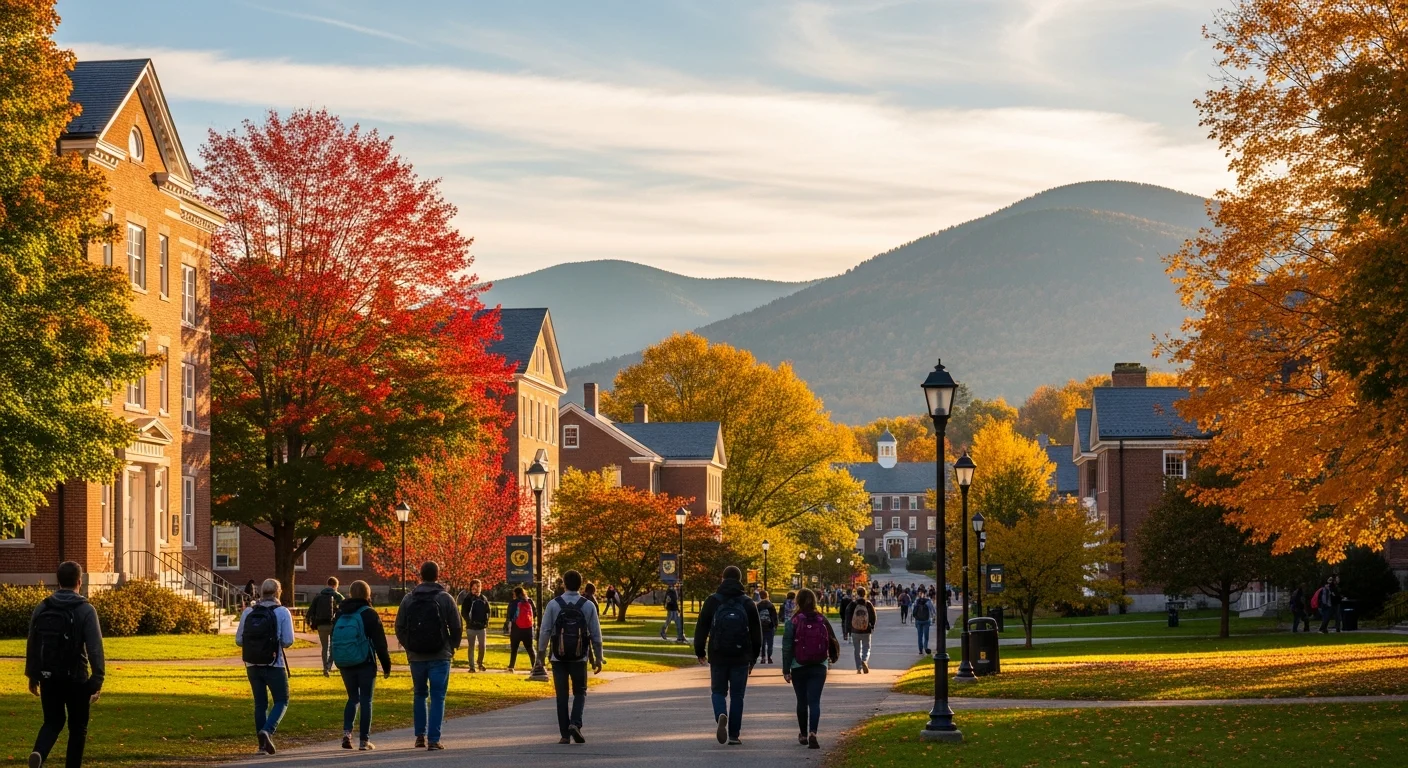
Landmark College — Putney, VT

Hakia Insight: Landmark College's game development degrees are specifically designed for students with ADHD and learning differences, meaning the curriculum architecture itself—pacing, feedback loops, mentorship intensity—is built around neurodivergent learning patterns rather than retrofitted accessibility.

At the bachelor's level, landmark College does not operate a dedicated game development degree program. The college specializes in supporting students with learning differences and ADHD through individualized instruction and comprehensive academic accommodations; its offerings focus on foundational liberal arts, STEM, and career preparation rather than specialized technical degree programs.

Programs Offered
  • Bachelor of Science in Game Development — 4 years, on-campus
  • Bachelor of Arts in Game Development — 4 years, online
Career Outcomes

Top Employers: Stanley Black & Decker, C&S Wholesale, JPMorgan Chase, EY, Dell, Chroma Technologies, AT&T.

Location Advantages:

Norwich University — Northfield, VT

Key Distinction: No information about game development program distinction was found in the provided content.

Hakia Insight: Norwich University's game development program sits within its School of Computing, positioning it to leverage military heritage in simulation and serious games—a niche where defense and training contracts fund innovation most other undergraduate programs can't access.

At the bachelor's level, the provided content does not contain specific information about a game development program at Norwich University. Instead, the content covers Norwich University's School of Criminology and Criminal Justice, cybersecurity programs, and military writers' symposium. Norwich University appears to be a military-oriented institution founded as one of America's premier leadership laboratories. The university offers both on-campus and online programs, with approximately 2,300 undergraduates and a 16:1 student-to-faculty ratio. Students can earn up to $30,000 in merit aid. The university has significant cybersecurity expertise, being designated as a National Center of Academic Excellence in Cybersecurity Cyber Defense since 2001, with over $90 million in federal funding for cyber programs. The School of Criminology and Criminal Justice is noted as the most popular major at Norwich, offering hands-on learning through police and court observation, field trips, and simulations. However, no specific information about game development programs, faculty, labs, or curriculum was found in the provided content.

Programs Offered
  • Bachelor of Science in Game Development — 4 years, on-campus
  • Bachelor of Arts in Game Development — 4 years, online

Location Advantages:
Vermont State University — Randolph, VT

Key Distinction: Vermont State University emphasizes hands-on experiential learning with unique facilities like the 3D Technology Summer Institute and Advanced Manufacturing Center, though no specific game development program was identified.

Hakia Insight: Vermont State's Advanced Manufacturing Center and Castleton Innovation Lab create unusual infrastructure for game dev students: access to 3D prototyping, real manufacturing workflows, and cross-disciplinary maker culture that most game programs treat as electives.

At the bachelor's level, vermont State University does not appear to offer a dedicated game development program based on the available content. The university was accredited by the New England Commission of Higher Education on July 1, 2023, and offers 105+ academic programs across campuses in Castleton, Johnson, Lyndon, Randolph Center, and Williston. The School of Science, Technology, Engineering & Math houses related technical programs including Software Engineering (both A.S. and B.S.), Information Technology, Data Science & Applied Statistics, and Computer Information Systems. The university maintains a 1:14 faculty-student ratio and provides more than 80% of students with financial aid. Vermont State emphasizes hands-on experiential learning with facilities including TV studio workstations, renewable energy labs, and solar training roofs. The 3D Technology Summer Institute at the Randolph campus offers high school students intensive training in 3D imaging, 3D printing, and 3D modeling technologies, utilizing the Advanced Manufacturing Center and Castleton Innovation Lab. Students can earn up to 9 college credits and a certificate in 3D Technology through this residential program. The university's graduates work as software engineers, data scientists, and in various technology roles across different industries.

Programs Offered
  • Bachelor of Science in Game Development — 4 years, on-campus
  • Bachelor of Arts in Game Development — 4 years, online
Research Labs and Institutes
  • Advanced Manufacturing Center
  • Castleton Innovation Lab
  • Renewable Energy Lab
Accreditations and Certifications
  • New England Commission of Higher Education

Location Advantages: Campuses across Vermont's Green MountainsLearning sites across the stateCross-campus collaborations

Saint Michael's College — Colchester, VT

Hakia Insight: Saint Michael's College positions game development within a Catholic liberal arts framework, meaning its curriculum likely integrates ethical game design and narrative philosophy earlier than secular counterparts—a deliberate pedagogical difference, not a limitation.

Programs Offered
  • Bachelor of Science in Game Development — 4 years, on-campus
  • Bachelor of Arts in Game Development — 4 years, online

Location Advantages:

Best Master's Game Development Degree Programs in Vermont

University of Vermont — Burlington, VT

Key Distinction: UVM's game development activities are primarily student-driven through clubs and supported by interdisciplinary open-source initiatives rather than through a formal academic program.

Hakia Insight: UVM's master's program operates bottom-up through the Game Development Club and Center for Multimedia Development rather than as a formal department, creating unusual flexibility for students to co-design their research agenda with faculty like Jonathan Ferguson rather than follow a fixed track.

At the master's level, based on the available content, the University of Vermont does not appear to have a dedicated game development academic program or department. However, there is a Game Development Club open to students from any major interested in developing computer games. The club is led by President sgusick@uvm.edu and advised by Faculty Advisor Daniel Hathaway (Daniel.Hathaway@uvm.edu). Game development activities at UVM appear to be supported through the CS Crew, a computer science student organization that provides a community for like-minded students and holds meetings on Wednesdays at 5 pm in Innovation E327. Additionally, the Vermont Research Open Source Program Office (VERSO) offers programs like the Open Research Community Accelerator (ORCA) that could support game development projects through open-source methodologies. The Center for Multimedia Development in Howe Library provides technical resources including Alienware PCs capable of intensive processing and gaming, specialized software including Adobe Creative Suite, 3D modeling applications, virtual reality services, and 3D printing facilities. Faculty with game development expertise includes Professor Jonathan Ferguson at nearby Champlain College, who has over 27 years of technology experience spanning game development, cybersecurity, and software development, and maintains particular interests in game technology, game history, and game preservation.

Programs Offered
  • Master of Science in Game Development — 1-2 years, on-campus
  • Master of Arts in Game Development — 1-2 years, online
Research Labs and Institutes
  • Center for Multimedia Development
Notable Faculty
  • Daniel Hathaway — Game Development Club Faculty Advisor
  • Jonathan Ferguson — Game Design, Game Production, and Game Development

Location Advantages:

Best Doctoral Game Development Degree Programs in Vermont

University of Vermont — Burlington, VT

Key Distinction: UVM's game development activities are primarily student-driven through clubs and supported by interdisciplinary open-source initiatives rather than through a formal academic program.

Hakia Insight: UVM's doctoral pathway in game development is built on student-driven open-source initiatives and the Center for Multimedia Development, meaning PhD candidates essentially become lab founders rather than following a standardized dissertation model.

At the doctoral level, based on the available content, the University of Vermont does not appear to have a dedicated game development academic program or department. However, there is a Game Development Club open to students from any major interested in developing computer games. The club is led by President sgusick@uvm.edu and advised by Faculty Advisor Daniel Hathaway (Daniel.Hathaway@uvm.edu). Game development activities at UVM appear to be supported through the CS Crew, a computer science student organization that provides a community for like-minded students and holds meetings on Wednesdays at 5 pm in Innovation E327. Additionally, the Vermont Research Open Source Program Office (VERSO) offers programs like the Open Research Community Accelerator (ORCA) that could support game development projects through open-source methodologies. The Center for Multimedia Development in Howe Library provides technical resources including Alienware PCs capable of intensive processing and gaming, specialized software including Adobe Creative Suite, 3D modeling applications, virtual reality services, and 3D printing facilities. Faculty with game development expertise includes Professor Jonathan Ferguson at nearby Champlain College, who has over 27 years of technology experience spanning game development, cybersecurity, and software development, and maintains particular interests in game technology, game history, and game preservation.

Programs Offered
  • Doctor of Philosophy in Game Development — 4-6 years, on-campus
  • Doctor of Science in Game Development — 4-6 years, online
Research Labs and Institutes
  • Center for Multimedia Development
Notable Faculty
  • Daniel Hathaway — Game Development Club Faculty Advisor
  • Jonathan Ferguson — Game Design, Game Production, and Game Development

Location Advantages: