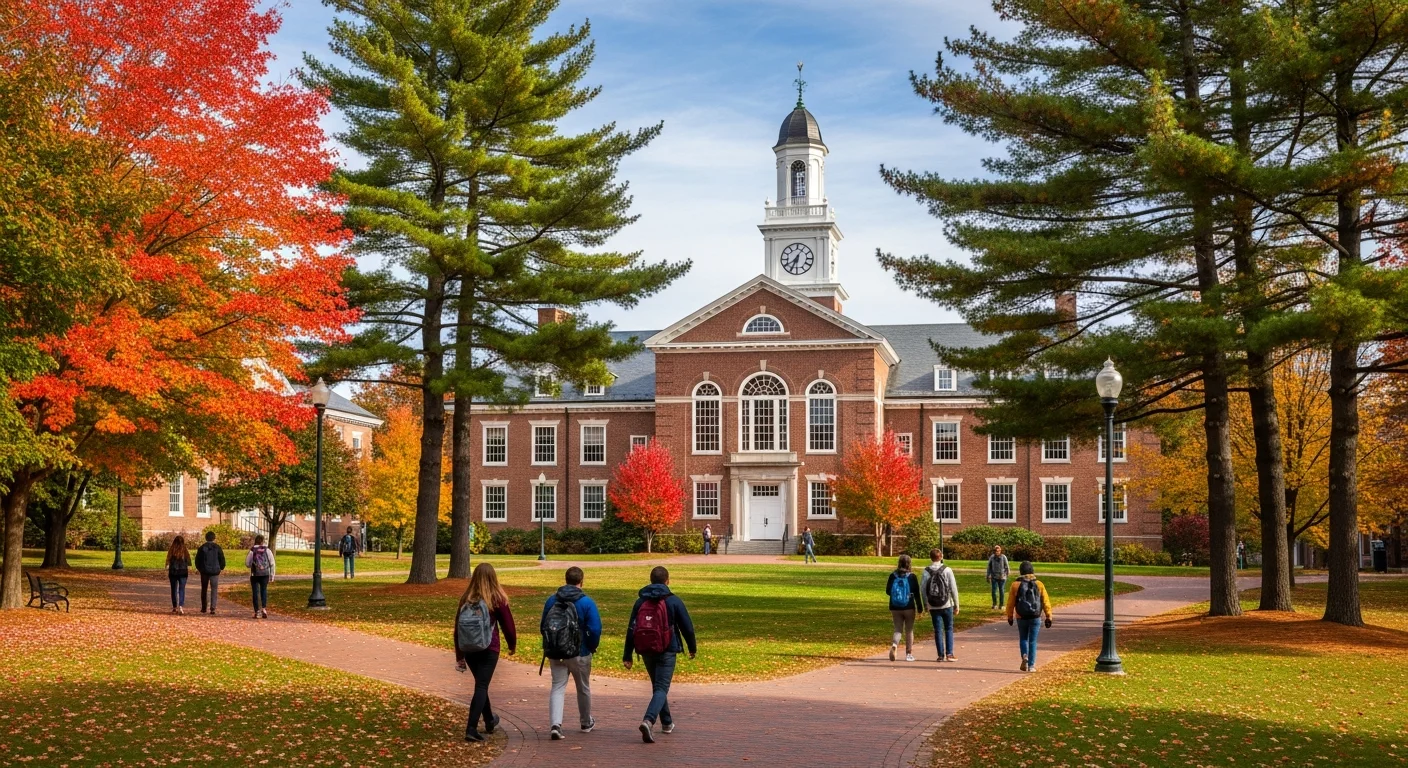
University campus in Maine
Updated January 2026

Best Data Analytics Degree Programs in Maine — 2026 Rankings

Compare the top data analytics colleges in Maine. 4 accredited data analytics schools ranked by graduation rate, career outcomes, and value—from University of Maine to Colby College.

#1 ProgramColby College
Avg Salary$94,320
Tuition From$12,000/yr
Job Growth+22%

Key Takeaways

Best data analytics degree programs: Colby College, Husson,

Ranked by graduation rates, program outcomes, and institutional quality

IPEDS 2023

Tuition ranges from $8,316 to $63,790/year

U of Maine offers the most affordable option at $12,000/yr

IPEDS 2023

Data Analytics degree programs available: 2 master's in Maine

From community college pathways to advanced research degrees

IPEDS 2023

Major employers: IDEXX, WEX, Tyler Technologies, Covetrus

Tech hubs in Portland and Bangor

Hakia Research 2026

Data Analytics degree programs near 25+ cities across Maine

Search by city to find programs within 200 miles of your location

IPEDS 2023

Updated February 2026

On This Page
$94,320
Are Data Analytics Degree Programs in Maine Worth It?
Yes. The best data analytics degree programs in Maine deliver strong ROI—graduates earn $94,320 median salary with +22% job growth through 2032. In-state tuition averages $26,328/year.

Source: BLS OEWS May 2024

Best Data Analytics Bachelor's Programs in Maine, 2026

2
Programs
$94,320
Median Salary
$42,497/yr
Avg Tuition
91%
Avg Grad Rate

Rankings based on program completions, graduation rates, selectivity, and career outcomes. See our methodology

Program Landscape

Maine ranks among the nation's top destinations for data analytics education, with 2 accredited bachelor's degree programs across 0 public and 2 private institutions. The highest-ranked programs are Colby College, Husson, recognized for academic excellence, research opportunities, and strong industry connections.

Career Outcomes

Graduates from Maine data analytics programs earn a median salary of $80,172—18% below the national average. The state's robust technology sector, anchored by the Portland, Bangor, Augusta metropolitan areas, provides abundant internship and employment opportunities with companies including IDEXX, WEX, Tyler Technologies.

Costs & Value

Tuition ranges from $21,204 to $63,790 annually, with an average of $42,497/yr. Top programs maintain graduation rates above 91%, with the highest reaching 91%. Many programs hold ABET accreditation, the gold standard for computing education, ensuring curriculum meets rigorous industry standards.

Curriculum & Specializations

Students can choose from specializations including software engineering, cybersecurity, artificial intelligence, data science, and systems architecture. Strong industry partnerships provide access to co-op programs, capstone projects with real companies, and direct recruiting pipelines to Maine's leading technology employers. For students seeking data analytics degrees in Maine, these top-ranked data analytics schools offer the strongest combination of academic rigor and career preparation.

Earn your bachelor's in Data Analytics

(Sponsored)

Loading programs...

🥇

Colby College

Private
Waterville, ME
$63,790
Tuition/yr
91%
Grad Rate
62.7
Score
Website
🥈

Husson University

Private
Bangor, ME
$21,204
Tuition/yr
$684
Per Credit
30.9
Score
Website

Best Data Analytics Master's Programs in Maine, 2026

2
Programs
$94,320
Median Salary
$10,158/yr
Avg Tuition

Rankings based on program completions, graduation rates, selectivity, and career outcomes. See our methodology

Program Landscape

Maine offers 2 master's degree programs in data analytics, designed for professionals seeking to advance into senior engineering, technical leadership, and specialized roles. The top programs—U of Maine, U of Southern Maine—combine advanced technical training with research opportunities and leadership development.

Career Outcomes

Master's graduates in Maine earn a median salary of $94,320, approximately 20-30% higher than bachelor's degree holders. The concentration of technology companies in Portland, Bangor, Augusta creates strong demand for graduate-level talent, with IDEXX, WEX, Tyler Technologies actively recruiting from these programs.

Costs & Value

Program formats include traditional full-time study (typically 2 years), part-time options for working professionals (2-3 years), and accelerated tracks. Tuition averages $10,158/yr, with many employers offering tuition reimbursement for graduate education. Some programs offer thesis and non-thesis tracks, allowing students to focus on research or professional development based on their career goals.

Curriculum & Specializations

Curriculum covers advanced topics including machine learning, distributed systems, software architecture, and technical management. Many programs include practicum experiences, industry capstone projects, or consulting engagements that provide real-world application of advanced concepts. Among Maine's data analytics schools at the graduate level, these programs stand out for both academic quality and career outcomes.

Advance your career with a Data Analytics master's degree

(Sponsored)

Loading programs...

🥇

University of Maine

PublicNSA CAE
Orono, ME
$12,000
Tuition/yr
$400
Per Credit
64.3
Score
Website
🥈

University of Southern Maine

Public
Portland, ME
$8,316
Tuition/yr
$297
Per Credit
34.9
Score
Website

Complete Data Analytics Degree Program Rankings in Maine

Best Bachelor's Data Analytics Degree Programs in Maine

### Program Landscape Maine ranks among the nation's top destinations for data analytics education, with **2 accredited** bachelor's degree programs across **0 public** and **2 private** institutions. The highest-ranked programs are **Colby College**, **Husson**, recognized for academic excellence, research opportunities, and strong industry connections. ### Career Outcomes Graduates from Maine data analytics programs earn a median salary of **$80,172**—18% below the national average. The state's robust technology sector, anchored by the Portland, Bangor, Augusta metropolitan areas, provides abundant internship and employment opportunities with companies including IDEXX, WEX, Tyler Technologies. ### Costs & Value Tuition ranges from **$21,204** to **$63,790** annually, with an average of **$42,497/yr**. Top programs maintain graduation rates above **91%**, with the highest reaching **91%**. Many programs hold ABET accreditation, the gold standard for computing education, ensuring curriculum meets rigorous industry standards. ### Curriculum & Specializations Students can choose from specializations including software engineering, cybersecurity, artificial intelligence, data science, and systems architecture. Strong industry partnerships provide access to co-op programs, capstone projects with real companies, and direct recruiting pipelines to Maine's leading technology employers. For students seeking data analytics degrees in Maine, these top-ranked data analytics schools offer the strongest combination of academic rigor and career preparation.

  1. #1. Colby College

    Hakia ranks Colby College as the #1 bachelor's in data analytics degree program in Maine. This private institution in Waterville, ME has annual tuition of $63,790 and a 91% graduation rate. Ranking score: 62.7.

  2. #2. Husson University

    Hakia ranks Husson University as the #2 bachelor's in data analytics degree program in Maine. This private institution in Bangor, ME has annual tuition of $21,204 ($684/credit). Ranking score: 30.9.

Best Master's Data Analytics Degree Programs in Maine

### Program Landscape Maine offers **2** master's degree programs in data analytics, designed for professionals seeking to advance into senior engineering, technical leadership, and specialized roles. The top programs—**U of Maine**, **U of Southern Maine**—combine advanced technical training with research opportunities and leadership development. ### Career Outcomes Master's graduates in Maine earn a median salary of **$94,320**, approximately **20-30% higher** than bachelor's degree holders. The concentration of technology companies in Portland, Bangor, Augusta creates strong demand for graduate-level talent, with IDEXX, WEX, Tyler Technologies actively recruiting from these programs. ### Costs & Value Program formats include traditional full-time study (typically 2 years), part-time options for working professionals (2-3 years), and accelerated tracks. Tuition averages **$10,158/yr**, with many employers offering tuition reimbursement for graduate education. Some programs offer thesis and non-thesis tracks, allowing students to focus on research or professional development based on their career goals. ### Curriculum & Specializations Curriculum covers advanced topics including machine learning, distributed systems, software architecture, and technical management. Many programs include practicum experiences, industry capstone projects, or consulting engagements that provide real-world application of advanced concepts. Among Maine's data analytics schools at the graduate level, these programs stand out for both academic quality and career outcomes.

  1. #1. University of Maine

    Hakia ranks University of Maine as the #1 master's in data analytics degree program in Maine. This public institution in Orono, ME has annual tuition of $12,000 ($400/credit). Ranking score: 64.3. NSA/DHS Center of Academic Excellence designation: CAE-CDE.

    Watch: Welcome to UMaine | University of Maine Virtual Tour

  2. #2. University of Southern Maine

    Hakia ranks University of Southern Maine as the #2 master's in data analytics degree program in Maine. This public institution in Portland, ME has annual tuition of $8,316 ($297/credit). Ranking score: 34.9.

Data Analytics Degree Costs & Tuition in Maine

MetricValue
Average in-state tuition$26,328/year
Average out-of-state tuition$65,820/year
Community college tuition$6,582/year
4-year savings for residents$157,968
2+2 transfer pathway savings$39,492

Source: IPEDS 2023

Financial Aid & Scholarships for Data Analytics Students in Maine

State Aid Programs

Maine residents pursuing data analytics degrees have access to several financial aid resources designed to make higher education more affordable. The primary state-level aid program is the Maine State Grant, which provides need-based grants up to $1,500 per year for eligible Maine residents (Maine State Grant). This grant complements federal aid programs and can significantly reduce out-of-pocket costs for undergraduate and graduate students alike. To apply for all federal and state aid, students must complete the Free Application for Federal Student Aid (FAFSA) through (Federal Student Aid), which determines eligibility for grants, loans, and work-study opportunities.

Key Programs & Amounts

Beyond state and federal aid, many Maine institutions offering data analytics programs provide institutional scholarships and financial packages. Students should explore options at schools like the University of Maine and University of Southern Maine, which offer competitive tuition rates and may have program-specific scholarships for data analytics majors. The University of Maine System institutions often provide additional funding opportunities for in-state students. Prospective students are encouraged to contact financial aid offices directly and review the (College Scorecard) for detailed aid information by institution. Additionally, exploring related programs in Data Science in Maine or Information Systems in Maine may reveal additional funding pathways within the state's higher education ecosystem.

Data Analytics Degree ROI Calculator — Maine

Use our interactive ROI calculator to estimate your return on investment for a data analytics degree in Maine. Enter your expected tuition costs, financial aid, and career goals to see projected payback periods and lifetime earnings. The calculator uses current salary data from BLS and tuition data from IPEDS to provide accurate estimates.

Data Analytics Degree ROI Calculator
Estimate your return on investment for a data analytics degree
$

Leave blank to use average cost for selected program type

20 years
10 years20 years30 years
20-Year ROI

+907%

Net gain divided by total investment. ROI above 200% is considered excellent for education investments.

Net Gain

$1,677,254

Your additional lifetime earnings with this degree vs. working without one, minus the total investment.

Break-Even

5 years

Years until your cumulative earnings exceed total investment. Shorter programs often break even faster due to lower opportunity cost.

COL-Adjusted Salary

$133,333

Your starting salary adjusted for local cost of living. This shows real purchasing power compared to a $100K national baseline.

Why does break-even change with program type? Your "total investment" includes both tuition AND opportunity cost (foregone earnings while in school). A 4-year full-time public university (in-state) means 4 years of not earning a salary ($140,000 in opportunity cost). Shorter full-time programs may have higher tuition but lower total investment because you return to the workforce sooner.

Detailed Breakdown
How we calculate your degree ROI using real salary data
Total Investment$185,000

Tuition plus opportunity cost (earnings you miss while in school)

Program Cost (Tuition)$45,000

Direct cost of the degree program

Opportunity Cost$140,000

4 years × $35K/year foregone salary while studying full-time

20-Year Earnings (with degree)$2,712,662

Projected career earnings starting after graduation, with salary growth

20-Year Earnings (without degree)$850,408

What you'd earn working at $35K/year with 2% annual growth

Starting Salary (Austin, TX)$140,000

Median salary for this role in your selected location (BLS 2024)

Annualized Return4.9%

Your investment's compound annual growth rate (similar to stock market returns)

Data sources: BLS OEWS May 2024, IPEDS 2023. Calculations use median salaries, 3% discount rate, and assume salary growth declines from 6% to 2% over career. Individual results will vary. | Powered by Hakia.com

Data Analytics Salaries by Metro Area

Median annual salary in Maine metro areas

Hakia.com
View data table
Categoryvalue
Portland$104K
Bangor$99K
Augusta$94K

Source: BLS OEWS May 2024

Hakia.com

Top Employers Hiring Data Analytics Graduates in Maine

Find data analytics jobs in Maine. These major employers across Maine metro areas are actively hiring data analytics degree holders. Click employer names to view current job openings.

Data Analytics Jobs in Portland

ME
WEX Inc.
fintech
IDEXX Laboratories
biotech
Tyler Technologies
govtech
MaineHealth
healthcare

Data Analytics Jobs in Bangor

ME
University of Maine
education
Jackson Laboratory
research

Transfer Pathways for Data Analytics Degrees in Maine

State Transfer System

Maine's community college system provides an affordable entry point into data analytics education, with 8 two-year institutions offering pathways to bachelor's and master's degrees. The state's structured transfer system, (Maine Transfer Pathways), facilitates seamless credit transfer from community colleges to four-year universities, ensuring that coursework completed at two-year institutions counts fully toward bachelor's degrees. This system is particularly valuable for students seeking to minimize costs while earning credentials. Community college tuition is significantly lower than four-year institution rates. Students can complete general education requirements and introductory analytics coursework at community colleges, then transfer to universities like University of Maine or University of Southern Maine to complete specialized analytics coursework and graduate-level study.

How Transfers Work

Articulation agreements between Maine's community colleges and universities streamline the transfer process, with explicit agreements detailing which credits transfer and how they apply toward degree requirements. The University of Maine System, through (Maine Transfer Pathways), coordinates these pathways to eliminate transfer confusion and credit loss. Students pursuing analytics should work with community college advisors to select transfer-friendly courses and confirm their pathway aligns with their target university's requirements. Additionally, Maine residents may qualify for the (Maine State Grant), a need-based financial aid program offering up to $1,500 annually. For those exploring four-year options directly, review rankings on the (National Best Bachelor's Programs) and (Most Affordable Programs) pages. Complementary related degrees available through transfer pathways include Data Science in Maine and Information Systems in Maine.

Why Pursue a Data Analytics Degree in Maine?

Industry & Workforce

Maine's data analytics education landscape offers compelling opportunities for students seeking careers in a rapidly growing field. According to (IPEDS), the state hosts 5 institutions offering data analytics programs, with 2 institutions providing master's-level education that produced 180 completions in 2023. The University of Maine leads the state, accounting for 176 of those completions, establishing itself as a premier destination for advanced analytics training. Whether you're pursuing a bachelor's or master's degree, Maine's programs combine accessible pricing with quality instruction from established universities.

Salary Outlook

Maine's major employment centers create strong career pathways for data analytics graduates. Cities including Portland, Lewiston, Bangor, and South Portland host major employers such as MaineHealth, Hannaford, L.L.Bean, and IDEXX Laboratories, all organizations that depend heavily on data-driven decision-making. The state's average public in-state tuition of $9,067 for four-year institutions makes Maine programs significantly more affordable than many national alternatives. Top-ranked schools like University of Maine and University of Southern Maine offer programs at $12,000 and $8,316 respectively, with the latter ranking among the most affordable data analytics programs nationally. For detailed salary and employment data in Maine's tech sector, consult the (BLS State Data). Students should also explore related fields by reviewing Data Science in Maine and Machine Learning in Maine to understand the broader analytics ecosystem.

4 Programs
Data Analytics Program Availability in Maine
Maine offers 4 accredited data analytics programs across public universities, private colleges, and community colleges. Top tech hubs include Portland, Bangor, Augusta.

Source: IPEDS 2023

Data Analytics Job Market & Salary Data in Maine

Employment Outlook

Maine's data analytics job market is experiencing steady growth, driven by increasing demand across healthcare, retail, and technology sectors. According to the Bureau of Labor Statistics, Maine employers are actively seeking skilled data professionals to support business intelligence, reporting, and strategic decision-making initiatives. The state's major metropolitan areas, particularly the Portland-South Portland and Bangor regions, serve as employment hubs where data analytics positions concentrate. Maine's relatively lower cost of living compared to northeastern competitors makes the state an attractive location for both employers and professionals seeking career advancement without the expense burden of larger tech centers.

Salaries by Metro

The University of Maine System is a key pipeline for data analytics talent, with the University of Maine alone producing 176 completions at the master's level according to IPEDS data. This substantial graduate output reflects employer demand and institutional investment in workforce development. Career opportunities span multiple sectors, from established healthcare networks to innovative retail operations. Prospective graduates should explore related fields to expand career pathways, including Data Science in Maine, Information Systems in Maine, and Database Management in Maine, which often share employers and skill requirements with data analytics positions.

Entry-Level (0-2 yrs)

New graduates and career changers

Senior (8+ yrs)

Technical leads and architects

Median Salary in Maine$61,308$136,764
Typical RolesJunior Developer, AnalystStaff Engineer, Architect
Remote Work AccessLimitedCommon
Degree ExpectationBachelor's sufficientMaster's preferred

Online vs On-Campus Data Analytics Programs in Maine

Online Programs

0 available in Maine

On-Campus Programs

Traditional classroom experience

Typical Tuition$23,695/yr$26,328/yr
Schedule FlexibilitySelf-paced or asyncFixed schedule
NetworkingVirtual cohortsIn-person, career fairs
Best ForWorking professionalsTraditional students
Completion Time2-4 years (flexible)4 years (standard)

Best Data Analytics Degree Programs in Other States

StateTotal ProgramsMedian TuitionTop Program
Best Data Analytics Degree Programs in California19$11,834University of Southern California
Best Data Analytics Degree Programs in Texas16$30,694The University of Texas at Dallas
Best Data Analytics Degree Programs in New York17$45,450New York University
Best Data Analytics Degree Programs in Florida13$4,640University of Florida
Best Data Analytics Degree Programs in Washington8$11,524University of Washington-Seattle Campus
Best Data Analytics Degree Programs in Massachusetts12$59,750Bridgewater State University
Best Data Analytics Degree Programs in Illinois21$36,950University of Illinois Urbana-Champaign
Best Data Analytics Degree Programs in Georgia4$33,080Emory University

Data Analytics Degree Programs in Maine: FAQ

How We Rank Data Analytics Degree Programs

Based on 4 programs from IPEDS 2023

We analyzed 4 data analytics degree programs in Maine using IPEDS 2023 data and BLS labor statistics. Our rankings are produced algorithmically without editorial intervention, ensuring objectivity and reproducibility.

Ranking Factors

Program Completions35%

Number of graduates per year in this specific field (CIP code). Larger programs indicate established departments with more resources, course offerings, and career services. Measured from IPEDS Completions data.

Graduation Rate25%

Percentage of students completing their degree within 150% of expected time (6 years for bachelor's, 3 years for associate's). Higher rates indicate better student support and program quality. Source: IPEDS Graduation Rates survey.

Selectivity20%

Admission rate (lower = more selective). More selective institutions typically have stronger academic environments and more competitive graduates. For open-admission institutions, we use graduation rates as a proxy for quality.

Career Outcomes20%

Regional salary data for data analytics graduates. Maine median salary of $94,320 is factored into institutional scores based on local job market strength.

Ranking Categories

Best Programs

Overall quality using all four factors weighted as shown above. Ideal for students seeking the strongest academic experience.

Online Programs

Same methodology, filtered to schools with fully online or hybrid options (IPEDS Distance Education data). Some schools may have lower graduation rates due to different student demographics.

Most Affordable

Ranked primarily by net cost (tuition minus average institutional aid), with quality factors as tiebreakers. Best for cost-conscious students.

Data Sources

  • IPEDS 2023Institutional characteristics, completions, graduation rates
  • BLS OEWS 2024State and metro salary data by occupation
  • CIP Code MappingPrograms identified using Classification of Instructional Programs codes

Data Sources

Institutional characteristics, completions, graduation rates

Maine salary and employment data

Official University Websites

Program details and admissions information

Last Updated: February 22, 2026. Rankings based on IPEDS 2023 data. Salary data from BLS OEWS May 2024.

Was this ranking helpful for your college search?
Taylor Rupe

Taylor Rupe

Co-founder & Editor (B.S. Computer Science, Oregon State • B.A. Psychology, University of Washington)

Taylor combines technical expertise in computer science with a deep understanding of human behavior and learning. His dual background drives Hakia's mission: leveraging technology to build authoritative educational resources that help people make better decisions about their academic and career paths.

Data Analytics Degree Programs in Maine — Detailed School Profiles

Best Bachelor's Data Analytics Degree Programs in Maine

Colby College — Waterville, ME

Key Distinction: Colby College situates data analytics within a liberal arts framework, producing graduates who combine technical skill with domain expertise, ethical reasoning, and the ability to drive decisions across business, policy, and scientific domains.

Hakia Insight: Colby College's liberal arts approach to analytics—paired with Maine's position as a climate and environmental data hotbed—produces graduates who can lead analytics projects in sustainability, conservation, and climate policy, sectors where generalist analytical thinking outcompetes narrow technical training.

At the bachelor's level, colby College's approach to data analytics is rooted in liberal arts philosophy—students develop analytical skills within a broader intellectual context that emphasizes ethical reasoning, domain expertise, and cross-disciplinary thinking. Rather than a siloed technical program, analytics education at Colby integrates quantitative methods across economics, environmental science, government, and psychology, meaning students build domain knowledge alongside statistical competency. The college's location in Maine and its strong environmental science reputation create natural research opportunities in climate data analysis, ecological modeling, and environmental policy analytics—areas where Colby students have published and presented at conferences. Faculty in mathematics and computer science guide students through machine learning, statistical inference, and data visualization, but always anchored to real problems: analyzing public health datasets, modeling economic trends, or interpreting environmental monitoring systems. Colby's emphasis on independent research and senior capstone projects means analytics students don't simply learn tools—they lead original investigations that combine data work with substantive inquiry. The residential, close-knit community fosters mentorship between faculty and students, and Colby's extensive alumni network spans technology, finance, consulting, and non-profit sectors, providing internship and career pathways beyond the immediate Northeast. Graduates leave with not just technical portfolios but demonstrated ability to ask good questions of data and communicate findings to diverse audiences.

Programs Offered
  • Bachelor of Science in Data Analytics — 4 years, on-campus
  • Bachelor of Arts in Data Analytics — 4 years, online

Location Advantages: Maine location enables environmental data analysis and climate research partnershipsProximity to Northeast academic and financial services hubs

Husson University — Bangor, ME

Hakia Insight: Husson University's 96% employment rate within one year reflects not just job placement but mandatory internships and capstone projects that force students into real-world problem-solving before graduation, compressing the typical six-month post-degree learning curve into the curriculum itself.

At the bachelor's level, the Data Analytics program offers hands-on experience through required internships and capstone projects, with 96% of graduates employed or in graduate school within one year. Students gain practical skills in data mining, classification, prediction, and data visualization while working with partner institutions including businesses, research labs, nonprofits, and governmental agencies.

Programs Offered
  • Bachelor of Science in Data Analytics — 4 years, on-campus
  • Bachelor of Arts in Data Analytics — 4 years, online

Location Advantages:

Best Master's Data Analytics Degree Programs in Maine

University of Maine — Orono, ME

Key Distinction: Thesis vs. non-thesis track options available. Many courses offered online (marked with asterisk in curriculum)

Hakia Insight: University of Maine's Master of Data Science and Engineering offers thesis vs. coursework tracks alongside online delivery, but its real advantage is the Maine Agricultural and Forest Experiment Station—giving students access to decades of ecological datasets and U.S. Forest Service partnerships that create genuinely novel research opportunities.

The Master of Science in Data Science and Engineering at University of Maine offers flexible pathways for working professionals through both thesis and coursework-focused tracks. The program features five thematic areas (Data Collection, Representation, Analytics, Visualization, and Security) plus five domain specializations (Spatial Informatics, Bioinformatics, Business, Social/Behavioral Data Science, and Engineering Analytics). Many courses are available online and marked as suitable for part-time study. Students complete foundation courses in statistics, programming, and systems, followed by a required practicum and theme/domain coursework. The thesis option includes research methodology courses (SIE 501, SIE 502, INT 601). Graduate assistantships are available through the College of Engineering and Computing. The program emphasizes real-world applications through case study-based learning and domain specialization options aligned with industry needs. Specific salary advancement data and employer partnership details are not provided in the curriculum materials.

Programs Offered
  • Master of Science in Data Science and Engineering — 1-2 years, on-campus. MS
Research Labs and Institutes
  • Maine Agricultural and Forest Experiment Station
Industry Partners
  • U.S. Forest Service (government)
  • National Center for Ecological Analysis and Synthesis (nonprofit)

Location Advantages: Access to U.S. Forest Service research and datasetsConnection to Maine's forest products and sustainable agriculture industriesProximity to environmental monitoring organizations

University of Southern Maine — Portland, ME

Key Distinction: Flexible blended and online delivery with day and evening class options for working professionals. Certificate credits (15 hours) apply toward master's degree, enabling accelerated pathway

Hakia Insight: University of Southern Maine's 15-credit certificate-to-degree pathway lets working professionals test the program's rigor and teaching quality before committing to a full master's, a rare de-risking structure that reduces financial exposure for career-changers uncertain about their fit for analytics.

The University of Southern Maine's Master's in Data Analytics is designed for working professionals seeking career advancement in data science. The program offers flexible blended and online delivery with both day and evening class options to accommodate full-time employment. Students gain advanced technical skills in data mining, statistics, machine learning, and database processing using industry-standard software (SAS, MATLAB, Minitab, Mathematica). The curriculum emphasizes practical, hands-on experience with real-world problem-solving. Graduate assistantships and employer tuition partnerships support affordability. Credits earned through the certificate program (15 credit hours) can be applied toward the master's degree, enabling accelerated completion. The program prepares professionals for rapidly growing regional and national demand for qualified data scientists, with strong outcomes in analytics, communication, and cross-functional team collaboration skills.

Programs Offered
  • Master of Science in Data Analytics — 1-2 years, on-campus. MS

Location Advantages: Access to Portland-area healthcare and financial services companiesProximity to government agencies in Maine's capital region