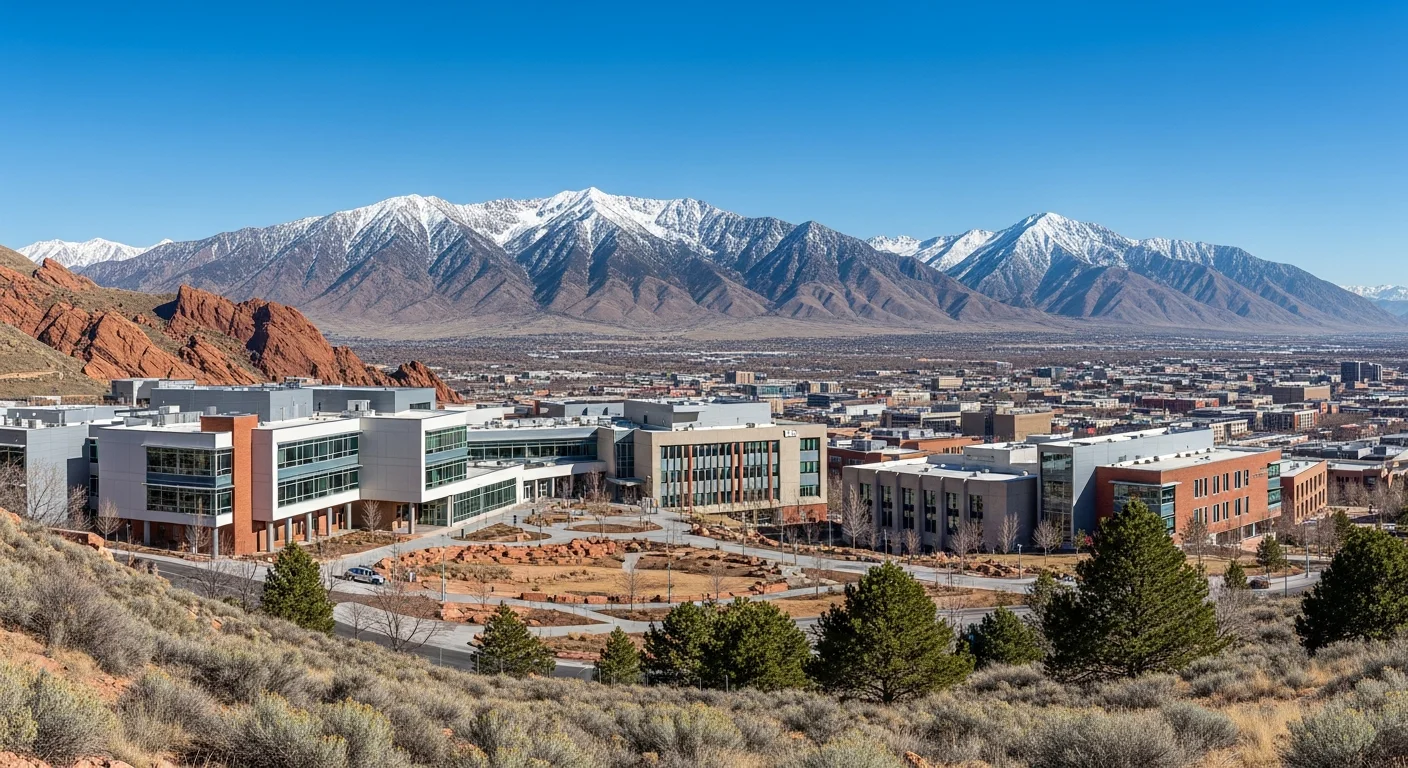
University campus in Utah
Updated January 2026

Best Cybersecurity Degree Programs in Utah — 2026 Rankings

Compare the top cybersecurity colleges in Utah. 8 accredited cybersecurity schools ranked by graduation rate, career outcomes, and value—from Utah Valley University to Western Governors University.

#1 ProgramWestern Governors
Avg Salary$108,000
Tuition From$5,614/yr
Job Growth+22%

Key Takeaways

Best cybersecurity degree programs: Western Governors, Utah Valley, Brigham Young

Ranked by graduation rates, program outcomes, and institutional quality

IPEDS 2023

Tuition ranges from $3,888 to $25,500/year

Utah Valley offers the most affordable option at $5,614/yr

IPEDS 2023

Cybersecurity degree programs available: 3 associate's, 4 master's in Utah

From community college pathways to advanced research degrees

IPEDS 2023

Utah community college transfer can save 40-60% on total degree costs

3 associate's programs provide transfer pathways to bachelor's degrees

Education Commission of the States

Major employers: Adobe, Qualtrics, Pluralsight, Domo

Tech hubs in Salt Lake City and Provo

Hakia Research 2026

Cybersecurity degree programs near 28+ cities across Utah

Search by city to find programs within 200 miles of your location

IPEDS 2023

Updated February 2026

On This Page
$108,000
Are Cybersecurity Degree Programs in Utah Worth It?
Yes. The best cybersecurity degree programs in Utah deliver strong ROI—graduates earn $108,000 median salary with +22% job growth through 2032. In-state tuition averages $8,446/year.

Source: BLS OEWS May 2024

Best Cybersecurity Bachelor's Programs in Utah, 2026

6
Programs
$108,000
Median Salary
$9,202/yr
Avg Tuition
88%
Avg Grad Rate

Rankings based on program completions, graduation rates, selectivity, and career outcomes. See our methodology

Program Landscape

Utah ranks among the nation's top destinations for cybersecurity education, with 6 accredited bachelor's degree programs across 2 public and 3 private institutions. The highest-ranked programs are Western Governors, Utah Valley, Brigham Young, recognized for academic excellence, research opportunities, and strong industry connections.

Career Outcomes

Graduates from Utah cybersecurity programs earn a median salary of $91,800—6% below the national average. The state's robust technology sector, anchored by the Salt Lake City, Provo, Lehi metropolitan areas, provides abundant internship and employment opportunities with companies including Adobe, Qualtrics, Pluralsight.

Costs & Value

Tuition ranges from $3,888 to $25,500 annually, with an average of $9,202/yr. Top programs maintain graduation rates above 88%, with the highest reaching 97%. Many programs hold ABET accreditation, the gold standard for computing education, ensuring curriculum meets rigorous industry standards.

Curriculum & Specializations

Students can choose from specializations including software engineering, cybersecurity, artificial intelligence, data science, and systems architecture. Strong industry partnerships provide access to co-op programs, capstone projects with real companies, and direct recruiting pipelines to Utah's leading technology employers. For students seeking cybersecurity degrees in Utah, these top-ranked cybersecurity schools offer the strongest combination of academic rigor and career preparation.

Earn your bachelor's in Cybersecurity

(Sponsored)

Loading programs...

🥇

Western Governors University

PrivateNSA CAE
Salt Lake City, UT
$7,710
Tuition/yr
75.9
Score
Website
🥈

Utah Valley University

Public
Orem, UT
$5,614
Tuition/yr
$234
Per Credit
92%
Grad Rate
52.1
Score
Website
🥉

Brigham Young University

PrivateNSA CAE
Provo, UT
$6,496
Tuition/yr
$342
Per Credit
91%
Grad Rate
49.1
Score
Website
#4

Ensign College

Private
Salt Lake City, UT
$3,888
Tuition/yr
$162
Per Credit
76%
Grad Rate
46.4
Score
Website
#5

Neumont College of Computer Science

For-Profit
Salt Lake City, UT
$25,500
Tuition/yr
$708
Per Credit
97%
Grad Rate
46.6
Score
Website

Best Cybersecurity Master's Programs in Utah, 2026

4
Programs
$108,000
Median Salary
$6,876/yr
Avg Tuition
83%
Avg Grad Rate

Rankings based on program completions, graduation rates, selectivity, and career outcomes. See our methodology

Program Landscape

Utah offers 4 master's degree programs in cybersecurity, designed for professionals seeking to advance into senior engineering, technical leadership, and specialized roles. The top programs—Western Governors, Utah Valley, Southern Utah—combine advanced technical training with research opportunities and leadership development.

Career Outcomes

Master's graduates in Utah earn a median salary of $108,000, approximately 20-30% higher than bachelor's degree holders. The concentration of technology companies in Salt Lake City, Provo, Lehi creates strong demand for graduate-level talent, with Adobe, Qualtrics, Pluralsight actively recruiting from these programs.

Costs & Value

Program formats include traditional full-time study (typically 2 years), part-time options for working professionals (2-3 years), and accelerated tracks. Tuition averages $6,876/yr, with many employers offering tuition reimbursement for graduate education. Some programs offer thesis and non-thesis tracks, allowing students to focus on research or professional development based on their career goals.

Curriculum & Specializations

Curriculum covers advanced topics including machine learning, distributed systems, software architecture, and technical management. Many programs include practicum experiences, industry capstone projects, or consulting engagements that provide real-world application of advanced concepts. Among Utah's cybersecurity schools at the graduate level, these programs stand out for both academic quality and career outcomes.

Advance your career with a Cybersecurity master's degree

(Sponsored)

Loading programs...

🥇

Western Governors University

PrivateNSA CAE
Salt Lake City, UT
$7,710
Tuition/yr
75.9
Score
Website
🥈

Utah Valley University

Public
Orem, UT
$5,614
Tuition/yr
$234
Per Credit
92%
Grad Rate
55.9
Score
Website
🥉

Southern Utah University

PublicNSA CAE
Cedar City, UT
$6,006
Tuition/yr
$282
Per Credit
86%
Grad Rate
44.8
Score
Website
#4

University of Utah

Public
Salt Lake City, UT
$8,175
Tuition/yr
$259
Per Credit
72%
Grad Rate
38.9
Score
Website

Best Cybersecurity Associate's Programs in Utah, 2026

3
Programs
$108,000
Median Salary
$4,561/yr
Avg Tuition
89%
Avg Grad Rate

Rankings based on program completions, graduation rates, selectivity, and career outcomes. See our methodology

Program Landscape

Utah offers 3 accredited associate's degree programs in cybersecurity, providing an affordable entry point into the technology field. The top-ranked programs include Utah Valley, Ensign College, Snow College, which combine rigorous technical curriculum with practical skills training.

Costs & Value

Community colleges in Utah offer these two-year programs at an average cost of $4,561/yr—significantly less than four-year university tuition. Students completing associate's degrees can pursue entry-level technical positions and transfer opportunities, with entry-level salaries averaging $59,400 in Utah.

Career Pathways

Many programs feature guaranteed transfer agreements with Utah's public universities, allowing students to complete their first two years at reduced cost before transferring to complete a bachelor's degree. The Salt Lake City, Provo, Lehi areas offer particularly strong job markets for associate's degree holders, with employers like Adobe, Qualtrics, Pluralsight hiring for technical support, junior development, and IT specialist positions.

Curriculum & Specializations

Programs typically include coursework in programming fundamentals, database management, networking basics, and software development. Among cybersecurity schools in Utah, these associate's programs offer the best value for students beginning their cybersecurity degrees in Utah.

Start your Cybersecurity career with an associate's degree

(Sponsored)

Loading programs...

🥇

Utah Valley University

Public
Orem, UT
$5,614
Tuition/yr
$234
Per Credit
92%
Grad Rate
51.0
Score
Website
🥈

Ensign College

Private
Salt Lake City, UT
$3,888
Tuition/yr
$162
Per Credit
76%
Grad Rate
46.1
Score
Website
🥉

Snow College

Public
Ephraim, UT
$4,180
Tuition/yr
$348
Per Credit
100%
Grad Rate
51.2
Score
Website

Complete Cybersecurity Degree Program Rankings in Utah

Best Associate's Cybersecurity Degree Programs in Utah

### Program Landscape Utah offers **3 accredited** associate's degree programs in cybersecurity, providing an affordable entry point into the technology field. The top-ranked programs include **Utah Valley**, **Ensign College**, **Snow College**, which combine rigorous technical curriculum with practical skills training. ### Costs & Value Community colleges in Utah offer these two-year programs at an average cost of **$4,561/yr**—significantly less than four-year university tuition. Students completing associate's degrees can pursue entry-level technical positions and transfer opportunities, with entry-level salaries averaging **$59,400** in Utah. ### Career Pathways Many programs feature guaranteed transfer agreements with Utah's public universities, allowing students to complete their first two years at reduced cost before transferring to complete a bachelor's degree. The Salt Lake City, Provo, Lehi areas offer particularly strong job markets for associate's degree holders, with employers like Adobe, Qualtrics, Pluralsight hiring for technical support, junior development, and IT specialist positions. ### Curriculum & Specializations Programs typically include coursework in programming fundamentals, database management, networking basics, and software development. Among cybersecurity schools in Utah, these associate's programs offer the best value for students beginning their cybersecurity degrees in Utah.

  1. #1. Utah Valley University

    Hakia ranks Utah Valley University as the #1 associate's in cybersecurity degree program in Utah. This public institution in Orem, UT has annual tuition of $5,614 ($234/credit) and a 92% graduation rate. Ranking score: 51.0.

  2. #2. Ensign College

    Hakia ranks Ensign College as the #2 associate's in cybersecurity degree program in Utah. This private institution in Salt Lake City, UT has annual tuition of $3,888 ($162/credit) and a 76% graduation rate. Ranking score: 46.1.

  3. #3. Snow College

    Hakia ranks Snow College as the #3 associate's in cybersecurity degree program in Utah. This public institution in Ephraim, UT has annual tuition of $4,180 ($348/credit) and a 100% graduation rate. Ranking score: 51.2.

Best Bachelor's Cybersecurity Degree Programs in Utah

### Program Landscape Utah ranks among the nation's top destinations for cybersecurity education, with **6 accredited** bachelor's degree programs across **2 public** and **3 private** institutions. The highest-ranked programs are **Western Governors**, **Utah Valley**, **Brigham Young**, recognized for academic excellence, research opportunities, and strong industry connections. ### Career Outcomes Graduates from Utah cybersecurity programs earn a median salary of **$91,800**—6% below the national average. The state's robust technology sector, anchored by the Salt Lake City, Provo, Lehi metropolitan areas, provides abundant internship and employment opportunities with companies including Adobe, Qualtrics, Pluralsight. ### Costs & Value Tuition ranges from **$3,888** to **$25,500** annually, with an average of **$9,202/yr**. Top programs maintain graduation rates above **88%**, with the highest reaching **97%**. Many programs hold ABET accreditation, the gold standard for computing education, ensuring curriculum meets rigorous industry standards. ### Curriculum & Specializations Students can choose from specializations including software engineering, cybersecurity, artificial intelligence, data science, and systems architecture. Strong industry partnerships provide access to co-op programs, capstone projects with real companies, and direct recruiting pipelines to Utah's leading technology employers. For students seeking cybersecurity degrees in Utah, these top-ranked cybersecurity schools offer the strongest combination of academic rigor and career preparation.

  1. #1. Western Governors University

    Hakia ranks Western Governors University as the #1 bachelor's in cybersecurity degree program in Utah. This private institution in Salt Lake City, UT has annual tuition of $7,710. Ranking score: 75.9. NSA/DHS Center of Academic Excellence designation: CAE-CDE.

    Watch: Welcome to WGU Admissions

  2. #2. Utah Valley University

    Hakia ranks Utah Valley University as the #2 bachelor's in cybersecurity degree program in Utah. This public institution in Orem, UT has annual tuition of $5,614 ($234/credit) and a 92% graduation rate. Ranking score: 52.1.

    Watch: Utah Valley University Campus Tour

  3. #3. Brigham Young University

    Hakia ranks Brigham Young University as the #3 bachelor's in cybersecurity degree program in Utah. This private institution in Provo, UT has annual tuition of $6,496 ($342/credit) and a 91% graduation rate. Ranking score: 49.1. NSA/DHS Center of Academic Excellence designation: CAE-CDE.

    Watch: Welcome to Brigham Young University

  4. #4. Ensign College

    Hakia ranks Ensign College as the #4 bachelor's in cybersecurity degree program in Utah. This private institution in Salt Lake City, UT has annual tuition of $3,888 ($162/credit) and a 76% graduation rate. Ranking score: 46.4.

  5. #5. Neumont College of Computer Science

    Hakia ranks Neumont College of Computer Science as the #5 bachelor's in cybersecurity degree program in Utah. This for-profit institution in Salt Lake City, UT has annual tuition of $25,500 ($708/credit) and a 97% graduation rate. Ranking score: 46.6.

  6. #6. Southern Utah University

    Hakia ranks Southern Utah University as the #6 bachelor's in cybersecurity degree program in Utah. This public institution in Cedar City, UT has annual tuition of $6,006 ($282/credit) and a 86% graduation rate. Ranking score: 42.6. NSA/DHS Center of Academic Excellence designation: CAE-CDE.

Best Master's Cybersecurity Degree Programs in Utah

### Program Landscape Utah offers **4** master's degree programs in cybersecurity, designed for professionals seeking to advance into senior engineering, technical leadership, and specialized roles. The top programs—**Western Governors**, **Utah Valley**, **Southern Utah**—combine advanced technical training with research opportunities and leadership development. ### Career Outcomes Master's graduates in Utah earn a median salary of **$108,000**, approximately **20-30% higher** than bachelor's degree holders. The concentration of technology companies in Salt Lake City, Provo, Lehi creates strong demand for graduate-level talent, with Adobe, Qualtrics, Pluralsight actively recruiting from these programs. ### Costs & Value Program formats include traditional full-time study (typically 2 years), part-time options for working professionals (2-3 years), and accelerated tracks. Tuition averages **$6,876/yr**, with many employers offering tuition reimbursement for graduate education. Some programs offer thesis and non-thesis tracks, allowing students to focus on research or professional development based on their career goals. ### Curriculum & Specializations Curriculum covers advanced topics including machine learning, distributed systems, software architecture, and technical management. Many programs include practicum experiences, industry capstone projects, or consulting engagements that provide real-world application of advanced concepts. Among Utah's cybersecurity schools at the graduate level, these programs stand out for both academic quality and career outcomes.

  1. #1. Western Governors University

    Hakia ranks Western Governors University as the #1 master's in cybersecurity degree program in Utah. This private institution in Salt Lake City, UT has annual tuition of $7,710. Ranking score: 75.9. NSA/DHS Center of Academic Excellence designation: CAE-CDE.

    Watch: Welcome to WGU Admissions

  2. #2. Utah Valley University

    Hakia ranks Utah Valley University as the #2 master's in cybersecurity degree program in Utah. This public institution in Orem, UT has annual tuition of $5,614 ($234/credit) and a 92% graduation rate. Ranking score: 55.9.

    Watch: Utah Valley University Campus Tour

  3. #3. Southern Utah University

    Hakia ranks Southern Utah University as the #3 master's in cybersecurity degree program in Utah. This public institution in Cedar City, UT has annual tuition of $6,006 ($282/credit) and a 86% graduation rate. Ranking score: 44.8. NSA/DHS Center of Academic Excellence designation: CAE-CDE.

  4. #4. University of Utah

    Hakia ranks University of Utah as the #4 master's in cybersecurity degree program in Utah. This public institution in Salt Lake City, UT has annual tuition of $8,175 ($259/credit) and a 72% graduation rate. Ranking score: 38.9.

    Watch: University of Utah Campus Tour 2024

Cybersecurity Degree Costs & Tuition in Utah

MetricValue
Average in-state tuition$8,446/year
Average out-of-state tuition$21,115/year
Community college tuition$2,112/year
4-year savings for residents$50,676
2+2 transfer pathway savings$12,668

Source: IPEDS 2023

Financial Aid & Scholarships for Cybersecurity Students in Utah

State Aid Programs

Utah residents pursuing cybersecurity degrees have access to multiple financial aid pathways to make education more affordable. The primary federal avenue is through the Free Application for Federal Student Aid (FAFSA), which determines eligibility for federal grants, loans, and work-study programs. All Utah students should complete the FAFSA at Federal Student Aid to access these need-based and merit-based opportunities. Additionally, Utah offers the Utah Opportunity Scholarship, a state-specific program providing need- and merit-based awards exclusively for Utah residents. This scholarship is administered through the Utah System of Higher Education and represents a significant resource for reducing out-of-pocket education costs across public institutions statewide.

Key Programs & Amounts

Beyond federal and state aid, individual institutions in Utah offer institutional scholarships and assistantships specifically for cybersecurity and computer science majors. Many four-year universities waive application fees and provide merit scholarships based on academic achievement and test scores. Community colleges in Utah also participate in state and federal aid programs, making the first two years of a cybersecurity degree extremely affordable for transfer-bound students. Prospective students should contact their institution's financial aid office directly to inquire about discipline-specific scholarships, work-study positions in IT departments, and graduate assistantships. The College Scorecard provides transparent data on average aid packages and net prices at Utah institutions, allowing students to compare financial support across programs before enrolling.

Cybersecurity Degree ROI Calculator — Utah

Use our interactive ROI calculator to estimate your return on investment for a cybersecurity degree in Utah. Enter your expected tuition costs, financial aid, and career goals to see projected payback periods and lifetime earnings. The calculator uses current salary data from BLS and tuition data from IPEDS to provide accurate estimates.

Cybersecurity Degree ROI Calculator
Estimate your return on investment for a cybersecurity degree
$

Leave blank to use average cost for selected program type

20 years
10 years20 years30 years
20-Year ROI

+801%

Net gain divided by total investment. ROI above 200% is considered excellent for education investments.

Net Gain

$1,482,166

Your additional lifetime earnings with this degree vs. working without one, minus the total investment.

Break-Even

5 years

Years until your cumulative earnings exceed total investment. Shorter programs often break even faster due to lower opportunity cost.

COL-Adjusted Salary

$123,810

Your starting salary adjusted for local cost of living. This shows real purchasing power compared to a $100K national baseline.

Why does break-even change with program type? Your "total investment" includes both tuition AND opportunity cost (foregone earnings while in school). A 4-year full-time public university (in-state) means 4 years of not earning a salary ($140,000 in opportunity cost). Shorter full-time programs may have higher tuition but lower total investment because you return to the workforce sooner.

Detailed Breakdown
How we calculate your degree ROI using real salary data
Total Investment$185,000

Tuition plus opportunity cost (earnings you miss while in school)

Program Cost (Tuition)$45,000

Direct cost of the degree program

Opportunity Cost$140,000

4 years × $35K/year foregone salary while studying full-time

20-Year Earnings (with degree)$2,517,574

Projected career earnings starting after graduation, with salary growth

20-Year Earnings (without degree)$850,408

What you'd earn working at $35K/year with 2% annual growth

Starting Salary (Austin, TX)$130,000

Median salary for this role in your selected location (BLS 2024)

Annualized Return4.5%

Your investment's compound annual growth rate (similar to stock market returns)

Data sources: BLS OEWS May 2024, IPEDS 2023. Calculations use median salaries, 3% discount rate, and assume salary growth declines from 6% to 2% over career. Individual results will vary. | Powered by Hakia.com

Cybersecurity Salaries by Metro Area

Median annual salary in Utah metro areas

Hakia.com
View data table
Categoryvalue
Salt Lake City$119K
Provo$113K
Lehi$108K

Source: BLS OEWS May 2024

Hakia.com

Top Employers Hiring Cybersecurity Graduates in Utah

Find cybersecurity jobs in Utah. These major employers across Utah metro areas are actively hiring cybersecurity degree holders. Click employer names to view current job openings.

Cybersecurity Jobs in Salt Lake City

UT
Adobe
tech
Goldman Sachs
finance
Pluralsight
edtech
Overstock.com
ecommerce

Cybersecurity Jobs in Provo

UT
Qualtrics
tech
Vivint
iot
Ancestry.com
tech

Cybersecurity Jobs in Lehi

UT
Domo
tech
MX Technologies
fintech
Podium
tech

Transfer Pathways for Cybersecurity Degrees in Utah

State Transfer System

Utah provides a structured transfer system designed to help students move seamlessly from two-year to four-year institutions while pursuing cybersecurity degrees. The state's 5 two-year institutions work in partnership with 21 four-year institutions through the Utah Transfer Guides, which offer major-specific pathways for cybersecurity study (Utah Transfer Guides). Community colleges like Salt Lake Community College ($3,778 tuition), Snow College ($4,180 tuition), and Ensign College ($3,888 tuition) provide affordable associate's programs in cybersecurity and related fields, allowing students to complete general education and foundational coursework before transferring. These pathways guarantee credit recognition and streamlined admission to four-year universities, reducing time to degree completion and overall education costs.

How Transfers Work

Students pursuing associate's degrees at institutions like Weber State University (#1 ranked, $5,471 tuition) and Utah Valley University (#2 ranked, $5,614 tuition) benefit from articulation agreements that ensure smooth transitions to bachelor's programs at universities like Brigham Young University, Utah State University, and Southern Utah University. The Utah Transfer Guides provide clear course requirements and guaranteed pathways, eliminating confusion about prerequisite completion and major-specific expectations (Utah Transfer Guides). After completing an associate's degree, graduates can transfer with junior standing, completing their bachelor's in approximately two additional years. Financial aid continues through the Utah Opportunity Scholarship, which supports both community college and university-level study. This integrated system makes Utah an excellent choice for students seeking affordable, efficient pathways to cybersecurity careers.

Why Pursue a Cybersecurity Degree in Utah?

Industry & Workforce

Utah is a significant hub for cybersecurity education, with 14 institutions offering cybersecurity programs across associate's, bachelor's, and master's degree levels (IPEDS). The state's 7 bachelor's programs have produced 2,104 completions, reflecting strong industry demand for skilled professionals. Leading institutions like Brigham Young University, Utah State University, and Utah Valley University consistently rank among the nation's best cybersecurity programs, providing students with access to top-tier education without relocating to coastal tech centers.

Salary Outlook

Utah's major metropolitan areas. Salt Lake City, Provo-Orem, and Ogden-Clearfield, are home to major employers including Intermountain Healthcare, Goldman Sachs, and Adobe, creating abundant career opportunities for graduates. The state's average public four-year in-state tuition of $6,014 makes cybersecurity education more accessible than the national average (IPEDS). Students can explore related fields through programs in information security, network administration, and computer science, building a comprehensive technical foundation while remaining in-state.

8 Programs
Cybersecurity Program Availability in Utah
Utah offers 8 accredited cybersecurity programs across public universities, private colleges, and community colleges. Top tech hubs include Salt Lake City, Provo, Lehi.

Source: IPEDS 2023

Cybersecurity Job Market & Salary Data in Utah

Employment Outlook

Utah's cybersecurity job market is experiencing strong growth, supported by a thriving tech ecosystem and increasing demand for digital security professionals. The state's major metropolitan areas, including Salt Lake City, Provo-Orem, and Ogden-Clearfield, serve as employment hubs for cybersecurity specialists across multiple industries. According to the Bureau of Labor Statistics, Utah continues to develop a competitive landscape for information security analysts and network security professionals. The Salt Lake Valley region, in particular, has become a significant employment center, attracting both established corporations and emerging cybersecurity firms seeking to build local talent pools.

Salaries by Metro

Utah's educational pipeline supports this growing market through 14 institutions offering cybersecurity programs at the associate's, bachelor's, and master's levels. The state produced 2,104 bachelor's degree completions and 1,194 master's degree completions in cybersecurity (IPEDS Program Data), demonstrating substantial talent generation. Public in-state tuition for four-year institutions averages $6,014, making education accessible for aspiring cybersecurity professionals. The combination of affordable tuition, quality academic programs, and strong employer demand creates favorable conditions for students pursuing cybersecurity careers in Utah. Career development resources are available through the College Scorecard and state-specific transfer pathways designed to streamline progression from two-year to four-year programs.

Entry-Level (0-2 yrs)

New graduates and career changers

Senior (8+ yrs)

Technical leads and architects

Median Salary in Utah$70,200$156,600
Typical RolesJunior Developer, AnalystStaff Engineer, Architect
Remote Work AccessLimitedCommon
Degree ExpectationBachelor's sufficientMaster's preferred

Online vs On-Campus Cybersecurity Programs in Utah

Online Programs

0 available in Utah

On-Campus Programs

Traditional classroom experience

Typical Tuition$7,601/yr$8,446/yr
Schedule FlexibilitySelf-paced or asyncFixed schedule
NetworkingVirtual cohortsIn-person, career fairs
Best ForWorking professionalsTraditional students
Completion Time2-4 years (flexible)4 years (standard)

Best Cybersecurity Degree Programs in Other States

StateTotal ProgramsMedian TuitionTop Program
Best Cybersecurity Degree Programs in California4$13,320Ashford University
Best Cybersecurity Degree Programs in Texas11$7,637The University of Texas at San Antonio
Best Cybersecurity Degree Programs in New York24$21,236CUNY John Jay College of Criminal Justice
Best Cybersecurity Degree Programs in Florida15$13,452St Petersburg College
Best Cybersecurity Degree Programs in Washington11$4,477Green River College
Best Cybersecurity Degree Programs in Massachusetts5$48,552Northeastern University
Best Cybersecurity Degree Programs in Illinois15$36,950Illinois State University
Best Cybersecurity Degree Programs in Georgia9$6,892University of North Georgia

Cybersecurity Degree Programs in Utah: FAQ

How We Rank Cybersecurity Degree Programs

Based on 8 programs from IPEDS 2023

We analyzed 8 cybersecurity degree programs in Utah using IPEDS 2023 data and BLS labor statistics. Our rankings are produced algorithmically without editorial intervention, ensuring objectivity and reproducibility.

Ranking Factors

Program Completions35%

Number of graduates per year in this specific field (CIP code). Larger programs indicate established departments with more resources, course offerings, and career services. Measured from IPEDS Completions data.

Graduation Rate25%

Percentage of students completing their degree within 150% of expected time (6 years for bachelor's, 3 years for associate's). Higher rates indicate better student support and program quality. Source: IPEDS Graduation Rates survey.

Selectivity20%

Admission rate (lower = more selective). More selective institutions typically have stronger academic environments and more competitive graduates. For open-admission institutions, we use graduation rates as a proxy for quality.

Career Outcomes20%

Regional salary data for cybersecurity graduates. Utah median salary of $108,000 is factored into institutional scores based on local job market strength.

Ranking Categories

Best Programs

Overall quality using all four factors weighted as shown above. Ideal for students seeking the strongest academic experience.

Online Programs

Same methodology, filtered to schools with fully online or hybrid options (IPEDS Distance Education data). Some schools may have lower graduation rates due to different student demographics.

Most Affordable

Ranked primarily by net cost (tuition minus average institutional aid), with quality factors as tiebreakers. Best for cost-conscious students.

Data Sources

  • IPEDS 2023Institutional characteristics, completions, graduation rates
  • BLS OEWS 2024State and metro salary data by occupation
  • CIP Code MappingPrograms identified using Classification of Instructional Programs codes

Data Sources

Institutional characteristics, completions, graduation rates

Utah salary and employment data

Official University Websites

Program details and admissions information

Last Updated: February 22, 2026. Rankings based on IPEDS 2023 data. Salary data from BLS OEWS May 2024.

Was this ranking helpful for your college search?
Taylor Rupe

Taylor Rupe

Co-founder & Editor (B.S. Computer Science, Oregon State • B.A. Psychology, University of Washington)

Taylor combines technical expertise in computer science with a deep understanding of human behavior and learning. His dual background drives Hakia's mission: leveraging technology to build authoritative educational resources that help people make better decisions about their academic and career paths.

Cybersecurity Degree Programs in Utah — Detailed School Profiles

Best Associate's Cybersecurity Degree Programs in Utah

Utah Valley University — Orem, UT

Key Distinction: A regionally anchored program balancing technical rigor with risk governance and compliance frameworks, supported by active internship pipelines with Mountain West employers.

Hakia Insight: UVU's partnership with the UK Ministry of Defense and Bellingcat—a geopolitical open-source intelligence organization—gives associate students access to real classified intelligence workflows that most two-year programs can't legally offer, turning the capstone into genuine national security work rather than simulation.

At the associate's level, UVU's cybersecurity degree builds on the university's strengths in applied computing and regional industry connections—the program prioritizes defense-in-depth strategies across infrastructure, applications, and user behavior. Coursework integrates security governance and risk frameworks alongside technical skills in network defense and secure coding, preparing graduates for roles that span technical and compliance dimensions. The program benefits from Utah Valley's proximity to mid-market tech companies and a growing defense contracting presence, creating internship pipelines and mentorship relationships with security leaders. UVU emphasizes career readiness through industry certifications embedded in the curriculum and regular engagement with hiring managers to shape technical priorities. Students access state-of-the-art labs for vulnerability assessment and incident response drills, and many complete capstone projects with regional employers. The combination of technical depth, risk management literacy, and practical internship opportunities appeals to students seeking well-rounded security foundations with clear career trajectories.

Programs Offered
  • Associate of Science in Cybersecurity — 2 years, on-campus
  • Associate of Applied Science in Cybersecurity — 2 years, online
Research Labs and Institutes
  • Center for National Security Studies
  • Open Source Intelligence Center
  • Emerging Tech and Policy Lab
Industry Partners
  • UK Ministry of Defense (collaborator)
  • Bellingcat (collaborator)
  • National Cyber Security and Resilience Division (collaborator)
  • Scottish Institute for Policing Research (collaborator)
  • White House (collaborator)
  • Pentagon (collaborator)
  • CIA (collaborator)
  • FBI (employer)
  • DIA (employer)
  • State Department (employer)
Notable Faculty
  • Dr. Saikat Das — Cybersecurity, Machine Learning, DDoS Detection, IoT Security, Explainable AI
  • Dr. Imtiaz Parvez — Networking Security, Artificial Intelligence, Graph Neural Networks
  • Dr. Qudrat E Alahy Ratul — Machine Learning, Natural Language Processing, Large Language Models, Adversarial Attack

Location Advantages: Utah Valley tech sector accessRegional defense contracting internship opportunities

Ensign College — Salt Lake City, UT

Hakia Insight: Ensign's instructor-practitioners working in CIA and FBI roles bring operational tradecraft directly into labs, meaning students learn not just how to detect breaches but how federal agencies actually prioritize and respond to them.

At the associate's level, ensign College's cybersecurity program combines hands-on learning in tech labs with instructors working in the field, preparing students to analyze network traffic and implement both offensive 'red team' and defensive 'blue team' strategies. The program starts with a Technical Support Engineer certificate foundation, allowing students to gain marketable skills while building toward cybersecurity expertise.

Programs Offered
  • Associate of Science in Cybersecurity — 2 years, on-campus
  • Associate of Applied Science in Cybersecurity — 2 years, online
Career Outcomes

Top Employers: CIA, FBI.

Location Advantages:

Snow College — Ephraim, UT

Hakia Insight: By embedding CompTIA and Cisco certifications into coursework rather than treating them as optional add-ons, Snow College compresses the path to employment—graduates walk out with both a degree and industry credentials already earned, eliminating the typical 3-6 month cert grind after graduation.

At the associate's level, snow College's technology and cybersecurity coursework integrates CompTIA and Cisco certifications directly into the curriculum, so you're working toward industry credentials while completing your degree—not after. The school's proximity to major employers in the Utah Valley tech corridor (including software companies and regional data centers) creates strong internship and job placement pathways. Graduates typically transfer to University of Utah, Utah State, or BYU, or move directly into Help Desk and junior systems roles with local employers. The program balances networking fundamentals with security principles, giving you a broader tech foundation if you're still deciding between pure cybersecurity and IT operations roles.

Programs Offered
  • Associate of Science in Cybersecurity — 2 years, on-campus
  • Associate of Applied Science in Cybersecurity — 2 years, online
Career Outcomes

Top Employers: Utah Valley tech companies, Regional software firms, BYU IT Services, Local healthcare IT departments, School district IT departments.

Top Transfer Destinations
  • University of Utah
  • Utah State University
  • Brigham Young University
Entry-Level Career Paths
  • Help Desk Technician
  • Junior Network Administrator
  • IT Support Technician
  • Systems Support Specialist
  • Junior IT Technician
Included Certifications
  • CompTIA A+
  • CompTIA Network+
  • CompTIA Security+
  • Cisco CCNA (Introduction to Networks)

Location Advantages:

Best Bachelor's Cybersecurity Degree Programs in Utah

Western Governors University — Salt Lake City, UT

Key Distinction: A competency-based online degree model that permits accelerated progression, vendor-integrated labs, and stackable certifications—ideal for self-directed learners and working professionals.

Hakia Insight: WGU's competency-based model means a highly motivated student with strong fundamentals can finish the bachelor's in 18-24 months instead of four years, then immediately stack a master's—a particularly powerful advantage for career-changers who can't afford traditional full-time enrollment.

At the bachelor's level, WGU's cybersecurity offerings exemplify competency-based education applied to security domains—students progress by demonstrating mastery rather than seat time, a model that allows motivated learners to accelerate and tailor their study pace. The program structure permits specialization in cloud security, application security, and IT audit while maintaining a core foundation in cryptography, network defense, and risk management. Faculty-led mentorship pairs students with industry practitioners, and the platform integrates labs from vendors like CompTIA, Cisco, and Palo Networks into degree requirements, creating a seamless pathway from coursework to certification. WGU's online-first architecture and moderate tuition attract working professionals and military-connected learners who value flexibility without sacrificing credential rigor. Graduates emerge with multiple stackable certifications—Security+, CISSP prerequisites, and cloud security credentials—aligned with hiring managers' expectations. The university's growing reputation in remote cybersecurity education benefits students seeking employment across distributed tech companies and remote-first security firms.

Programs Offered
  • Bachelor of Science in Cybersecurity — 4 years, on-campus
  • Bachelor of Arts in Cybersecurity — 4 years, online
Industry Partners
  • Palo Networks (corporate)
  • Cisco (corporate)
  • CompTIA (nonprofit)
Accreditations and Certifications
  • CompTIA Security+
  • CISSP pathway
  • Cloud security certifications aligned with AWS and Azure

Location Advantages:

Utah Valley University — Orem, UT

Key Distinction: Mandatory cybersecurity capstone project (CYBR 4750). Hands-on courses in ethical hacking and countermeasures

Hakia Insight: The mandatory CYBR 4750 capstone paired with Dr. Das's DDoS detection and explainable AI research labs creates a rare undergraduate pipeline into machine learning-driven security work, typically gatekept to master's students at peer institutions.

The Bachelor of Science in Cybersecurity at Utah Valley University is a 121-credit program designed to equip students with in-depth cybersecurity knowledge and advanced defensive and offensive technical skills for administering secure information systems, identifying vulnerabilities, and managing cyber risk. The curriculum includes a mandatory capstone project (CYBR 4750) and covers core competencies in cryptography, ethical hacking, incident response, and enterprise security management. Students complete 45 credits of discipline core requirements including system administration, networking, and database fundamentals, followed by 21 credits of specialized cybersecurity courses and 12 elective credits. The program emphasizes global ethical perspectives and technical communication. Graduates pursue roles as information security analysts (median salary $120,360, 32.7% field growth), computer and information systems managers (median $169,510), and network architects (median $129,840) in both private and public sector organizations.

Programs Offered
  • Bachelor of Science in Cybersecurity — 4 years, on-campus. BS
Research Labs and Institutes
  • Center for National Security Studies
  • Open Source Intelligence Center
  • Emerging Tech and Policy Lab
Industry Partners
  • UK Ministry of Defense (collaborator)
  • Bellingcat (collaborator)
  • National Cyber Security and Resilience Division (collaborator)
  • Scottish Institute for Policing Research (collaborator)
  • White House (collaborator)
  • Pentagon (collaborator)
  • CIA (collaborator)
  • FBI (employer)
  • DIA (employer)
  • State Department (employer)
Career Outcomes

Median Salary: $NaN.

Notable Faculty
  • Dr. Saikat Das — Cybersecurity, Machine Learning, DDoS Detection, IoT Security, Explainable AI
  • Dr. Imtiaz Parvez — Networking Security, Artificial Intelligence, Graph Neural Networks
  • Dr. Qudrat E Alahy Ratul — Machine Learning, Natural Language Processing, Large Language Models, Adversarial Attack

Location Advantages: Utah Valley tech sector accessRegional defense contracting internship opportunities

Brigham Young University — Provo, UT

Key Distinction: Mandatory two-semester capstone project where students design, build, manage, and report on significant cybersecurity projects. Required 200 hours of work experience in cybersecurity field

Hakia Insight: BYU's requirement of 200 hours of documented field experience before graduation is unusual—it forces students to land internships or entry-level roles while still in school, meaning most graduates have real incident response on their résumé before they receive their diploma.

BYU's Bachelor of Science in Cybersecurity is a rigorous, technology-focused program grounded in math, science, and computer fundamentals, designed to educate professional leaders with in-depth understanding of computer systems and security. The curriculum emphasizes experiential learning through substantial lab work and projects in all major courses. Students complete a mandatory two-semester capstone project where teams design, build, and report on significant cybersecurity projects, plus 200 hours of required work in cybersecurity before graduation. The program is closely aligned with BYU's IT major and allows flexible transfer between Cybersecurity, Computer Engineering, Computer Science, and Information Systems within the first two years. BYU's Cybersecurity program holds NSA/DHS Center of Academic Excellence in Cyber Defense designation. Faculty are actively involved in national committees developing model curricula and accreditation standards. Assessment includes exit interviews, alumni surveys, and feedback from an Industrial Advisory Board that meets at least annually to review program content and provide industry perspective.

Programs Offered
  • Bachelor of Science in Cybersecurity — 4 years, on-campus. BS
Research Labs and Institutes
  • Center for Academic Excellence in Cyber Defense
Industry Partners
  • eSentire (collaborator)
  • Sandia National Labs (collaborator)
  • Arctic Wolf (collaborator)
  • U.S. Department of Homeland Security (collaborator)
  • Northrop Grumman (collaborator)
  • LDS Church Education System (collaborator)
  • SD7 Technology Group (collaborator)
  • Utopia Fiber (collaborator)
  • Splunk (collaborator)
  • Space Dynamics Laboratory (employer)
  • Hill Air Force Base (employer)
  • Idaho National Laboratory (employer)
  • Nokia (employer)
  • EisnerAmper (employer)
  • Zions Bancorporation (employer)
Career Outcomes

Median Salary: $NaN.

Notable Faculty
  • Dr. Derek Hansen — Cybersecurity
  • Dr. Cammy Peterson — Drone tracking research
  • Dr. Randy Beard — Engineering
Admissions

GPA Requirement: 3.0 minimum cumulative undergraduate GPA. Application Deadline: Fall: January 15, Winter: August 15.

Requirements: Math and science foundation courses (Math 112, Stats 201, Physics 121), Computer fundamentals courses (IT&C 124, IT&C 252, CS 142, CS 235, CS 236), Advanced cybersecurity and networking courses (IT&C 247, IT&C 350, IT&C 366, IT&C 446, IT&C 566), Two-semester capstone project (IT&C 477) completed in assigned teams, 200 hours of work in cybersecurity field prior to graduation, All technical courses include substantial lab and project requirements

Accreditations and Certifications
  • NSA/DHS National Center of Academic Excellence in Cyber Defense

Location Advantages: Access to university research infrastructureProximity to Mountain West technology sectorConnections to tech companies in Utah region

Ensign College — Salt Lake City, UT

Hakia Insight: Ensign's faculty actively working in the intelligence community means curriculum updates track actual threat evolution in real time, so students aren't learning last year's attack vectors but the methodologies currently being deployed against U.S. targets.

At the bachelor's level, ensign College's cybersecurity program combines hands-on learning in tech labs with instructors working in the field, preparing students to analyze network traffic and implement both offensive 'red team' and defensive 'blue team' strategies. The program starts with a Technical Support Engineer certificate foundation, allowing students to gain marketable skills while building toward cybersecurity expertise.

Programs Offered
  • Bachelor of Science in Cybersecurity — 4 years, on-campus
  • Bachelor of Arts in Cybersecurity — 4 years, online
Career Outcomes

Top Employers: CIA, FBI.

Location Advantages:

Neumont College of Computer Science — Salt Lake City, UT

Key Distinction: An intensive, project-driven program where cohort-based learning and real-client security work build job-ready penetration testing and defensive coding skills before graduation.

Hakia Insight: Neumont's cohort-based, real-client pentesting model compresses what typically takes 2-3 years of post-grad consulting work into the final year of the degree, producing graduates with genuine penetration test reports in their portfolio rather than just certifications.

At the bachelor's level, neumont stands apart for its immersive, project-intensive curriculum designed specifically for cybersecurity specialization—students spend significant time on applied security challenges rather than distributed electives. The program blends secure software development, penetration testing, and adversarial thinking into a cohort-based model where peers progress together, fostering collaborative problem-solving and peer-driven learning. Neumont's partnerships with local software firms and security consultancies embed real clients into capstone projects, meaning students often solve actual vulnerabilities for live systems before graduation. The faculty combine academic training with active security consulting practices, bringing current threat intelligence and defensive strategies directly into classrooms. This hands-on, industry-embedded approach appeals to learners who thrive in intensity and want portfolio pieces before entering the job market. Graduates frequently report confidence in performing security assessments and demonstrating defensive expertise—skills that translate quickly to junior security roles at tech companies and consulting firms.

Programs Offered
  • Bachelor of Science in Cybersecurity — 4 years, on-campus
  • Bachelor of Arts in Cybersecurity — 4 years, online
Accreditations and Certifications
  • Northwest Commission on Colleges and Universities (NWCCU)

Location Advantages: Utah tech ecosystem accessProximity to Salt Lake City security consulting firms

Southern Utah University — Cedar City, UT

Key Distinction: Mandatory hands-on labs with latest cybersecurity technologies. Limited class sizes (maximum 32 students) for personalized instruction

Hakia Insight: Southern Utah's CAE accreditation combined with a hard cap of 32 students per class is a rare combination for a regional four-year program—it delivers NSA-vetted curriculum rigor with small-team mentorship that typically requires either elite private schools or much larger state flagships.

Southern Utah University's Bachelor of Science in Cybersecurity is a CAE-accredited program designed to equip students with advanced skills to defend global systems against threats. The program emphasizes hands-on experience through personalized labs equipped with latest technologies, limited class sizes (32 students max), and multiple experiential learning pathways including internships, service learning, capstone projects, and undergraduate research opportunities. Students join an engaged learning community through the Cyber Defense Competition Club and gain recognition from the Department of Homeland Security and NSA's Center of Academic Excellence designation. Graduates pursue roles such as Chief Information Security Officer, Penetration Tester, Security Consultant, Malware Analyst, and Computer Forensics Investigator.

Programs Offered
  • Bachelor of Science in Cybersecurity — 4 years, on-campus. BS
Accreditations and Certifications
  • CompTIA Security+ pathway
  • CEH pathway

Location Advantages: Growing Cedar City tech sectorAccess to outdoor industry and tourism sector IT infrastructure

Best Master's Cybersecurity Degree Programs in Utah

Western Governors University — Salt Lake City, UT

Key Distinction: A competency-based online degree model that permits accelerated progression, vendor-integrated labs, and stackable certifications—ideal for self-directed learners and working professionals.

Hakia Insight: WGU's stackable certification model lets students complete a Palo Networks or CompTIA certification every 6-8 weeks while finishing the master's, so completion doesn't mean job-ready—it means job-ready with 4-5 fresh vendor certifications already earned.

At the master's level, WGU's cybersecurity offerings exemplify competency-based education applied to security domains—students progress by demonstrating mastery rather than seat time, a model that allows motivated learners to accelerate and tailor their study pace. The program structure permits specialization in cloud security, application security, and IT audit while maintaining a core foundation in cryptography, network defense, and risk management. Faculty-led mentorship pairs students with industry practitioners, and the platform integrates labs from vendors like CompTIA, Cisco, and Palo Networks into degree requirements, creating a seamless pathway from coursework to certification. WGU's online-first architecture and moderate tuition attract working professionals and military-connected learners who value flexibility without sacrificing credential rigor. Graduates emerge with multiple stackable certifications—Security+, CISSP prerequisites, and cloud security credentials—aligned with hiring managers' expectations. The university's growing reputation in remote cybersecurity education benefits students seeking employment across distributed tech companies and remote-first security firms.

Programs Offered
  • Master of Science in Cybersecurity — 1-2 years, on-campus
  • Master of Arts in Cybersecurity — 1-2 years, online
Industry Partners
  • Palo Networks (corporate)
  • Cisco (corporate)
  • CompTIA (nonprofit)
Accreditations and Certifications
  • CompTIA Security+
  • CISSP pathway
  • Cloud security certifications aligned with AWS and Azure

Location Advantages:

Utah Valley University — Orem, UT

Key Distinction: Capstone course (IT 6900) provides applied, industry-relevant project experience. Flexible prerequisite pathways: applicants without relevant bachelor's degrees can substitute two years industry experience plus prerequisite coursework or comprehensive exam

Hakia Insight: The two-year industry experience alternative to a bachelor's degree removes a critical credential gatekeep, allowing practitioners with deep technical experience but non-traditional backgrounds to earn an advanced degree without returning for an undergrad—a pathway most master's programs don't offer.

The Master of Science in Cybersecurity at Utah Valley University is designed for working professionals seeking to advance careers in cybersecurity or pursue doctoral studies. The program emphasizes both managerial and technical perspectives through case studies and hands-on lab exercises. Students complete 30 credits with a flexible structure: 21 credits of core cybersecurity courses (Principles, Operations, Law/Ethics, Penetration Testing, Network Defense, Management, and Capstone) plus 9 elective credits in specialized areas like Network Forensics, Malware Analysis, and Secure Coding. The program accommodates mid-career professionals with prerequisite flexibility—those without relevant bachelor's degrees can substitute two years of industry experience plus prerequisite coursework. Graduates pursue roles as Information Security Analysts ($120,360 median), Computer Network Architects ($129,840 median), and IT Managers ($169,510 median), with the field experiencing 32.7% growth for security analysts. The capstone course provides real-world application, and the five-year completion window supports part-time study for working professionals.

Programs Offered
  • Master of Science in Cybersecurity — 1-2 years, on-campus. MS
Research Labs and Institutes
  • Center for National Security Studies
  • Open Source Intelligence Center
  • Emerging Tech and Policy Lab
Industry Partners
  • UK Ministry of Defense (collaborator)
  • Bellingcat (collaborator)
  • National Cyber Security and Resilience Division (collaborator)
  • Scottish Institute for Policing Research (collaborator)
  • White House (collaborator)
  • Pentagon (collaborator)
  • CIA (collaborator)
  • FBI (employer)
  • DIA (employer)
  • State Department (employer)
Career Outcomes

Median Salary: $NaN.

Notable Faculty
  • Dr. Saikat Das — Cybersecurity, Machine Learning, DDoS Detection, IoT Security, Explainable AI
  • Dr. Imtiaz Parvez — Networking Security, Artificial Intelligence, Graph Neural Networks
  • Dr. Qudrat E Alahy Ratul — Machine Learning, Natural Language Processing, Large Language Models, Adversarial Attack

Location Advantages: Utah Valley tech sector accessRegional defense contracting internship opportunities

Southern Utah University — Cedar City, UT

Key Distinction: 100% online with multiple start dates per year and seven-week sessions for accelerated completion. Tuition waivers available for eligible Utah residents (minimum 3.0 GPA, enrolled in at least 6 credit hours per semester)

Hakia Insight: Southern Utah's tuition waivers for Utah residents at 3.0+ GPA make the entire 100% online master's essentially free, creating an outlier ROI at the graduate level where most online programs still charge $30K+.

Southern Utah University's Master of Science in Cybersecurity with Information Assurance (MS-CSIA) is a 100% online program designed for working professionals seeking rapid career advancement in cybersecurity. Students can complete the degree in as few as 11-12 months with flexible start dates and seven-week sessions. The program offers four emphases—Cybersecurity Strategy, Cyber Operations Management, Management, and Healthcare Administration—allowing customization to career goals. No GRE or GMAT is required for admission. Graduate assistantship opportunities include tuition waivers (for eligible Utah residents maintaining 3.0+ GPA) and annual travel funding for conference attendance and professional development. The curriculum emphasizes hands-on experience, risk management, incident response, and leadership preparation for high-level cybersecurity roles. The program costs $14,880–$16,368 for the 30–33 credit hour degree, with no out-of-state tuition differential, making it accessible for mid-career professionals transitioning into or advancing within cybersecurity leadership positions.

Programs Offered
  • Master of Science in Cybersecurity with Information Assurance — 1-2 years, on-campus. MS
Accreditations and Certifications
  • CompTIA Security+ pathway
  • CEH pathway

Location Advantages: Growing Cedar City tech sectorAccess to outdoor industry and tourism sector IT infrastructure

University of Utah — Salt Lake City, UT

Key Distinction: Express Admit option: faster admissions decision, no written essays or recommendation letters required (apply by March 15, 2026). Fast Track pathway for recent David Eccles School of Business graduates (within 5 years, 3.1+ GPA): skip admissions committee, forgo recommendation letters, receive decision sooner

Hakia Insight: University of Utah's Express Admit removes essays and recommendations for applicants by March 15, and fast-tracks David Eccles graduates entirely—this structural advantage speeds admissions decisions by weeks, critical for working professionals who can't wait through traditional cycles.

The Master of Science in Cybersecurity Management (MSCM) at University of Utah is designed for working professionals seeking career advancement in cybersecurity leadership. The program offers flexible scheduling with part-time options and can be completed in as few as three semesters. Students benefit from graduate assistantship opportunities and embedded professional certifications aligned with industry standards. The program emphasizes both technical expertise and management capabilities, preparing graduates for mid-career advancement into leadership roles. Express Admit option available for faster admissions decisions. Fast Track pathway available for recent David Eccles School of Business graduates (3.1+ GPA). Employer tuition reimbursement partnerships support working professionals. Graduates advance into senior cybersecurity roles commanding significantly higher salaries than bachelor's-level positions, with mid-career professionals in cybersecurity management earning $120,000–$160,000+ annually.

Programs Offered
  • Master of Science in Cybersecurity Management — 1-2 years, on-campus. MS
Research Labs and Institutes
  • Software Security Group
Industry Partners
  • KPMG (partner)
  • Layton Construction (collaborator)
  • Adobe (partner)
  • AMD (employer)
  • Meta (employer)
  • Amazon (employer)
  • Google Research (employer)
  • Yahoo Research (employer)
  • NVIDIA (employer)
  • Imagination Technologies (employer)
Career Outcomes

Median Salary: $NaN.

Notable Faculty
  • Pratik Soni — Cryptography
  • Dr. G. Tao — ML Security
  • Dr. M. Zhang — Mobile Security
  • Dr. R. Balasubramonian — Systems Security and Hardware Security
  • Dr. S. Patil — Sociotechnical Aspects of Security
  • Dr. L. Garcia — Security/Safety of IoT and Cyber-Physical Systems

Location Advantages: Salt Lake City tech hub presenceProximity to major cloud providers and financial services sectorAccess to R1 research facilities