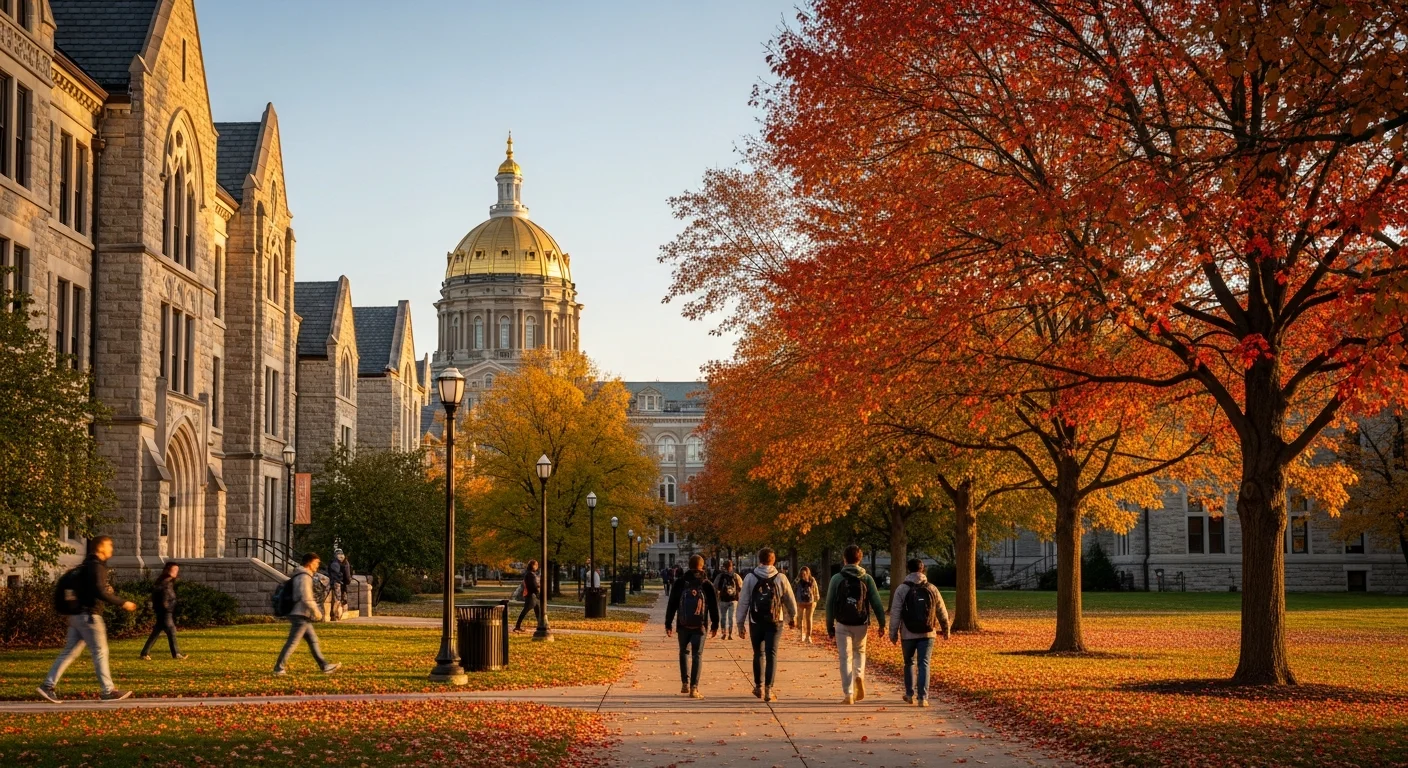
University campus in Iowa
Updated January 2026

Best Computer Engineering Degree Programs in Iowa — 2026 Rankings

Compare the top computer engineering colleges in Iowa. 20 accredited computer engineering schools ranked by graduation rate, career outcomes, and value—from Iowa State University to Iowa State University.

#1 ProgramIowa State
Avg Salary$89,450
Tuition From$8,982/yr
Job Growth+22%

Key Takeaways

Best computer engineering degree programs: Iowa State, Grinnell College, U of Iowa

Ranked by graduation rates, program outcomes, and institutional quality

IPEDS 2023

Tuition ranges from $8,396 to $64,342/year

Iowa State offers the most affordable option at $8,982/yr

IPEDS 2023

Computer Engineering degree programs available: 3 master's, 2 doctoral in Iowa

From community college pathways to advanced research degrees

IPEDS 2023

2 online computer engineering degree programs in Iowa

Flexible scheduling for working professionals

IPEDS 2023

Major employers: Principal Financial, Wellmark, Rockwell Collins, John Deere

Tech hubs in Des Moines and Cedar Rapids

Hakia Research 2026

Computer Engineering degree programs near 43+ cities across Iowa

Search by city to find programs within 200 miles of your location

IPEDS 2023

Updated February 2026

On This Page
$89,450
Are Computer Engineering Degree Programs in Iowa Worth It?
Yes. The best computer engineering degree programs in Iowa deliver strong ROI—graduates earn $89,450 median salary with +22% job growth through 2032. In-state tuition averages $32,820/year.

Source: BLS OEWS May 2024

Best Computer Engineering Bachelor's Programs in Iowa, 2026

20
Programs
$89,450
Median Salary
$32,820/yr
Avg Tuition
89%
Avg Grad Rate

Rankings based on program completions, graduation rates, selectivity, and career outcomes. See our methodology

Program Landscape

Iowa ranks among the nation's top destinations for computer engineering education, with 20 accredited bachelor's degree programs across 3 public and 17 private institutions. The highest-ranked programs are Iowa State, Grinnell College, U of Iowa, recognized for academic excellence, research opportunities, and strong industry connections.

Career Outcomes

Graduates from Iowa computer engineering programs earn a median salary of $76,033—23% below the national average. The state's robust technology sector, anchored by the Des Moines, Cedar Rapids, Iowa City metropolitan areas, provides abundant internship and employment opportunities with companies including Principal Financial, Wellmark, Rockwell Collins.

Costs & Value

Tuition ranges from $8,396 to $64,342 annually, with an average of $32,820/yr. Top programs maintain graduation rates above 89%, with the highest reaching 99%. Many programs hold ABET accreditation, the gold standard for computing education, ensuring curriculum meets rigorous industry standards.

Curriculum & Specializations

Students can choose from specializations including software engineering, cybersecurity, artificial intelligence, data science, and systems architecture. Strong industry partnerships provide access to co-op programs, capstone projects with real companies, and direct recruiting pipelines to Iowa's leading technology employers. For students seeking computer engineering degrees in Iowa, these top-ranked computer engineering schools offer the strongest combination of academic rigor and career preparation.

Earn your bachelor's in Computer Engineering

(Sponsored)

Loading programs...

🥇

Iowa State University

PublicNSA CAE
Ames, IA
$8,982
Tuition/yr
$376
Per Credit
99%
Grad Rate
78.1
Score
Website
🥈

Grinnell College

Private
Grinnell, IA
$64,342
Tuition/yr
$2,010
Per Credit
98%
Grad Rate
72.7
Score
Website
🥉

University of Iowa

Public
Iowa City, IA
$9,016
Tuition/yr
$376
Per Credit
93%
Grad Rate
69.4
Score
Website
#4

William Penn University

Private
Oskaloosa, IA
$28,750
Tuition/yr
$420
Per Credit
95%
Grad Rate
48.8
Score
Website
#5

Northwestern College

Private
Orange City, IA
$35,000
Tuition/yr
$1,100
Per Credit
99%
Grad Rate
43.9
Score
Website

Best Computer Engineering Master's Programs in Iowa, 2026

3
Programs
$89,450
Median Salary
$11,333/yr
Avg Tuition
83%
Avg Grad Rate

Rankings based on program completions, graduation rates, selectivity, and career outcomes. See our methodology

Program Landscape

Iowa offers 3 master's degree programs in computer engineering, designed for professionals seeking to advance into senior engineering, technical leadership, and specialized roles. The top programs—Maharishi International, Iowa State, U of Iowa—combine advanced technical training with research opportunities and leadership development.

Career Outcomes

Master's graduates in Iowa earn a median salary of $89,450, approximately 20-30% higher than bachelor's degree holders. The concentration of technology companies in Des Moines, Cedar Rapids, Iowa City creates strong demand for graduate-level talent, with Principal Financial, Wellmark, Rockwell Collins actively recruiting from these programs.

Costs & Value

Program formats include traditional full-time study (typically 2 years), part-time options for working professionals (2-3 years), and accelerated tracks. Tuition averages $11,333/yr, with many employers offering tuition reimbursement for graduate education. Some programs offer thesis and non-thesis tracks, allowing students to focus on research or professional development based on their career goals.

Curriculum & Specializations

Curriculum covers advanced topics including machine learning, distributed systems, software architecture, and technical management. Many programs include practicum experiences, industry capstone projects, or consulting engagements that provide real-world application of advanced concepts. Among Iowa's computer engineering schools at the graduate level, these programs stand out for both academic quality and career outcomes.

Advance your career with a Computer Engineering master's degree

(Sponsored)

Loading programs...

🥇

Maharishi International University

Private
Fairfield, IA
$16,000
Tuition/yr
$500
Per Credit
55%
Grad Rate
64.7
Score
Website
🥈

Iowa State University

PublicNSA CAE
Ames, IA
$8,982
Tuition/yr
$376
Per Credit
99%
Grad Rate
62.1
Score
Website
🥉

University of Iowa

Public
Iowa City, IA
$9,016
Tuition/yr
$376
Per Credit
93%
Grad Rate
50.3
Score
Website

Best Computer Engineering Doctoral Programs in Iowa, 2026

2
Programs
$89,450
Median Salary
$8,999/yr
Avg Tuition
96%
Avg Grad Rate

Rankings based on program completions, graduation rates, selectivity, and career outcomes. See our methodology

Program Landscape

Iowa is home to 2 doctoral programs in computer engineering, preparing students for research positions, faculty appointments, and executive technical roles. Leading programs at Iowa State, U of Iowa are recognized for cutting-edge research, strong faculty publications, and competitive funding packages.

Career Outcomes

Doctoral graduates command premium salaries, with Iowa PhD holders earning a median of $111,813—reflecting the advanced expertise required for research and executive positions. The Des Moines, Cedar Rapids, Iowa City region's research universities and corporate R&D centers provide extensive collaboration opportunities with industry leaders like Principal Financial, Wellmark, Rockwell Collins.

Costs & Value

PhD programs typically require 4-6 years of full-time study, including coursework, qualifying examinations, and original dissertation research. Many programs offer full funding through teaching or research assistantships, covering tuition and providing stipends of $25,000–$40,000 annually.

Curriculum & Specializations

Research strengths across Iowa programs include artificial intelligence, cybersecurity, human-computer interaction, systems, and theoretical computer science. For aspiring researchers pursuing computer engineering degrees in Iowa, graduates go on to careers as university faculty, industry research scientists, or technical executives, contributing to advances in technology that impact millions of users worldwide.

Reach the top of your field with a Computer Engineering doctorate

(Sponsored)

Loading programs...

🥇

Iowa State University

PublicNSA CAE
Ames, IA
$8,982
Tuition/yr
$376
Per Credit
99%
Grad Rate
48.9
Score
Website
🥈

University of Iowa

Public
Iowa City, IA
$9,016
Tuition/yr
$376
Per Credit
93%
Grad Rate
62.9
Score
Website

Complete Computer Engineering Degree Program Rankings in Iowa

Best Bachelor's Computer Engineering Degree Programs in Iowa

### Program Landscape Iowa ranks among the nation's top destinations for computer engineering education, with **20 accredited** bachelor's degree programs across **3 public** and **17 private** institutions. The highest-ranked programs are **Iowa State**, **Grinnell College**, **U of Iowa**, recognized for academic excellence, research opportunities, and strong industry connections. ### Career Outcomes Graduates from Iowa computer engineering programs earn a median salary of **$76,033**—23% below the national average. The state's robust technology sector, anchored by the Des Moines, Cedar Rapids, Iowa City metropolitan areas, provides abundant internship and employment opportunities with companies including Principal Financial, Wellmark, Rockwell Collins. ### Costs & Value Tuition ranges from **$8,396** to **$64,342** annually, with an average of **$32,820/yr**. Top programs maintain graduation rates above **89%**, with the highest reaching **99%**. Many programs hold ABET accreditation, the gold standard for computing education, ensuring curriculum meets rigorous industry standards. ### Curriculum & Specializations Students can choose from specializations including software engineering, cybersecurity, artificial intelligence, data science, and systems architecture. Strong industry partnerships provide access to co-op programs, capstone projects with real companies, and direct recruiting pipelines to Iowa's leading technology employers. For students seeking computer engineering degrees in Iowa, these top-ranked computer engineering schools offer the strongest combination of academic rigor and career preparation.

  1. #1. Iowa State University

    Hakia ranks Iowa State University as the #1 bachelor's in computer engineering degree program in Iowa. This public institution in Ames, IA has annual tuition of $8,982 ($376/credit) and a 99% graduation rate. Ranking score: 78.1. NSA/DHS Center of Academic Excellence designation: CAE-CDE, CAE-R.

    Watch: Iowa State University, Fall 2019 Graduation Perspectives

  2. #2. Grinnell College

    Hakia ranks Grinnell College as the #2 bachelor's in computer engineering degree program in Iowa. This private institution in Grinnell, IA has annual tuition of $64,342 ($2010/credit) and a 98% graduation rate. Ranking score: 72.7.

  3. #3. University of Iowa

    Hakia ranks University of Iowa as the #3 bachelor's in computer engineering degree program in Iowa. This public institution in Iowa City, IA has annual tuition of $9,016 ($376/credit) and a 93% graduation rate. Ranking score: 69.4.

    Watch: University of Iowa Campus Tour

  4. #4. William Penn University

    Hakia ranks William Penn University as the #4 bachelor's in computer engineering degree program in Iowa. This private institution in Oskaloosa, IA has annual tuition of $28,750 ($420/credit) and a 95% graduation rate. Ranking score: 48.8.

  5. #5. Northwestern College

    Hakia ranks Northwestern College as the #5 bachelor's in computer engineering degree program in Iowa. This private institution in Orange City, IA has annual tuition of $35,000 ($1100/credit) and a 99% graduation rate. Ranking score: 43.9.

  6. #6. Clarke University

    Hakia ranks Clarke University as the #6 bachelor's in computer engineering degree program in Iowa. This private institution in Dubuque, IA has annual tuition of $38,400 ($860/credit) and a 81% graduation rate. Ranking score: 43.3.

  7. #7. Dordt University

    Hakia ranks Dordt University as the #7 bachelor's in computer engineering degree program in Iowa. This private institution in Sioux Center, IA has annual tuition of $35,360 ($1480/credit) and a 87% graduation rate. Ranking score: 43.1.

  8. #8. Grand View University

    Hakia ranks Grand View University as the #8 bachelor's in computer engineering degree program in Iowa. This private institution in Des Moines, IA has annual tuition of $32,800 ($644/credit) and a 99% graduation rate. Ranking score: 42.7.

  9. #9. Simpson College

    Hakia ranks Simpson College as the #9 bachelor's in computer engineering degree program in Iowa. This private institution in Indianola, IA has annual tuition of $45,306 ($425/credit) and a 87% graduation rate. Ranking score: 40.5.

  10. #10. Briar Cliff University

    Hakia ranks Briar Cliff University as the #10 bachelor's in computer engineering degree program in Iowa. This private institution in Sioux City, IA has annual tuition of $33,369 ($1140/credit). Ranking score: 38.1.

  11. #11. Luther College

    Hakia ranks Luther College as the #11 bachelor's in computer engineering degree program in Iowa. This private institution in Decorah, IA has annual tuition of $49,650 ($1770/credit). Ranking score: 38.1.

  12. #12. Saint Ambrose University

    Hakia ranks Saint Ambrose University as the #12 bachelor's in computer engineering degree program in Iowa. This private institution in Davenport, IA has annual tuition of $35,318 ($1050/credit). Ranking score: 37.1.

  13. #13. Coe College

    Hakia ranks Coe College as the #13 bachelor's in computer engineering degree program in Iowa. This private institution in Cedar Rapids, IA has annual tuition of $52,226 ($6532/credit). Ranking score: 36.6.

  14. #14. University of Northern Iowa

    Hakia ranks University of Northern Iowa as the #14 bachelor's in computer engineering degree program in Iowa. This public institution in Cedar Falls, IA has annual tuition of $8,396 ($350/credit). Ranking score: 36.5.

  15. #15. Cornell College

    Hakia ranks Cornell College as the #15 bachelor's in computer engineering degree program in Iowa. This private institution in Mount Vernon, IA has annual tuition of $49,970 ($1562/credit). Ranking score: 36.0.

  16. #16. Central College

    Hakia ranks Central College as the #16 bachelor's in computer engineering degree program in Iowa. This private institution in Pella, IA has annual tuition of $20,988 ($875/credit). Ranking score: 34.4.

  17. #17. Mount Mercy University

    Hakia ranks Mount Mercy University as the #17 bachelor's in computer engineering degree program in Iowa. This private institution in Cedar Rapids, IA has annual tuition of $38,070 ($1107/credit). Ranking score: 32.3.

  18. #18. Maharishi International University

    Hakia ranks Maharishi International University as the #18 bachelor's in computer engineering degree program in Iowa. This private institution in Fairfield, IA has annual tuition of $16,000 ($500/credit) and a 55% graduation rate. Ranking score: 30.9.

  19. #19. Loras College

    Hakia ranks Loras College as the #19 bachelor's in computer engineering degree program in Iowa. This private institution in Dubuque, IA has annual tuition of $36,454 ($816/credit). Ranking score: 31.4.

  20. #20. Upper Iowa University

    Hakia ranks Upper Iowa University as the #20 bachelor's in computer engineering degree program in Iowa. This private institution in Fayette, IA has annual tuition of $18,000 ($850/credit). Ranking score: 28.9.

Online Bachelor's Computer Engineering Degree Programs in Iowa

### Online Program Options 2 Iowa institutions offer bachelor's computer engineering degrees with online or hybrid options, enabling students to earn accredited degrees while maintaining professional or personal commitments. Top-ranked online programs include **Loras College**, **Mount Mercy**, all regionally accredited and recognized by Iowa employers. ### Costs & Employer Recognition Online bachelor's programs average **$37,262/yr**—often comparable to or less than on-campus tuition. Iowa-based employers including Principal Financial, Wellmark, Rockwell Collins value online credentials from accredited institutions, recognizing that program quality matters more than delivery format. The Des Moines, Cedar Rapids, Iowa City job market actively recruits graduates from online programs. ### Program Format These programs feature asynchronous coursework for maximum flexibility, with some offering synchronous sessions for collaborative learning. Students can typically complete **120 credit hours** in 4 years while working full-time. ### Technology & Flexibility Technology requirements include reliable internet access and a modern computer. Programs provide virtual labs, online tutoring, career services, and networking opportunities. Many offer start dates throughout the year and accelerated course formats for motivated students. Graduates earn the same degree as on-campus students, with no distinction on transcripts or diplomas. For students pursuing online computer engineering degrees in Iowa, these accredited computer engineering schools offer the flexibility and quality that today's learners demand.

  • Loras College - Dubuque, IA - Tuition: $36,454/year
  • Mount Mercy University - Cedar Rapids, IA - Tuition: $38,070/year

Best Master's Computer Engineering Degree Programs in Iowa

### Program Landscape Iowa offers **3** master's degree programs in computer engineering, designed for professionals seeking to advance into senior engineering, technical leadership, and specialized roles. The top programs—**Maharishi International**, **Iowa State**, **U of Iowa**—combine advanced technical training with research opportunities and leadership development. ### Career Outcomes Master's graduates in Iowa earn a median salary of **$89,450**, approximately **20-30% higher** than bachelor's degree holders. The concentration of technology companies in Des Moines, Cedar Rapids, Iowa City creates strong demand for graduate-level talent, with Principal Financial, Wellmark, Rockwell Collins actively recruiting from these programs. ### Costs & Value Program formats include traditional full-time study (typically 2 years), part-time options for working professionals (2-3 years), and accelerated tracks. Tuition averages **$11,333/yr**, with many employers offering tuition reimbursement for graduate education. Some programs offer thesis and non-thesis tracks, allowing students to focus on research or professional development based on their career goals. ### Curriculum & Specializations Curriculum covers advanced topics including machine learning, distributed systems, software architecture, and technical management. Many programs include practicum experiences, industry capstone projects, or consulting engagements that provide real-world application of advanced concepts. Among Iowa's computer engineering schools at the graduate level, these programs stand out for both academic quality and career outcomes.

  1. #1. Maharishi International University

    Hakia ranks Maharishi International University as the #1 master's in computer engineering degree program in Iowa. This private institution in Fairfield, IA has annual tuition of $16,000 ($500/credit) and a 55% graduation rate. Ranking score: 64.7.

  2. #2. Iowa State University

    Hakia ranks Iowa State University as the #2 master's in computer engineering degree program in Iowa. This public institution in Ames, IA has annual tuition of $8,982 ($376/credit) and a 99% graduation rate. Ranking score: 62.1. NSA/DHS Center of Academic Excellence designation: CAE-CDE, CAE-R.

    Watch: Iowa State University, Fall 2019 Graduation Perspectives

  3. #3. University of Iowa

    Hakia ranks University of Iowa as the #3 master's in computer engineering degree program in Iowa. This public institution in Iowa City, IA has annual tuition of $9,016 ($376/credit) and a 93% graduation rate. Ranking score: 50.3.

    Watch: University of Iowa Campus Tour

Best Doctoral Computer Engineering Degree Programs in Iowa

### Program Landscape Iowa is home to **2** doctoral programs in computer engineering, preparing students for research positions, faculty appointments, and executive technical roles. Leading programs at **Iowa State**, **U of Iowa** are recognized for cutting-edge research, strong faculty publications, and competitive funding packages. ### Career Outcomes Doctoral graduates command premium salaries, with Iowa PhD holders earning a median of **$111,813**—reflecting the advanced expertise required for research and executive positions. The Des Moines, Cedar Rapids, Iowa City region's research universities and corporate R&D centers provide extensive collaboration opportunities with industry leaders like Principal Financial, Wellmark, Rockwell Collins. ### Costs & Value PhD programs typically require 4-6 years of full-time study, including coursework, qualifying examinations, and original dissertation research. Many programs offer full funding through teaching or research assistantships, covering tuition and providing stipends of **$25,000–$40,000** annually. ### Curriculum & Specializations Research strengths across Iowa programs include artificial intelligence, cybersecurity, human-computer interaction, systems, and theoretical computer science. For aspiring researchers pursuing computer engineering degrees in Iowa, graduates go on to careers as university faculty, industry research scientists, or technical executives, contributing to advances in technology that impact millions of users worldwide.

  1. #1. Iowa State University

    Hakia ranks Iowa State University as the #1 doctoral in computer engineering degree program in Iowa. This public institution in Ames, IA has annual tuition of $8,982 ($376/credit) and a 99% graduation rate. Ranking score: 48.9. NSA/DHS Center of Academic Excellence designation: CAE-CDE, CAE-R.

  2. #2. University of Iowa

    Hakia ranks University of Iowa as the #2 doctoral in computer engineering degree program in Iowa. This public institution in Iowa City, IA has annual tuition of $9,016 ($376/credit) and a 93% graduation rate. Ranking score: 62.9.

Computer Engineering Degree Costs & Tuition in Iowa

MetricValue
Average in-state tuition$32,820/year
Average out-of-state tuition$82,050/year
Community college tuition$8,205/year
4-year savings for residents$196,920
2+2 transfer pathway savings$49,230

Source: IPEDS 2023

Financial Aid & Scholarships for Computer Engineering Students in Iowa

State Aid Programs

Iowa residents pursuing computer engineering degrees have access to strong state and federal financial aid programs designed to make higher education affordable. The Iowa Tuition Grant is a need-based grant program specifically for Iowa residents attending private institutions in the state, providing crucial support for students at schools like Clarke University, Drake University, and Grinnell College. In addition to state aid, all students can access federal financial aid through the Free Application for Federal Student Aid (FAFSA), which determines eligibility for Pell Grants, Federal Work-Study, and federal student loans. The FAFSA is the gateway to all federal aid programs and should be completed as early as possible to maximize available funding.

Key Programs & Amounts

Many Iowa institutions offering computer engineering programs provide institutional scholarships and merit-based aid to qualified students. Public universities like Iowa State University, which leads the state with 541 computer engineering completions, and the University of Iowa offer competitive scholarship packages. Students should also explore the College Scorecard to compare net price and average aid packages across Iowa's 26 institutions offering computer engineering programs. For those starting at community colleges, the Iowa LACTS Agreement ensures seamless transfer of credits to regent universities, potentially reducing overall education costs. Additional resources and information about federal student aid programs are available through Federal Student Aid.

Computer Engineering Degree ROI Calculator — Iowa

Use our interactive ROI calculator to estimate your return on investment for a computer engineering degree in Iowa. Enter your expected tuition costs, financial aid, and career goals to see projected payback periods and lifetime earnings. The calculator uses current salary data from BLS and tuition data from IPEDS to provide accurate estimates.

Computer Engineering Degree ROI Calculator
Estimate your return on investment for a computer engineering degree
$

Leave blank to use average cost for selected program type

20 years
10 years20 years30 years
20-Year ROI

+907%

Net gain divided by total investment. ROI above 200% is considered excellent for education investments.

Net Gain

$1,677,254

Your additional lifetime earnings with this degree vs. working without one, minus the total investment.

Break-Even

5 years

Years until your cumulative earnings exceed total investment. Shorter programs often break even faster due to lower opportunity cost.

COL-Adjusted Salary

$133,333

Your starting salary adjusted for local cost of living. This shows real purchasing power compared to a $100K national baseline.

Why does break-even change with program type? Your "total investment" includes both tuition AND opportunity cost (foregone earnings while in school). A 4-year full-time public university (in-state) means 4 years of not earning a salary ($140,000 in opportunity cost). Shorter full-time programs may have higher tuition but lower total investment because you return to the workforce sooner.

Detailed Breakdown
How we calculate your degree ROI using real salary data
Total Investment$185,000

Tuition plus opportunity cost (earnings you miss while in school)

Program Cost (Tuition)$45,000

Direct cost of the degree program

Opportunity Cost$140,000

4 years × $35K/year foregone salary while studying full-time

20-Year Earnings (with degree)$2,712,662

Projected career earnings starting after graduation, with salary growth

20-Year Earnings (without degree)$850,408

What you'd earn working at $35K/year with 2% annual growth

Starting Salary (Austin, TX)$140,000

Median salary for this role in your selected location (BLS 2024)

Annualized Return4.9%

Your investment's compound annual growth rate (similar to stock market returns)

Data sources: BLS OEWS May 2024, IPEDS 2023. Calculations use median salaries, 3% discount rate, and assume salary growth declines from 6% to 2% over career. Individual results will vary. | Powered by Hakia.com

Computer Engineering Salaries by Metro Area

Median annual salary in Iowa metro areas

Hakia.com
View data table
Categoryvalue
Des Moines$98K
Cedar Rapids$94K
Iowa City$89K

Source: BLS OEWS May 2024

Hakia.com

Top Employers Hiring Computer Engineering Graduates in Iowa

Find computer engineering jobs in Iowa. These major employers across Iowa metro areas are actively hiring computer engineering degree holders. Click employer names to view current job openings.

Computer Engineering Jobs in Des Moines

IA
Principal Financial Group
finance
John Deere
manufacturing
Meredith Corporation
media
Workiva
tech
Dwolla
fintech

Computer Engineering Jobs in Cedar Rapids

IA
Collins Aerospace
aerospace
Pearson
edtech

Transfer Pathways for Computer Engineering Degrees in Iowa

State Transfer System

Iowa's strong transfer system makes it seamless for students to begin their computer engineering education at community colleges and transfer to four-year universities. The state operates 31 two-year institutions that offer foundational coursework in mathematics, physics, programming, and general education requirements. The Iowa LACTS Agreement (Lower-Division Agreement for Course Transfer Statewide) ensures that courses completed at community colleges transfer directly to Iowa's regent universities, including Iowa State University and University of Iowa. This agreement eliminates lost credits and duplication, allowing students to complete their first two years of general education and introductory engineering courses at significantly lower community college costs, then transition seamlessly to complete their degree at a four-year institution. Aspiring computer engineers can save thousands of dollars through this strategic pathway.

How Transfers Work

The transfer pathway is particularly valuable for students managing costs, as Iowa's average public in-state tuition of $8,798 at four-year institutions is already competitive. Starting at community colleges reduces initial costs even further. The Iowa Board of Regents and Iowa Tuition Grant provide additional financial aid support for eligible residents, including those attending private institutions after transferring. Students should work with academic advisors at their community college to ensure course alignment with specific bachelor's degree requirements at their target university. For related program information, explore Computer Science in Iowa, Software Engineering in Iowa, and Information Technology in Iowa, all of which participate in Iowa's transfer system. This structured approach allows motivated students to earn a quality computer engineering degree affordably.

Why Pursue a Computer Engineering Degree in Iowa?

Industry & Workforce

Iowa has established itself as a strong hub for computer engineering education, with 26 institutions offering programs across multiple degree levels. According to IPEDS data, the state awarded 833 bachelor's degrees, 405 master's degrees, and 32 doctoral degrees in computer engineering in 2023. This diverse educational landscape means students can find programs suited to their academic level and career goals, whether they're pursuing an associate degree at one of Iowa's 31 two-year institutions or a doctorate at a research-focused university.

Salary Outlook

Iowa's premier institutions, led by Iowa State University with 541 completions and University of Iowa with 218 completions, provide education at competitive prices. Public in-state tuition averages $8,798, making Iowa significantly more affordable than the national average. Students benefit from proximity to major tech employers and regional hubs including Des Moines, Cedar Rapids, and Iowa City, where companies like UnityPoint Health, Principal Financial, and Wells Fargo maintain substantial operations. For additional context on related fields, explore Computer Science programs in Iowa and Software Engineering programs in Iowa, which complement computer engineering career pathways. Iowa's combination of affordable tuition, quality institutions, and strong regional employers creates an attractive environment for aspiring computer engineers.

20 Programs
Computer Engineering Program Availability in Iowa
Iowa offers 20 accredited computer engineering programs across public universities, private colleges, and community colleges. Top tech hubs include Des Moines, Cedar Rapids, Iowa City.

Source: IPEDS 2023

Computer Engineering Job Market & Salary Data in Iowa

Employment Outlook

Iowa's computer engineering job market offers strong opportunities across multiple sectors and geographic regions. The state has 26 institutions offering computer engineering programs, with 833 bachelor's degree completions annually, creating a strong pipeline of talent for employers (IPEDS). Major metropolitan areas including Des Moines-West Des Moines, Cedar Rapids, Iowa City, and the Quad Cities region serve as primary employment hubs for computer engineers. These regions host diverse industries ranging from healthcare technology to financial services, providing varied career pathways for graduates. The competitive job market is strengthened by proximity to regional and national tech corridors, making Iowa an increasingly attractive location for computer engineering professionals seeking opportunities without the cost-of-living pressures of coastal tech hubs.

Salaries by Metro

Employment growth in Iowa's computer engineering sector continues to expand as companies prioritize digital transformation and technological innovation. The state's major employers actively recruit from local universities, particularly Iowa State University, which produces 541 completions annually, the highest in the state (IPEDS). Current salary data and detailed employment projections are available through the Bureau of Labor Statistics' Iowa occupational data, which provides comprehensive information on compensation trends and job growth across the computer engineering field. Graduates from programs ranked among the national best bachelor's programs and most affordable options consistently find competitive positions throughout the state. Iowa's business-friendly environment and growing tech sector make it an excellent destination for launching a computer engineering career, with opportunities extending across Central Iowa, Eastern Iowa, and Western Iowa regions.

Entry-Level (0-2 yrs)

New graduates and career changers

Senior (8+ yrs)

Technical leads and architects

Median Salary in Iowa$58,143$129,703
Typical RolesJunior Developer, AnalystStaff Engineer, Architect
Remote Work AccessLimitedCommon
Degree ExpectationBachelor's sufficientMaster's preferred

Online vs On-Campus Computer Engineering Programs in Iowa

Online Programs

2 available in Iowa

On-Campus Programs

Traditional classroom experience

Typical Tuition$29,538/yr$32,820/yr
Schedule FlexibilitySelf-paced or asyncFixed schedule
NetworkingVirtual cohortsIn-person, career fairs
Best ForWorking professionalsTraditional students
Completion Time2-4 years (flexible)4 years (standard)

Best Computer Engineering Degree Programs in Other States

StateTotal ProgramsMedian TuitionTop Program
Best Computer Engineering Degree Programs in California59$11,834University of California-Berkeley
Best Computer Engineering Degree Programs in Texas45$9,003Texas A & M University-College Station
Best Computer Engineering Degree Programs in New York53$31,100Cornell University
Best Computer Engineering Degree Programs in Florida29$14,274Florida International University
Best Computer Engineering Degree Programs in Washington17$31,899University of Washington-Seattle Campus
Best Computer Engineering Degree Programs in Massachusetts36$52,800University of Massachusetts-Amherst
Best Computer Engineering Degree Programs in Illinois40$35,740University of Illinois Urbana-Champaign
Best Computer Engineering Degree Programs in Georgia14$9,790Kennesaw State University

Computer Engineering Degree Programs in Iowa: FAQ

How We Rank Computer Engineering Degree Programs

Based on 20 programs from IPEDS 2023

We analyzed 20 computer engineering degree programs in Iowa using IPEDS 2023 data and BLS labor statistics. Our rankings are produced algorithmically without editorial intervention, ensuring objectivity and reproducibility.

Ranking Factors

Program Completions35%

Number of graduates per year in this specific field (CIP code). Larger programs indicate established departments with more resources, course offerings, and career services. Measured from IPEDS Completions data.

Graduation Rate25%

Percentage of students completing their degree within 150% of expected time (6 years for bachelor's, 3 years for associate's). Higher rates indicate better student support and program quality. Source: IPEDS Graduation Rates survey.

Selectivity20%

Admission rate (lower = more selective). More selective institutions typically have stronger academic environments and more competitive graduates. For open-admission institutions, we use graduation rates as a proxy for quality.

Career Outcomes20%

Regional salary data for computer engineering graduates. Iowa median salary of $89,450 is factored into institutional scores based on local job market strength.

Ranking Categories

Best Programs

Overall quality using all four factors weighted as shown above. Ideal for students seeking the strongest academic experience.

Online Programs

Same methodology, filtered to schools with fully online or hybrid options (IPEDS Distance Education data). Some schools may have lower graduation rates due to different student demographics.

Most Affordable

Ranked primarily by net cost (tuition minus average institutional aid), with quality factors as tiebreakers. Best for cost-conscious students.

Data Sources

  • IPEDS 2023Institutional characteristics, completions, graduation rates
  • BLS OEWS 2024State and metro salary data by occupation
  • CIP Code MappingPrograms identified using Classification of Instructional Programs codes

Data Sources

Institutional characteristics, completions, graduation rates

Iowa salary and employment data

Official University Websites

Program details and admissions information

Last Updated: February 22, 2026. Rankings based on IPEDS 2023 data. Salary data from BLS OEWS May 2024.

Was this ranking helpful for your college search?
Taylor Rupe

Taylor Rupe

Co-founder & Editor (B.S. Computer Science, Oregon State • B.A. Psychology, University of Washington)

Taylor combines technical expertise in computer science with a deep understanding of human behavior and learning. His dual background drives Hakia's mission: leveraging technology to build authoritative educational resources that help people make better decisions about their academic and career paths.

Computer Engineering Degree Programs in Iowa — Detailed School Profiles

Best Bachelor's Computer Engineering Degree Programs in Iowa

Iowa State University — Ames, IA

Key Distinction: Mandatory senior design capstone project (CPRE 4910 and CPRE 4920) with professionalism training. Optional cooperative education and internship program for practical industry experience

Hakia Insight: Iowa State's proximity to John Deere headquarters (2 hours away) plus faculty expertise in power electronics and embedded systems creates an unusually direct pipeline: students work on problems John Deere actually faces, then interview with hiring managers who already know their capstone work.

Iowa State University's Bachelor of Science in Computer Engineering is a 127-credit, ABET-accredited program administered by the Department of Electrical and Computer Engineering. The curriculum integrates hands-on learning through mandatory senior design projects (CPRE 4910 and 4920), optional co-op and internship opportunities, and undergraduate research activities. Students gain practical experience in software systems, embedded systems, networking, information security, computer architecture, and VLSI through 40 credits of core coursework and 14 credits of technical electives. The program emphasizes real-world problem-solving and professional development, with well-qualified juniors and seniors eligible for concurrent enrollment in master's programs (M.S., M.ENG, or MBA). The curriculum structure includes 24 credits of foundational courses, 17 credits of math and physical science, and culminates in a comprehensive senior design capstone. Graduates are prepared for careers in computer engineering with expertise in contemporary hardware and software systems integration.

Programs Offered
  • Bachelor of Science in Computer Engineering — 4 years, on-campus. BS
Research Labs and Institutes
  • Virtual Reality Applications Center (VRAC)
  • Embedded Systems and IoT Lab
  • High Performance Computing Lab
Industry Partners
  • John Deere (corporate)
  • Rockwell Automation (corporate)
  • Intel (corporate)
  • Qualcomm (corporate)
  • Raytheon Technologies (government)
Career Outcomes

Median Salary: $NaN.

Notable Faculty
  • Degang Chen — Power electronics and renewable energy systems
  • Randall L. Geiger — Analog and mixed-signal integrated circuit design
Accreditations and Certifications
  • ABET accredited (EAC)

Location Advantages: Proximity to John Deere headquarters (Moline, IL; ~2 hours)Access to Midwest manufacturing and automation ecosystemStrong connections to semiconductor and aerospace suppliers in the region

Grinnell College — Grinnell, IA

Key Distinction: 3-2 dual degree structure with four partner engineering schools (Columbia, Caltech, RPI, Washington University). Liberal arts foundation combined with engineering specialization

Hakia Insight: Grinnell's 3-2 program with partners like Columbia and Caltech operates as a selective filter disguised as flexibility—students earn a liberal arts degree from a top-50 college, then transfer to an elite engineering school, creating resume credentials that four-year programs struggle to match despite similar technical outcomes.

Grinnell College offers a 3-2 Engineering Program that allows students to complete three years of study at Grinnell with a strong foundation in mathematics, physics, and chemistry, followed by two years at one of four affiliated engineering schools: Columbia University, California Institute of Technology, Rensselaer Polytechnic Institute, or Washington University. Students receive a Bachelor of Arts degree from Grinnell after year three and a Bachelor of Science or Bachelor of Engineering degree from their affiliated university after year five. The program requires a minimum 3.3 GPA at Grinnell and completion of specific technical prerequisites including four semesters of mathematics, two semesters of calculus-based physics, one semester of chemistry, one computer science course, and at least 32 non-technical credits in humanities and social studies. Engineering specializations available through affiliates include mechanical engineering, electrical engineering, biomedical engineering, chemical engineering, operations research, data science, and computer engineering. The program emphasizes a liberal education approach, combining rigorous engineering preparation with humanities and social science coursework. Financial aid from Grinnell does not extend to years four and five at the engineering affiliate; students must rely on the affiliate institution's financial aid policies.

Programs Offered
  • 3-2 Engineering Program — 4 years, on-campus. BA/BS
Career Outcomes

Top Employers: Apple, Amazon, Amazon Web Services, Allstate Corporation, Airtable, Anchorage Digital.

Location Advantages:

University of Iowa — Iowa City, IA

Key Distinction: Two-semester capstone design sequence culminating in significant original project. Customizable Elective Focus Areas (EFAs) tailored to career or research goals

Hakia Insight: University of Iowa's two-semester capstone sequence combined with customizable Elective Focus Areas means students can tailor their final year to emerging specializations (AI, biomedical, systems) rather than follow a locked curriculum—an advantage that compounds when employers value specialized expertise.

The Bachelor of Science in Engineering (BSE) in Computer Science and Engineering at University of Iowa combines computer science and computer engineering into a single integrated degree program, jointly taught by the Department of Electrical and Computer Engineering and the Department of Computer Science. The curriculum provides strong theoretical understanding of software and hardware principles alongside engineering analysis, design, and multidisciplinary teamwork skills for developing complex systems. Students complete 129 credit hours across core computing and engineering courses, mathematics, sciences, and general education requirements. The program culminates in a two-semester capstone design sequence in the senior year where students develop and implement significant original projects, emphasizing teamwork, professionalism, and real-world problem solving. Students customize their education by selecting from multiple Elective Focus Areas (EFAs) including bioinformatics, business, medical imaging, embedded systems, and software engineering. The flexibility allows students to pursue certificates in Sustainability or Technological Entrepreneurship and undergraduate minors with minimal additional coursework.

Programs Offered
  • Bachelor of Science in Engineering - Computer Science and Engineering — 4 years, on-campus. BSE
Research Labs and Institutes
  • Center for Computer Vision
  • Biomedical Engineering Laboratory
Industry Partners
  • Emerson Electric (corporate)
  • Collins Aerospace (corporate)
  • Microsoft (corporate)
Notable Faculty
  • Gregory L. Plett — Power electronics and energy systems
Accreditations and Certifications
  • Engineering Accreditation Council
  • Computing Accreditation Council

Location Advantages: Growing tech and startup ecosystem in Iowa CityProximity to University of Iowa hospitals (biomedical research and design opportunities)Regional connections to Midwest manufacturing and industrial automation

William Penn University — Oskaloosa, IA

Key Distinction: A career-focused computer engineering program emphasizing hands-on lab work and direct industry placement in manufacturing and automation sectors.

Hakia Insight: William Penn's employer list (Pella Corporation, Musco Lighting, Pacific Northwest National Laboratory) reveals a deliberate regional placement strategy focused on Midwest manufacturing and defense—graduates compete for well-paid technical roles in sectors that recruit locally rather than chase national tech hubs.

At the bachelor's level, william Penn University's engineering programs prioritize accessibility and career readiness, making it an option for students who may not fit the traditional elite-school profile but are serious about computer engineering. The curriculum balances theory with practical application, incorporating hands-on lab work in digital systems, microcontrollers, and embedded applications that directly mirror industry needs. The university's location in Oskaloosa, Iowa, positions it near growing manufacturing and industrial automation sectors where computer engineering skills are in high demand. What distinguishes the experience here is the smaller student-to-faculty ratio that enables personalized instruction and internship placement support—advisors actively help match students with regional employers and facilitate co-op opportunities. The program includes exposure to emerging areas like IoT and control systems, relevant to both traditional manufacturing and newer tech sectors. William Penn's approach is less about research prestige and more about preparing graduates who can step into engineering roles and contribute immediately; alumni work across manufacturing, automation, energy, and IT sectors in the Midwest and beyond. For students seeking a solid engineering foundation without the name-brand premium, the program offers genuine technical training and support systems designed to get graduates employed.

Programs Offered
  • Bachelor of Science in Computer Engineering — 4 years, on-campus
  • Bachelor of Arts in Computer Engineering — 4 years, online
Career Outcomes

Top Employers: Prism Projection, Pella Corporation, Pacific Northwest National Laboratory, State Farm Insurance, Musco Lighting.

Location Advantages:

Northwestern College — Orange City, IA

Key Distinction: Northwestern differentiates through early, intensive hands-on design experience and a culture that treats capstone projects as real engineering challenges, not academic exercises.

Hakia Insight: Northwestern's first-year hands-on design culture—building functional systems from day one—produces graduates who can ship products immediately, a practical advantage that shows up in employer feedback; most programs defer serious building to year three or four, leaving Northwestern students a year ahead in engineering maturity.

At the bachelor's level, northwestern's computer engineering program prioritizes hands-on design and prototyping from the first year, with students building functional systems rather than just studying theory. The curriculum covers digital design, microcontrollers, and computer architecture with significant laboratory components and real-world problem sets drawn from industry sponsors and faculty research interests. Northwestern emphasizes the integration of software and hardware, preparing engineers who can navigate both the firmware layer and the systems-level picture. The college's scale allows faculty to know students individually and mentor capstone projects with genuine industry relevance. Internship opportunities span both regional employers and national technology companies, with many students securing positions in embedded systems, hardware verification, and systems integration roles.

Programs Offered
  • Bachelor of Science in Computer Engineering — 4 years, on-campus
  • Bachelor of Arts in Computer Engineering — 4 years, online

Location Advantages: Orange City, Iowa location with access to Midwest tech employers and manufacturing sectors

Clarke University — Dubuque, IA

Key Distinction: Mandatory internships and experiential education ventures at off-campus laboratories or field settings. Undergraduate computer science research opportunities

Hakia Insight: Clarke's mandatory internships paired with undergraduate research opportunities create a dual-track experience where students build both industry credibility and research credentials simultaneously, rare among regional programs where students typically choose one path or the other.

Clarke University's Bachelor of Arts in Computer Science prepares students for careers in one of the fastest-growing fields through hands-on experience with current, state-of-the-art software and emerging technologies including machine learning, data analysis, artificial intelligence, mobile development, web development, robotics, drones, server administration, and virtual reality. The program emphasizes both technical skills and critical thinking through a curriculum that blends theory and practice. Students gain experience through internships, computer science research opportunities, and the creation of original work in data analysis, design, testing, and implementation of programming systems that build a digital portfolio for job searches. The Bachelor of Arts structure allows flexibility to easily add a minor or double major, with over 20% of Clarke graduates earning double majors. Faculty mentoring and community partnerships throughout the Midwest support student success. The program builds on Clarke's historic legacy as one of the first small computer science colleges in the country, established by pioneering computer scientist Sister Mary Kenneth Keller.

Programs Offered
  • Bachelor of Arts in Computer Science — 4 years, on-campus. BA
Career Outcomes

Median Salary: $NaN.

Location Advantages: Proximity to Midwest manufacturing and industrial automation sectors

Dordt University — Sioux Center, IA

Key Distinction: Dordt distinguishes itself through explicit integration of ethical reasoning and sustainable design principles into computer engineering education, appealing to students motivated by responsible innovation.

Hakia Insight: Dordt's explicit ethical reasoning framework—integrated, not bolted on—appeals to growing cohorts of engineers concerned with responsible AI and sustainable systems; graduates can articulate *why* they designed something a certain way, a soft skill that increasingly differentiates candidates in senior hiring.

At the bachelor's level, dordt's computer engineering curriculum centers on sustainable design and ethical engineering practice—philosophically grounded commitments that distinguish it from purely market-driven programs. Students engage with hardware design, embedded systems, and digital signal processing within a framework that explicitly considers environmental impact and responsible innovation. The program maintains a collaborative culture where computer engineers work closely with computer science and electrical engineering students on interdisciplinary projects. Dordt's Reformed Christian mission translates into an educational approach that asks not only "Can we build it?" but "Should we, and for whom?"—questions that resonate with employers increasingly focused on corporate responsibility. The relatively small cohort size fosters mentorship and allows faculty to tailor projects to individual student interests, whether that's renewable energy systems, assistive technology, or sustainable agricultural systems.

Programs Offered
  • Bachelor of Science in Computer Engineering — 4 years, on-campus
  • Bachelor of Arts in Computer Engineering — 4 years, online

Location Advantages: Rural Iowa setting supporting agricultural technology partnerships and sustainability-focused research

Grand View University — Des Moines, IA

Key Distinction: Grand View emphasizes career-pathway clarity and employer collaboration, positioning graduates for rapid placement in roles that align with their specialized interests and regional job markets.

Hakia Insight: Grand View's Des Moines location and employer collaboration model means the university can guarantee internship networks within a single metro area, eliminating the geographic friction that plagues regional programs and enabling students to build sustained relationships with local employers before graduation.

At the bachelor's level, grand View's computer engineering program reflects the university's commitment to practical, career-focused education with a strong emphasis on preparing students for immediate employment and long-term career advancement. The curriculum balances theoretical foundations with applied coursework in digital systems, embedded systems, and hardware-software integration. The program benefits from Grand View's Des Moines location and established pipelines to employers seeking engineers with both depth and workplace readiness. Internships are integrated into the academic plan, allowing students to apply classroom learning to real problems while building professional networks. Faculty bring industry experience and maintain current knowledge of market demands, adjusting the curriculum to reflect emerging specializations in IoT, cybersecurity in hardware systems, and automotive electronics.

Programs Offered
  • Bachelor of Science in Computer Engineering — 4 years, on-campus
  • Bachelor of Arts in Computer Engineering — 4 years, online

Location Advantages: Des Moines location with direct access to regional employers and strong internship networks

Simpson College — Indianola, IA

Key Distinction: Project-centric curriculum with direct access to fabrication equipment and regional automation industry partnerships differentiates Simpson's hands-on engineering approach.

Hakia Insight: Simpson College's project-based curriculum paired with direct fabrication access creates a rare advantage for undergraduates: students design and build working systems rather than simulating them, a depth of hands-on work typically reserved for graduate labs at larger universities.

At the bachelor's level, simpson College's computer engineering program emphasizes hands-on learning through a project-based curriculum where students build real systems from circuit design through embedded systems implementation. The program integrates hardware and software development early, giving students experience with microcontrollers, FPGA design, and signal processing before specializing. What distinguishes this approach is its small cohort size—allowing faculty to mentor students individually through capstone projects that often address local industry needs. Students gain practical experience in the college's electronics labs equipped with oscilloscopes, logic analyzers, and PCB fabrication tools. The program's partnership with regional manufacturing and automation companies creates internship pathways and ensures curriculum stays aligned with employer needs. Graduates typically pursue roles in embedded systems, industrial automation, and IoT device development, with many staying connected to the Midwest's growing automation sector.

Programs Offered
  • Bachelor of Science in Computer Engineering — 4 years, on-campus
  • Bachelor of Arts in Computer Engineering — 4 years, online

Location Advantages: Access to Midwest manufacturing and automation companies

Briar Cliff University — Sioux City, IA

Hakia Insight: Briar Cliff's dual-degree structure with UND lets students earn two accredited bachelor's degrees without the typical cost and time penalty, effectively providing the breadth of a dual-major program while remaining embedded in a single supportive community.

This dual-degree program allows students to earn both a bachelor's degree in mathematics from BCU and a bachelor's degree in engineering from UND while remaining in the supportive academic community of Briar Cliff and maintaining eligibility for athletics, music, and other student programs.

Programs Offered
  • Bachelor of Science in Computer Engineering — 4 years, on-campus
  • Bachelor of Arts in Computer Engineering — 4 years, online

Location Advantages:

Best Master's Computer Engineering Degree Programs in Iowa

Maharishi International University — Fairfield, IA

Key Distinction: Consciousness-based educational approach integrated with standard computer engineering curriculum creates a distinctive learning environment emphasizing both technical mastery and personal development.

Hakia Insight: Maharishi International's integration of consciousness-based education alongside digital systems and microelectronics training appeals to a specific cohort seeking technical rigor without the pressure-cooker culture of traditional programs—a philosophical distinction that shapes both classroom dynamics and career trajectories.

At the master's level, maharishi International University's computer engineering program combines technical rigor in digital systems, microelectronics, and embedded design with a distinctive educational philosophy that emphasizes consciousness-based learning. The curriculum covers core computer engineering topics—logic design, microprocessor architecture, signal processing, communications systems—while integrating contemplative practices intended to enhance focus, creativity, and problem-solving ability. Students engage in hands-on laboratory work and design projects within an environment that encourages both technical excellence and personal development. The program's smaller scale enables direct mentoring and individualized career guidance. While maintaining academic standards in computer engineering fundamentals, the university creates a learning environment that some students find conducive to deeper engagement with technical material and career reflection.

Programs Offered
  • Master of Science in Computer Engineering — 1-2 years, on-campus
  • Master of Arts in Computer Engineering — 1-2 years, online

Location Advantages:

Iowa State University — Ames, IA

Key Distinction: 100% online format designed for working professionals. Flexible scheduling with one course per semester option

Hakia Insight: Iowa State's 100% online master's program is architected for Midwest manufacturing talent: proximity to John Deere and Rockwell Automation means working professionals can advance credentials while staying embedded in their industry networks, then pivot into internal advancement or lateral moves.

Iowa State University's Master of Science in Computer Engineering is a 100% online graduate program designed for working professionals seeking career advancement in hardware-software system design. The 30-credit program can be completed in 1+ years with flexible scheduling allowing one course per semester. Students gain expertise in cutting-edge computer systems and networks, combining electrical engineering and computer science fundamentals. The program emphasizes industry-focused knowledge delivered by expert faculty, preparing graduates for leadership roles in technology innovation. With rolling admissions and affordable tuition at $900 per credit, this program enables mid-career professionals to advance without compromising work or family commitments.

Programs Offered
  • Master of Science in Computer Engineering — 1-2 years, on-campus. MS
Research Labs and Institutes
  • Virtual Reality Applications Center (VRAC)
  • Embedded Systems and IoT Lab
  • High Performance Computing Lab
Industry Partners
  • John Deere (corporate)
  • Rockwell Automation (corporate)
  • Intel (corporate)
  • Qualcomm (corporate)
  • Raytheon Technologies (government)
Notable Faculty
  • Degang Chen — Power electronics and renewable energy systems
  • Randall L. Geiger — Analog and mixed-signal integrated circuit design
Accreditations and Certifications
  • ABET accredited (EAC)

Location Advantages: Proximity to John Deere headquarters (Moline, IL; ~2 hours)Access to Midwest manufacturing and automation ecosystemStrong connections to semiconductor and aerospace suppliers in the region

University of Iowa — Iowa City, IA

Key Distinction: Course-based, non-research program (no thesis requirement). Professionally-oriented curriculum designed for working professionals

Hakia Insight: University of Iowa's course-based (no-thesis) design eliminates the research bottleneck that slows many working professionals through grad school, while partnerships with Emerson Electric and Collins Aerospace create a direct pipeline from coursework to industry collaboration.

The Master of Computer Science (M.C.S.) at the University of Iowa is a professionally-oriented, course-based, non-research program designed for working professionals seeking to advance their careers with advanced computer science knowledge. The program requires 32 semester hours of graduate credit, with at least 24 hours completed at Iowa. It emphasizes coursework over thesis, allowing students to complete the degree efficiently while maintaining employment. The curriculum includes theory, algorithms, colloquium series, and 24 hours of upper-level electives. A Software Engineering subprogram is available with four additional specialized courses. Students must maintain a 2.75 GPA to graduate and a 3.00 GPA for good standing. The program is ideal for mid-career professionals seeking salary advancement and specialized expertise without research obligations.

Programs Offered
  • Master of Computer Science — 1-2 years, on-campus. MCS
Research Labs and Institutes
  • Center for Computer Vision
  • Biomedical Engineering Laboratory
Industry Partners
  • Emerson Electric (corporate)
  • Collins Aerospace (corporate)
  • Microsoft (corporate)
Notable Faculty
  • Gregory L. Plett — Power electronics and energy systems
Accreditations and Certifications
  • Engineering Accreditation Council
  • Computing Accreditation Council

Location Advantages: Growing tech and startup ecosystem in Iowa CityProximity to University of Iowa hospitals (biomedical research and design opportunities)Regional connections to Midwest manufacturing and industrial automation

Best Doctoral Computer Engineering Degree Programs in Iowa

Iowa State University — Ames, IA

Key Distinction: Iowa State's computer engineering program leverages one of America's largest ECE departments and world-class research infrastructure to deliver unparalleled specialization depth, research opportunities, and industry recruiting connections.

Hakia Insight: Iowa State's doctoral program benefits from one of America's largest ECE departments (200+ faculty and students), which translates to specialized research labs you'd otherwise only access at top-tier institutions—VRAC, embedded systems, and HPC facilities all competing for your involvement simultaneously.

At the doctoral level, iowa State's computer engineering program is anchored in one of the nation's largest electrical and computer engineering departments, meaning students access extraordinary research breadth, specialized labs, and industry connections that smaller programs cannot match. The curriculum integrates advanced coursework across microelectronics, digital systems, signal processing, and embedded design, with numerous elective specializations in areas like computer architecture, cybersecurity, power systems, and autonomous systems. Students engage with state-of-the-art fabrication and testing facilities, including semiconductor design labs and high-performance computing clusters, enabling hands-on experience with tools used in Fortune 500 companies. Research opportunities abound—undergraduates routinely contribute to NSF-funded projects, DARPA initiatives, and industry-sponsored research, often earning first-author publications before graduation. The proximity to Ames and the broader Midwest innovation corridor means partnerships with John Deere, Rockwell Automation, and major semiconductor suppliers, creating internship pipelines and recruiting relationships that drive strong employment outcomes. Iowa State's career services specifically track computer engineering graduates into roles at leading tech companies, defense contractors, and regional automation leaders, with median starting salaries consistently in the top tier nationally. Graduate pathways are equally robust, with many students pursuing MS or PhD degrees within the same department or moving to top-tier programs elsewhere.

Programs Offered
  • Doctor of Philosophy in Computer Engineering — 4-6 years, on-campus
  • Doctor of Science in Computer Engineering — 4-6 years, online
Research Labs and Institutes
  • Virtual Reality Applications Center (VRAC)
  • Embedded Systems and IoT Lab
  • High Performance Computing Lab
Industry Partners
  • John Deere (corporate)
  • Rockwell Automation (corporate)
  • Intel (corporate)
  • Qualcomm (corporate)
  • Raytheon Technologies (government)
Career Outcomes

Median Salary: $NaN.

Notable Faculty
  • Degang Chen — Power electronics and renewable energy systems
  • Randall L. Geiger — Analog and mixed-signal integrated circuit design
Accreditations and Certifications
  • ABET accredited (EAC)

Location Advantages: Proximity to John Deere headquarters (Moline, IL; ~2 hours)Access to Midwest manufacturing and automation ecosystemStrong connections to semiconductor and aerospace suppliers in the region

University of Iowa — Iowa City, IA

Key Distinction: The University of Iowa's computer engineering program distinguishes itself through emphasis on hardware-software co-design and research-driven learning in signal processing and biomedical applications, grounded in a growing tech ecosystem.

Hakia Insight: The University of Iowa's biomedical and signal processing focus, anchored in proximity to teaching hospitals, positions doctoral candidates to publish in high-impact medical device and healthcare engineering venues—a research niche with fewer competitors than traditional chip design.

At the doctoral level, the University of Iowa's computer engineering program builds on the university's strong research reputation and positions students at the intersection of computing hardware and software systems in ways that prepare them for leadership roles in modern tech environments. The curriculum emphasizes both classical digital systems design and contemporary applications in areas like signal processing, machine learning hardware acceleration, and networked embedded systems. Students gain practical experience through a mix of classroom labs, senior design projects with industry sponsorship, and research opportunities in areas spanning computer vision, robotics, and biomedical signal processing. Faculty actively mentor undergraduates through collaborative research projects, with many students presenting at conferences and contributing to publishable work before graduation. The program's location in Iowa City—a growing tech hub home to several AI and healthcare IT startups—provides internship and career networking opportunities beyond the traditional Midwest industrial base. Capstone design courses connect students with real-world problems, often from healthcare systems, transportation networks, or renewable energy initiatives. Graduates frequently enter roles in software-hardware co-design, systems architecture, and product engineering at companies valuing both depth in circuits/systems and breadth in software integration.

Programs Offered
  • Doctor of Philosophy in Computer Engineering — 4-6 years, on-campus
  • Doctor of Science in Computer Engineering — 4-6 years, online
Research Labs and Institutes
  • Center for Computer Vision
  • Biomedical Engineering Laboratory
Industry Partners
  • Emerson Electric (corporate)
  • Collins Aerospace (corporate)
  • Microsoft (corporate)
Notable Faculty
  • Gregory L. Plett — Power electronics and energy systems
Accreditations and Certifications
  • Engineering Accreditation Council
  • Computing Accreditation Council

Location Advantages: Growing tech and startup ecosystem in Iowa CityProximity to University of Iowa hospitals (biomedical research and design opportunities)Regional connections to Midwest manufacturing and industrial automation