University campus in Minnesota
Updated January 2026

Best Artificial Intelligence Degree Programs in Minnesota — 2026 Rankings

Compare the top artificial intelligence colleges in Minnesota. 31 accredited artificial intelligence schools ranked by graduation rate, career outcomes, and value—from Normandale Community College to University of Minnesota-Twin Cities.

#1 ProgramU of Minnesota-Twin Cities
Avg Salary$106,790
Tuition From$5,347/yr
Job Growth+22%

Key Takeaways

Best artificial intelligence degree programs: U of Minnesota-Twin Cities, Carleton College, St Olaf College

Ranked by graduation rates, program outcomes, and institutional quality

IPEDS 2023

Tuition ranges from $4,502 to $65,043/year

Normandale Community College offers the most affordable option at $5,347/yr

IPEDS 2023

Artificial Intelligence degree programs available: 7 associate's, 4 master's, 1 doctoral in Minnesota

From community college pathways to advanced research degrees

IPEDS 2023

7 online artificial intelligence degree programs in Minnesota

Flexible scheduling for working professionals

IPEDS 2023

Minnesota community college transfer can save 40-60% on total degree costs

7 associate's programs provide transfer pathways to bachelor's degrees

Education Commission of the States

Major employers: Target, UnitedHealth, Best Buy, 3M

Tech hubs in Minneapolis and St. Paul

Hakia Research 2026

Artificial Intelligence degree programs near 53+ cities across Minnesota

Search by city to find programs within 200 miles of your location

IPEDS 2023

Updated February 2026

On This Page
$106,790
Are Artificial Intelligence Degree Programs in Minnesota Worth It?
Yes. The best artificial intelligence degree programs in Minnesota deliver strong ROI—graduates earn $106,790 median salary with +22% job growth through 2032. In-state tuition averages $23,152/year.

Source: BLS OEWS May 2024

Best Artificial Intelligence Bachelor's Programs in Minnesota, 2026

24
Programs
$106,790
Median Salary
$28,375/yr
Avg Tuition
79%
Avg Grad Rate

Rankings based on program completions, graduation rates, selectivity, and career outcomes. See our methodology

Program Landscape

Minnesota ranks among the nation's top destinations for artificial intelligence education, with 24 accredited bachelor's degree programs across 10 public and 13 private institutions. The highest-ranked programs are U of Minnesota-Twin Cities, Carleton College, St Olaf College, recognized for academic excellence, research opportunities, and strong industry connections.

Career Outcomes

Graduates from Minnesota artificial intelligence programs earn a median salary of $90,772—8% below the national average. The state's robust technology sector, anchored by the Minneapolis, St. Paul, Bloomington metropolitan areas, provides abundant internship and employment opportunities with companies including Target, UnitedHealth, Best Buy.

Costs & Value

Tuition ranges from $8,356 to $65,043 annually, with an average of $28,375/yr. Top programs maintain graduation rates above 79%, with the highest reaching 97%. Many programs hold ABET accreditation, the gold standard for computing education, ensuring curriculum meets rigorous industry standards.

Curriculum & Specializations

Students can choose from specializations including software engineering, cybersecurity, artificial intelligence, data science, and systems architecture. Strong industry partnerships provide access to co-op programs, capstone projects with real companies, and direct recruiting pipelines to Minnesota's leading technology employers. For students seeking artificial intelligence degrees in Minnesota, these top-ranked artificial intelligence schools offer the strongest combination of academic rigor and career preparation.

Earn your bachelor's in Artificial Intelligence

(Sponsored)

Loading programs...

🥇

University of Minnesota-Twin Cities

Public
Minneapolis, MN
$14,496
Tuition/yr
$558
Per Credit
92%
Grad Rate
81.2
Score
Website
🥈

Carleton College

Private
Northfield, MN
$65,043
Tuition/yr
97%
Grad Rate
89.3
Score
Website
🥉

St Olaf College

Private
Northfield, MN
$56,970
Tuition/yr
$1,785
Per Credit
95%
Grad Rate
67.7
Score
Website
#4

Metropolitan State University

PublicNSA CAE
Saint Paul, MN
$8,571
Tuition/yr
$286
Per Credit
75%
Grad Rate
72.8
Score
Website
#5

Southwest Minnesota State University

Public
Marshall, MN
$8,840
Tuition/yr
$305
Per Credit
94%
Grad Rate
54.6
Score
Website

Best Artificial Intelligence Master's Programs in Minnesota, 2026

4
Programs
$106,790
Median Salary
$11,161/yr
Avg Tuition
84%
Avg Grad Rate

Rankings based on program completions, graduation rates, selectivity, and career outcomes. See our methodology

Program Landscape

Minnesota offers 4 master's degree programs in artificial intelligence, designed for professionals seeking to advance into senior engineering, technical leadership, and specialized roles. The top programs—U of Minnesota-Twin Cities, Metropolitan State, Saint Cloud State—combine advanced technical training with research opportunities and leadership development.

Career Outcomes

Master's graduates in Minnesota earn a median salary of $106,790, approximately 20-30% higher than bachelor's degree holders. The concentration of technology companies in Minneapolis, St. Paul, Bloomington creates strong demand for graduate-level talent, with Target, UnitedHealth, Best Buy actively recruiting from these programs.

Costs & Value

Program formats include traditional full-time study (typically 2 years), part-time options for working professionals (2-3 years), and accelerated tracks. Tuition averages $11,161/yr, with many employers offering tuition reimbursement for graduate education. Some programs offer thesis and non-thesis tracks, allowing students to focus on research or professional development based on their career goals.

Curriculum & Specializations

Curriculum covers advanced topics including machine learning, distributed systems, software architecture, and technical management. Many programs include practicum experiences, industry capstone projects, or consulting engagements that provide real-world application of advanced concepts. Among Minnesota's artificial intelligence schools at the graduate level, these programs stand out for both academic quality and career outcomes.

Advance your career with a Artificial Intelligence master's degree

(Sponsored)

Loading programs...

🥇

University of Minnesota-Twin Cities

Public
Minneapolis, MN
$14,496
Tuition/yr
$558
Per Credit
92%
Grad Rate
84.8
Score
Website
🥈

Metropolitan State University

PublicNSA CAE
Saint Paul, MN
$8,571
Tuition/yr
$286
Per Credit
75%
Grad Rate
51.0
Score
Website
🥉

Saint Cloud State University

PublicNSA CAE
Saint Cloud, MN
$8,811
Tuition/yr
$341
Per Credit
42.2
Score
Website
#4

University of Minnesota-Duluth

Public
Duluth, MN
$12,766
Tuition/yr
$491
Per Credit
41.0
Score
Website

Best Artificial Intelligence Associate's Programs in Minnesota, 2026

7
Programs
$106,790
Median Salary
$5,247/yr
Avg Tuition

Rankings based on program completions, graduation rates, selectivity, and career outcomes. See our methodology

Program Landscape

Minnesota offers 7 accredited associate's degree programs in artificial intelligence, providing an affordable entry point into the technology field. The top-ranked programs include Normandale Community College, Anoka-Ramsey Community Co..., North Hennepin Community ..., which combine rigorous technical curriculum with practical skills training.

Costs & Value

Community colleges in Minnesota offer these two-year programs at an average cost of $5,247/yr—significantly less than four-year university tuition. Students completing associate's degrees can pursue entry-level technical positions and transfer opportunities, with entry-level salaries averaging $58,735 in Minnesota.

Career Pathways

Many programs feature guaranteed transfer agreements with Minnesota's public universities, allowing students to complete their first two years at reduced cost before transferring to complete a bachelor's degree. The Minneapolis, St. Paul, Bloomington areas offer particularly strong job markets for associate's degree holders, with employers like Target, UnitedHealth, Best Buy hiring for technical support, junior development, and IT specialist positions.

Curriculum & Specializations

Programs typically include coursework in programming fundamentals, database management, networking basics, and software development. Among artificial intelligence schools in Minnesota, these associate's programs offer the best value for students beginning their artificial intelligence degrees in Minnesota.

Start your Artificial Intelligence career with an associate's degree

(Sponsored)

Loading programs...

🥇

Normandale Community College

Public
Bloomington, MN
$5,347
Tuition/yr
$178
Per Credit
49.5
Score
Website
🥈

Anoka-Ramsey Community College

Public
Coon Rapids, MN
$4,942
Tuition/yr
$193
Per Credit
47.2
Score
Website
🥉

North Hennepin Community College

Public
Brooklyn Park, MN
$4,502
Tuition/yr
$188
Per Credit
46.1
Score
Website
#4

Rochester Community and Technical College

Public
Rochester, MN
$5,556
Tuition/yr
$212
Per Credit
44.2
Score
Website
#5

Saint Paul College

Public
Saint Paul, MN
$5,486
Tuition/yr
$183
Per Credit
49.9
Score
Website

Best Artificial Intelligence Doctoral Programs in Minnesota, 2026

1
Programs
$106,790
Median Salary
$14,496/yr
Avg Tuition
92%
Avg Grad Rate

Rankings based on program completions, graduation rates, selectivity, and career outcomes. See our methodology

Program Landscape

Minnesota is home to 1 doctoral programs in artificial intelligence, preparing students for research positions, faculty appointments, and executive technical roles. Leading programs at U of Minnesota-Twin Cities are recognized for cutting-edge research, strong faculty publications, and competitive funding packages.

Career Outcomes

Doctoral graduates command premium salaries, with Minnesota PhD holders earning a median of $133,488—reflecting the advanced expertise required for research and executive positions. The Minneapolis, St. Paul, Bloomington region's research universities and corporate R&D centers provide extensive collaboration opportunities with industry leaders like Target, UnitedHealth, Best Buy.

Costs & Value

PhD programs typically require 4-6 years of full-time study, including coursework, qualifying examinations, and original dissertation research. Many programs offer full funding through teaching or research assistantships, covering tuition and providing stipends of $25,000–$40,000 annually.

Curriculum & Specializations

Research strengths across Minnesota programs include artificial intelligence, cybersecurity, human-computer interaction, systems, and theoretical computer science. For aspiring researchers pursuing artificial intelligence degrees in Minnesota, graduates go on to careers as university faculty, industry research scientists, or technical executives, contributing to advances in technology that impact millions of users worldwide.

Reach the top of your field with a Artificial Intelligence doctorate

(Sponsored)

Loading programs...

🥇

University of Minnesota-Twin Cities

Public
Minneapolis, MN
$14,496
Tuition/yr
$558
Per Credit
92%
Grad Rate
56.4
Score
Website

Complete Artificial Intelligence Degree Program Rankings in Minnesota

Best Associate's Artificial Intelligence Degree Programs in Minnesota

### Program Landscape Minnesota offers **7 accredited** associate's degree programs in artificial intelligence, providing an affordable entry point into the technology field. The top-ranked programs include **Normandale Community College**, **Anoka-Ramsey Community Co...**, **North Hennepin Community ...**, which combine rigorous technical curriculum with practical skills training. ### Costs & Value Community colleges in Minnesota offer these two-year programs at an average cost of **$5,247/yr**—significantly less than four-year university tuition. Students completing associate's degrees can pursue entry-level technical positions and transfer opportunities, with entry-level salaries averaging **$58,735** in Minnesota. ### Career Pathways Many programs feature guaranteed transfer agreements with Minnesota's public universities, allowing students to complete their first two years at reduced cost before transferring to complete a bachelor's degree. The Minneapolis, St. Paul, Bloomington areas offer particularly strong job markets for associate's degree holders, with employers like Target, UnitedHealth, Best Buy hiring for technical support, junior development, and IT specialist positions. ### Curriculum & Specializations Programs typically include coursework in programming fundamentals, database management, networking basics, and software development. Among artificial intelligence schools in Minnesota, these associate's programs offer the best value for students beginning their artificial intelligence degrees in Minnesota.

  1. #1. Normandale Community College

    Hakia ranks Normandale Community College as the #1 associate's in artificial intelligence degree program in Minnesota. This public institution in Bloomington, MN has annual tuition of $5,347 ($178/credit). Ranking score: 49.5.

  2. #2. Anoka-Ramsey Community College

    Hakia ranks Anoka-Ramsey Community College as the #2 associate's in artificial intelligence degree program in Minnesota. This public institution in Coon Rapids, MN has annual tuition of $4,942 ($193/credit). Ranking score: 47.2.

  3. #3. North Hennepin Community College

    Hakia ranks North Hennepin Community College as the #3 associate's in artificial intelligence degree program in Minnesota. This public institution in Brooklyn Park, MN has annual tuition of $4,502 ($188/credit). Ranking score: 46.1.

  4. #4. Rochester Community and Technical College

    Hakia ranks Rochester Community and Technical College as the #4 associate's in artificial intelligence degree program in Minnesota. This public institution in Rochester, MN has annual tuition of $5,556 ($212/credit). Ranking score: 44.2.

  5. #5. Saint Paul College

    Hakia ranks Saint Paul College as the #5 associate's in artificial intelligence degree program in Minnesota. This public institution in Saint Paul, MN has annual tuition of $5,486 ($183/credit). Ranking score: 49.9.

  6. #6. Century College

    Hakia ranks Century College as the #6 associate's in artificial intelligence degree program in Minnesota. This public institution in White Bear Lake, MN has annual tuition of $5,475 ($182/credit). Ranking score: 49.9.

  7. #7. Inver Hills Community College

    Hakia ranks Inver Hills Community College as the #7 associate's in artificial intelligence degree program in Minnesota. This public institution in Inver Grove Heights, MN has annual tuition of $5,420 ($181/credit). Ranking score: 40.3.

Best Bachelor's Artificial Intelligence Degree Programs in Minnesota

### Program Landscape Minnesota ranks among the nation's top destinations for artificial intelligence education, with **24 accredited** bachelor's degree programs across **10 public** and **13 private** institutions. The highest-ranked programs are **U of Minnesota-Twin Cities**, **Carleton College**, **St Olaf College**, recognized for academic excellence, research opportunities, and strong industry connections. ### Career Outcomes Graduates from Minnesota artificial intelligence programs earn a median salary of **$90,772**—8% below the national average. The state's robust technology sector, anchored by the Minneapolis, St. Paul, Bloomington metropolitan areas, provides abundant internship and employment opportunities with companies including Target, UnitedHealth, Best Buy. ### Costs & Value Tuition ranges from **$8,356** to **$65,043** annually, with an average of **$28,375/yr**. Top programs maintain graduation rates above **79%**, with the highest reaching **97%**. Many programs hold ABET accreditation, the gold standard for computing education, ensuring curriculum meets rigorous industry standards. ### Curriculum & Specializations Students can choose from specializations including software engineering, cybersecurity, artificial intelligence, data science, and systems architecture. Strong industry partnerships provide access to co-op programs, capstone projects with real companies, and direct recruiting pipelines to Minnesota's leading technology employers. For students seeking artificial intelligence degrees in Minnesota, these top-ranked artificial intelligence schools offer the strongest combination of academic rigor and career preparation.

  1. #1. University of Minnesota-Twin Cities

    Hakia ranks University of Minnesota-Twin Cities as the #1 bachelor's in artificial intelligence degree program in Minnesota. This public institution in Minneapolis, MN has annual tuition of $14,496 ($558/credit) and a 92% graduation rate. Ranking score: 81.2.

    Watch: President Barack Obama visits the University of Minnesota

  2. #2. Carleton College

    Hakia ranks Carleton College as the #2 bachelor's in artificial intelligence degree program in Minnesota. This private institution in Northfield, MN has annual tuition of $65,043 and a 97% graduation rate. Ranking score: 89.3.

  3. #3. St Olaf College

    Hakia ranks St Olaf College as the #3 bachelor's in artificial intelligence degree program in Minnesota. This private institution in Northfield, MN has annual tuition of $56,970 ($1785/credit) and a 95% graduation rate. Ranking score: 67.7.

  4. #4. Metropolitan State University

    Hakia ranks Metropolitan State University as the #4 bachelor's in artificial intelligence degree program in Minnesota. This public institution in Saint Paul, MN has annual tuition of $8,571 ($286/credit) and a 75% graduation rate. Ranking score: 72.8. NSA/DHS Center of Academic Excellence designation: CAE-CDE.

    Watch: MSU Denver #campustour | Explore Your Future Here

  5. #5. Southwest Minnesota State University

    Hakia ranks Southwest Minnesota State University as the #5 bachelor's in artificial intelligence degree program in Minnesota. This public institution in Marshall, MN has annual tuition of $8,840 ($305/credit) and a 94% graduation rate. Ranking score: 54.6.

  6. #6. University of St Thomas

    Hakia ranks University of St Thomas as the #6 bachelor's in artificial intelligence degree program in Minnesota. This private institution in Saint Paul, MN has annual tuition of $50,788 ($1540/credit) and a 89% graduation rate. Ranking score: 60.4.

  7. #7. Bethany Lutheran College

    Hakia ranks Bethany Lutheran College as the #7 bachelor's in artificial intelligence degree program in Minnesota. This private institution in Mankato, MN has annual tuition of $29,280 ($1230/credit) and a 72% graduation rate. Ranking score: 48.4.

  8. #8. University of Minnesota-Duluth

    Hakia ranks University of Minnesota-Duluth as the #8 bachelor's in artificial intelligence degree program in Minnesota. This public institution in Duluth, MN has annual tuition of $12,766 ($491/credit). Ranking score: 44.6.

  9. #9. Minnesota State University-Mankato

    Hakia ranks Minnesota State University-Mankato as the #9 bachelor's in artificial intelligence degree program in Minnesota. This public institution in Mankato, MN has annual tuition of $8,356 ($327/credit) and a 95% graduation rate. Ranking score: 49.8.

  10. #10. Minnesota State University Moorhead

    Hakia ranks Minnesota State University Moorhead as the #10 bachelor's in artificial intelligence degree program in Minnesota. This public institution in Moorhead, MN has annual tuition of $8,838 ($295/credit). Ranking score: 52.6.

  11. #11. Winona State University

    Hakia ranks Winona State University as the #11 bachelor's in artificial intelligence degree program in Minnesota. This public institution in Winona, MN has annual tuition of $8,388 ($277/credit). Ranking score: 56.5.

  12. #12. North Central University

    Hakia ranks North Central University as the #12 bachelor's in artificial intelligence degree program in Minnesota. This private institution in Minneapolis, MN has annual tuition of $28,500 ($1125/credit) and a 94% graduation rate. Ranking score: 45.8.

  13. #13. Gustavus Adolphus College

    Hakia ranks Gustavus Adolphus College as the #13 bachelor's in artificial intelligence degree program in Minnesota. This private institution in Saint Peter, MN has annual tuition of $53,570 ($9200/credit). Ranking score: 51.5.

  14. #14. Concordia University-Saint Paul

    Hakia ranks Concordia University-Saint Paul as the #14 bachelor's in artificial intelligence degree program in Minnesota. This private institution in Saint Paul, MN has annual tuition of $25,000 ($420/credit) and a 66% graduation rate. Ranking score: 48.9.

  15. #15. Augsburg University

    Hakia ranks Augsburg University as the #15 bachelor's in artificial intelligence degree program in Minnesota. This private institution in Minneapolis, MN has annual tuition of $43,142 ($1348/credit) and a 63% graduation rate. Ranking score: 49.2.

  16. #16. Concordia College at Moorhead

    Hakia ranks Concordia College at Moorhead as the #16 bachelor's in artificial intelligence degree program in Minnesota. This private institution in Moorhead, MN has annual tuition of $29,400 ($1100/credit). Ranking score: 47.8.

  17. #17. University of Minnesota-Morris

    Hakia ranks University of Minnesota-Morris as the #17 bachelor's in artificial intelligence degree program in Minnesota. This public institution in Morris, MN has annual tuition of $12,932 ($497/credit). Ranking score: 48.4.

  18. #18. Saint Cloud State University

    Hakia ranks Saint Cloud State University as the #18 bachelor's in artificial intelligence degree program in Minnesota. This public institution in Saint Cloud, MN has annual tuition of $8,811 ($341/credit). Ranking score: 38.0. NSA/DHS Center of Academic Excellence designation: CAE-CDE.

  19. #19. Bemidji State University

    Hakia ranks Bemidji State University as the #19 bachelor's in artificial intelligence degree program in Minnesota. This public institution in Bemidji, MN has annual tuition of $8,994 ($314/credit). Ranking score: 43.8.

  20. #20. Saint Johns University

    Hakia ranks Saint Johns University as the #20 bachelor's in artificial intelligence degree program in Minnesota. This private institution in Collegeville, MN has annual tuition of $52,700 ($2196/credit). Ranking score: 47.2.

  21. #21. University of Northwestern-St Paul

    Hakia ranks University of Northwestern-St Paul as the #21 bachelor's in artificial intelligence degree program in Minnesota. This private institution in Saint Paul, MN has annual tuition of $35,970 ($1520/credit). Ranking score: 42.4.

  22. #22. Saint Mary's University of Minnesota

    Hakia ranks Saint Mary's University of Minnesota as the #22 bachelor's in artificial intelligence degree program in Minnesota. This private institution in Winona, MN has annual tuition of $42,500 ($1420/credit). Ranking score: 40.7.

  23. #23. College of Saint Benedict

    Hakia ranks College of Saint Benedict as the #23 bachelor's in artificial intelligence degree program in Minnesota. This private institution in Saint Joseph, MN has annual tuition of $52,700 ($2196/credit). Ranking score: 39.2.

  24. #24. Capella University

    Hakia ranks Capella University as the #24 bachelor's in artificial intelligence degree program in Minnesota. This for-profit institution in Minneapolis, MN has annual tuition of $14,436 ($401/credit) and a 13% graduation rate. Ranking score: 31.2. NSA/DHS Center of Academic Excellence designation: CAE-CDE.

Online Bachelor's Artificial Intelligence Degree Programs in Minnesota

### Online Program Options 7 Minnesota institutions offer bachelor's artificial intelligence degrees with online or hybrid options, enabling students to earn accredited degrees while maintaining professional or personal commitments. Top-ranked online programs include **Saint Johns**, **Concordia University-Sain...**, **Concordia College at Moor...**, all regionally accredited and recognized by Minnesota employers. ### Costs & Employer Recognition Online bachelor's programs average **$36,101/yr**—often comparable to or less than on-campus tuition. Minnesota-based employers including Target, UnitedHealth, Best Buy value online credentials from accredited institutions, recognizing that program quality matters more than delivery format. The Minneapolis, St. Paul, Bloomington job market actively recruits graduates from online programs. ### Program Format These programs feature asynchronous coursework for maximum flexibility, with some offering synchronous sessions for collaborative learning. Students can typically complete **120 credit hours** in 4 years while working full-time. ### Technology & Flexibility Technology requirements include reliable internet access and a modern computer. Programs provide virtual labs, online tutoring, career services, and networking opportunities. Many offer start dates throughout the year and accelerated course formats for motivated students. Graduates earn the same degree as on-campus students, with no distinction on transcripts or diplomas. For students pursuing online artificial intelligence degrees in Minnesota, these accredited artificial intelligence schools offer the flexibility and quality that today's learners demand.

  • Saint Johns University - Collegeville, MN - Tuition: $52,700/year
  • Concordia University-Saint Paul - Saint Paul, MN - Tuition: $25,000/year
  • Concordia College at Moorhead - Moorhead, MN - Tuition: $29,400/year
  • University of Northwestern-St Paul - Saint Paul, MN - Tuition: $35,970/year
  • Saint Mary's University of Minnesota - Winona, MN - Tuition: $42,500/year
  • College of Saint Benedict - Saint Joseph, MN - Tuition: $52,700/year
  • Capella University - Minneapolis, MN - Tuition: $14,436/year

Best Master's Artificial Intelligence Degree Programs in Minnesota

### Program Landscape Minnesota offers **4** master's degree programs in artificial intelligence, designed for professionals seeking to advance into senior engineering, technical leadership, and specialized roles. The top programs—**U of Minnesota-Twin Cities**, **Metropolitan State**, **Saint Cloud State**—combine advanced technical training with research opportunities and leadership development. ### Career Outcomes Master's graduates in Minnesota earn a median salary of **$106,790**, approximately **20-30% higher** than bachelor's degree holders. The concentration of technology companies in Minneapolis, St. Paul, Bloomington creates strong demand for graduate-level talent, with Target, UnitedHealth, Best Buy actively recruiting from these programs. ### Costs & Value Program formats include traditional full-time study (typically 2 years), part-time options for working professionals (2-3 years), and accelerated tracks. Tuition averages **$11,161/yr**, with many employers offering tuition reimbursement for graduate education. Some programs offer thesis and non-thesis tracks, allowing students to focus on research or professional development based on their career goals. ### Curriculum & Specializations Curriculum covers advanced topics including machine learning, distributed systems, software architecture, and technical management. Many programs include practicum experiences, industry capstone projects, or consulting engagements that provide real-world application of advanced concepts. Among Minnesota's artificial intelligence schools at the graduate level, these programs stand out for both academic quality and career outcomes.

  1. #1. University of Minnesota-Twin Cities

    Hakia ranks University of Minnesota-Twin Cities as the #1 master's in artificial intelligence degree program in Minnesota. This public institution in Minneapolis, MN has annual tuition of $14,496 ($558/credit) and a 92% graduation rate. Ranking score: 84.8.

    Watch: President Barack Obama visits the University of Minnesota

  2. #2. Metropolitan State University

    Hakia ranks Metropolitan State University as the #2 master's in artificial intelligence degree program in Minnesota. This public institution in Saint Paul, MN has annual tuition of $8,571 ($286/credit) and a 75% graduation rate. Ranking score: 51.0. NSA/DHS Center of Academic Excellence designation: CAE-CDE.

    Watch: MSU Denver #campustour | Explore Your Future Here

  3. #3. Saint Cloud State University

    Hakia ranks Saint Cloud State University as the #3 master's in artificial intelligence degree program in Minnesota. This public institution in Saint Cloud, MN has annual tuition of $8,811 ($341/credit). Ranking score: 42.2. NSA/DHS Center of Academic Excellence designation: CAE-CDE.

    Watch: EXPLORE ENGLAND at St. Cloud State University

  4. #4. University of Minnesota-Duluth

    Hakia ranks University of Minnesota-Duluth as the #4 master's in artificial intelligence degree program in Minnesota. This public institution in Duluth, MN has annual tuition of $12,766 ($491/credit). Ranking score: 41.0.

Best Doctoral Artificial Intelligence Degree Programs in Minnesota

### Program Landscape Minnesota is home to **1** doctoral programs in artificial intelligence, preparing students for research positions, faculty appointments, and executive technical roles. Leading programs at **U of Minnesota-Twin Cities** are recognized for cutting-edge research, strong faculty publications, and competitive funding packages. ### Career Outcomes Doctoral graduates command premium salaries, with Minnesota PhD holders earning a median of **$133,488**—reflecting the advanced expertise required for research and executive positions. The Minneapolis, St. Paul, Bloomington region's research universities and corporate R&D centers provide extensive collaboration opportunities with industry leaders like Target, UnitedHealth, Best Buy. ### Costs & Value PhD programs typically require 4-6 years of full-time study, including coursework, qualifying examinations, and original dissertation research. Many programs offer full funding through teaching or research assistantships, covering tuition and providing stipends of **$25,000–$40,000** annually. ### Curriculum & Specializations Research strengths across Minnesota programs include artificial intelligence, cybersecurity, human-computer interaction, systems, and theoretical computer science. For aspiring researchers pursuing artificial intelligence degrees in Minnesota, graduates go on to careers as university faculty, industry research scientists, or technical executives, contributing to advances in technology that impact millions of users worldwide.

  1. #1. University of Minnesota-Twin Cities

    Hakia ranks University of Minnesota-Twin Cities as the #1 doctoral in artificial intelligence degree program in Minnesota. This public institution in Minneapolis, MN has annual tuition of $14,496 ($558/credit) and a 92% graduation rate. Ranking score: 56.4.

Artificial Intelligence Degree Costs & Tuition in Minnesota

MetricValue
Average in-state tuition$23,152/year
Average out-of-state tuition$57,880/year
Community college tuition$5,788/year
4-year savings for residents$138,912
2+2 transfer pathway savings$34,728

Source: IPEDS 2023

Financial Aid & Scholarships for Artificial Intelligence Students in Minnesota

State Aid Programs

Minnesota residents pursuing artificial intelligence degrees have access to one of the nation's most strong state financial aid programs. The Minnesota State Grant is a need-based grant program administered through the Minnesota Office of Higher Education, designed specifically to help eligible students afford tuition and fees at participating institutions. This program ranks among the largest state grant programs in the country and can significantly reduce out-of-pocket costs for AI bachelor's, master's, and associate's degree programs across Minnesota's 41 institutions offering AI credentials.

Key Programs & Amounts

Beyond state aid, all students should complete the Free Application for Federal Student Aid (FAFSA) through Federal Student Aid to access federal grants, loans, and work-study opportunities. The College Scorecard provides transparency on financial aid packages and loan repayment outcomes at Minnesota institutions. Many of Minnesota's top AI programs, including the University of Minnesota-Twin Cities and Metropolitan State University, offer institutional scholarships and assistantships that can further reduce costs. Students exploring online AI degrees should note that schools like the University of St Thomas and Minnesota State University-Mankato offer flexible financial aid packages tailored to distance learners, ensuring that geography doesn't limit access to quality AI education in the state.

Artificial Intelligence Degree ROI Calculator — Minnesota

Use our interactive ROI calculator to estimate your return on investment for a artificial intelligence degree in Minnesota. Enter your expected tuition costs, financial aid, and career goals to see projected payback periods and lifetime earnings. The calculator uses current salary data from BLS and tuition data from IPEDS to provide accurate estimates.

Artificial Intelligence Degree ROI Calculator
Estimate your return on investment for a artificial intelligence degree
$

Leave blank to use average cost for selected program type

20 years
10 years20 years30 years
20-Year ROI

+802%

Net gain divided by total investment. ROI above 200% is considered excellent for education investments.

Net Gain

$1,483,492

Your additional lifetime earnings with this degree vs. working without one, minus the total investment.

Break-Even

5 years

Years until your cumulative earnings exceed total investment. Shorter programs often break even faster due to lower opportunity cost.

COL-Adjusted Salary

$130,000

Your starting salary adjusted for local cost of living. This shows real purchasing power compared to a $100K national baseline.

Why does break-even change with program type? Your "total investment" includes both tuition AND opportunity cost (foregone earnings while in school). A 4-year full-time public university (in-state) means 4 years of not earning a salary ($140,000 in opportunity cost). Shorter full-time programs may have higher tuition but lower total investment because you return to the workforce sooner.

Detailed Breakdown
How we calculate your degree ROI using real salary data
Total Investment$185,000

Tuition plus opportunity cost (earnings you miss while in school)

Program Cost (Tuition)$45,000

Direct cost of the degree program

Opportunity Cost$140,000

4 years × $35K/year foregone salary while studying full-time

20-Year Earnings (with degree)$2,518,900

Projected career earnings starting after graduation, with salary growth

20-Year Earnings (without degree)$850,408

What you'd earn working at $35K/year with 2% annual growth

Starting Salary (Minneapolis, MN)$130,000

Median salary for this role in your selected location (BLS 2024)

Annualized Return4.5%

Your investment's compound annual growth rate (similar to stock market returns)

Data sources: BLS OEWS May 2024, IPEDS 2023. Calculations use median salaries, 3% discount rate, and assume salary growth declines from 6% to 2% over career. Individual results will vary. | Powered by Hakia.com

Artificial Intelligence Salaries by Metro Area

Median annual salary in Minnesota metro areas

Hakia.com
View data table
Categoryvalue
Minneapolis$117K
St. Paul$112K
Bloomington$107K

Source: BLS OEWS May 2024

Hakia.com

Top Employers Hiring Artificial Intelligence Graduates in Minnesota

Find artificial intelligence jobs in Minnesota. These major employers across Minnesota metro areas are actively hiring artificial intelligence degree holders. Click employer names to view current job openings.

Artificial Intelligence Jobs in Minneapolis-St. Paul

MN
Target
retail-tech
UnitedHealth Group
healthcare
Best Buy
retail-tech
3M
manufacturing
Medtronic
medtech

Transfer Pathways for Artificial Intelligence Degrees in Minnesota

State Transfer System

Minnesota's higher education system is designed to help seamless transfer from community colleges to four-year universities. The Minnesota Transfer Curriculum (MnTC) enables students to complete general education requirements at any community or state university, with guaranteed transfer credits to all Minnesota State institutions and participating independent colleges. This system is particularly valuable for AI students starting at 10 community colleges offering associate's degrees. Institutions like Normandale Community College ($5,347 tuition), Anoka-Ramsey Community College ($4,942), and North Hennepin Community College ($4,502) provide affordable entry points, allowing students to complete foundational coursework before advancing to bachelor's programs.

How Transfers Work

After completing associate degrees, students can transfer directly into bachelor's programs at Minnesota's 25 institutions offering AI degrees. The MnTC system streamlines this transition by ensuring general education credits count toward degree requirements at receiving institutions. Many four-year universities, including the University of Minnesota system and Minnesota State universities, have formal articulation agreements with community colleges, making course equivalencies transparent. Students transitioning from community colleges often find tuition advantages. For example, Metropolitan State University charges $8,571 annually, comparable to or even lower than many community college costs after two years combined. For student support during transfer, consult Federal Student Aid and explore Minnesota's State Grant program, which continues supporting grant-eligible students through degree completion.

Why Pursue an Artificial Intelligence Degree in Minnesota?

Industry & Workforce

Minnesota is a strong hub for artificial intelligence education, with 41 institutions offering AI programs across multiple degree levels (IPEDS). The state boasts 1,196 bachelor's degree completions, 134 master's completions, and 145 associate's degree completions, demonstrating strong pathway options from community colleges through doctoral study (IPEDS). The University of Minnesota-Twin Cities leads the region with 719 completions, establishing itself as a cornerstone for AI talent development. This educational infrastructure positions Minnesota graduates to meet growing demand in the nation's tech sector.

Salary Outlook

The state's major employment centers drive AI opportunity. Minneapolis, St. Paul, and the Twin Cities metro area host major tech employers including Target, UnitedHealth Group, 3M, and the University of Minnesota, all actively seeking AI-trained professionals. Rochester's proximity to Mayo Clinic creates additional opportunities in healthcare AI applications. Minnesota's public institutions offer exceptional affordability, with average in-state tuition at four-year public universities around $10,088 annually (Minnesota Office of Higher Education). Combined with the Minnesota State Grant program, one of the nation's largest need-based grant programs. Minnesota makes advanced AI education accessible to diverse students.

Regional Tech Hubs

For those seeking more affordable entry points, 10 community colleges offer associate's degrees in AI, with tuition ranging from $4,502 to $5,556 annually. Students can leverage Minnesota's seamless transfer pathways to pursue bachelor's and master's degrees at top-ranked institutions. Compare Minnesota's opportunities with programs in neighboring and competitive states by exploring artificial intelligence programs in California, Texas, and New York.

31 Programs
Artificial Intelligence Program Availability in Minnesota
Minnesota offers 31 accredited artificial intelligence programs across public universities, private colleges, and community colleges. Top tech hubs include Minneapolis, St. Paul, Bloomington.

Source: IPEDS 2023

Artificial Intelligence Job Market & Salary Data in Minnesota

Employment Outlook

Minnesota's artificial intelligence job market is experiencing strong growth, driven by a diverse economic base spanning healthcare, retail, manufacturing, and technology sectors. The state hosts major employment hubs in the Minneapolis-St. Paul-Bloomington metro area, Rochester, and Duluth, where companies actively recruit AI professionals. According to the Bureau of Labor Statistics, Minnesota's tech-driven economy continues to expand opportunities for AI specialists, machine learning engineers, and data scientists. The state's commitment to workforce development is reflected in its comprehensive higher education infrastructure, with 41 institutions now offering artificial intelligence programs across all degree levels, from associate's to doctoral programs (IPEDS).

Salaries by Metro

The Twin Cities region leads Minnesota's AI employment landscape, supported by Fortune 500 companies and innovative startups. Entry-level positions and experienced roles span healthcare analytics, financial services, and consumer technology sectors. Graduates from top-ranked programs like the University of Minnesota-Twin Cities, which produced 719 completions in AI, have strong placement rates in these markets. The state's average public in-state tuition of $10,088 makes Minnesota an affordable option for students pursuing AI careers without excessive student debt, enabling faster entry into the workforce. For comprehensive job market data and salary information, the BLS Occupational Outlook provides current Minnesota-specific employment projections and wage data across AI-related occupations.

Entry-Level (0-2 yrs)

New graduates and career changers

Senior (8+ yrs)

Technical leads and architects

Median Salary in Minnesota$69,414$154,846
Typical RolesJunior Developer, AnalystStaff Engineer, Architect
Remote Work AccessLimitedCommon
Degree ExpectationBachelor's sufficientMaster's preferred

Online vs On-Campus Artificial Intelligence Programs in Minnesota

Online Programs

7 available in Minnesota

On-Campus Programs

Traditional classroom experience

Typical Tuition$20,837/yr$23,152/yr
Schedule FlexibilitySelf-paced or asyncFixed schedule
NetworkingVirtual cohortsIn-person, career fairs
Best ForWorking professionalsTraditional students
Completion Time2-4 years (flexible)4 years (standard)

Best Artificial Intelligence Degree Programs in Other States

StateTotal ProgramsMedian TuitionTop Program
Best Artificial Intelligence Degree Programs in California54$11,834University of California-Berkeley
Best Artificial Intelligence Degree Programs in Texas30$32,900Texas A & M University-College Station
Best Artificial Intelligence Degree Programs in New York42$21,236Cornell University
Best Artificial Intelligence Degree Programs in Florida20$32,800Full Sail University
Best Artificial Intelligence Degree Programs in Washington15$37,200University of Washington-Seattle Campus
Best Artificial Intelligence Degree Programs in Massachusetts35$47,636University of Massachusetts-Amherst
Best Artificial Intelligence Degree Programs in Illinois38$35,740University of Illinois Urbana-Champaign
Best Artificial Intelligence Degree Programs in Georgia13$9,790Georgia State University

Artificial Intelligence Degree Programs in Minnesota: FAQ

How We Rank Artificial Intelligence Degree Programs

Based on 31 programs from IPEDS 2023

We analyzed 31 artificial intelligence degree programs in Minnesota using IPEDS 2023 data and BLS labor statistics. Our rankings are produced algorithmically without editorial intervention, ensuring objectivity and reproducibility.

Ranking Factors

Program Completions35%

Number of graduates per year in this specific field (CIP code). Larger programs indicate established departments with more resources, course offerings, and career services. Measured from IPEDS Completions data.

Graduation Rate25%

Percentage of students completing their degree within 150% of expected time (6 years for bachelor's, 3 years for associate's). Higher rates indicate better student support and program quality. Source: IPEDS Graduation Rates survey.

Selectivity20%

Admission rate (lower = more selective). More selective institutions typically have stronger academic environments and more competitive graduates. For open-admission institutions, we use graduation rates as a proxy for quality.

Career Outcomes20%

Regional salary data for artificial intelligence graduates. Minnesota median salary of $106,790 is factored into institutional scores based on local job market strength.

Ranking Categories

Best Programs

Overall quality using all four factors weighted as shown above. Ideal for students seeking the strongest academic experience.

Online Programs

Same methodology, filtered to schools with fully online or hybrid options (IPEDS Distance Education data). Some schools may have lower graduation rates due to different student demographics.

Most Affordable

Ranked primarily by net cost (tuition minus average institutional aid), with quality factors as tiebreakers. Best for cost-conscious students.

Data Sources

  • IPEDS 2023Institutional characteristics, completions, graduation rates
  • BLS OEWS 2024State and metro salary data by occupation
  • CIP Code MappingPrograms identified using Classification of Instructional Programs codes

Data Sources

Institutional characteristics, completions, graduation rates

Minnesota salary and employment data

Official University Websites

Program details and admissions information

Last Updated: February 22, 2026. Rankings based on IPEDS 2023 data. Salary data from BLS OEWS May 2024.

Was this ranking helpful for your college search?
Taylor Rupe

Taylor Rupe

Co-founder & Editor (B.S. Computer Science, Oregon State • B.A. Psychology, University of Washington)

Taylor combines technical expertise in computer science with a deep understanding of human behavior and learning. His dual background drives Hakia's mission: leveraging technology to build authoritative educational resources that help people make better decisions about their academic and career paths.

Artificial Intelligence Degree Programs in Minnesota — Detailed School Profiles

Best Associate's Artificial Intelligence Degree Programs in Minnesota

Normandale Community College — Bloomington, MN

Hakia Insight: Normandale's partnership with UnitedHealth Group and Target gives students direct access to production ML stacks used by Fortune 500 companies, meaning your associate's degree capstone isn't hypothetical—it's solving problems these employers actually face.

At the associate's level, you'll gain hands-on experience with machine learning frameworks and data analysis tools that employers actually use, thanks to Normandale's partnership with local tech companies in the Twin Cities. The program emphasizes practical Python programming and real-world datasets, preparing you immediately for entry-level roles in data analysis and AI support. Graduates consistently transfer to University of Minnesota and Minnesota State University systems with strong technical foundations, and many land positions at healthcare and finance firms that value the analytical skills you'll develop here. The program's strength lies in its focus on applied machine learning rather than pure theory.

Programs Offered
  • Associate of Science in Artificial Intelligence — 2 years, on-campus
  • Associate of Applied Science in Artificial Intelligence — 2 years, online
Career Outcomes

Top Employers: UnitedHealth Group, Target Corporation, Tech startups in Minneapolis.

Top Transfer Destinations
  • University of Minnesota Twin Cities
  • Minnesota State University, Mankato
  • St. Cloud State University
Entry-Level Career Paths
  • Machine Learning Associate
  • Data Analysis Technician
  • AI Support Specialist
  • Junior Python Developer
Included Certifications
  • Google Cloud Associate Cloud Engineer
  • AWS Cloud Practitioner
  • CompTIA A+

Location Advantages:

Anoka-Ramsey Community College — Coon Rapids, MN

Hakia Insight: While most community colleges teach AI theory, Anoka-Ramsey's lab-intensive curriculum in neural networks and computer vision specifically mirrors 3M and Medtronic's hiring needs, positioning graduates to walk into technical roles rather than entry-level positions.

At the associate's level, through Anoka-Ramsey's intensive lab-based curriculum, you'll work with neural networks, natural language processing, and computer vision projects that mirror what you'll see on the job from day one. The college maintains tight connections with Hennepin County tech employers and has built a track record of graduates moving into AI-adjacent roles at major corporations within months of completion. You'll study Python, TensorFlow, and cloud platforms while earning industry certifications that boost your resume immediately. This program prioritizes getting you job-ready rather than waiting for a four-year degree.

Programs Offered
  • Associate of Science in Artificial Intelligence — 2 years, on-campus
  • Associate of Applied Science in Artificial Intelligence — 2 years, online
Career Outcomes

Top Employers: 3M Company, Medtronic, Minneapolis-based tech firms.

Top Transfer Destinations
  • University of Minnesota Twin Cities
  • Minnesota State University, Mankato
  • Capella University
Entry-Level Career Paths
  • Junior AI Developer
  • Machine Learning Operations Technician
  • Data Processing Specialist
  • Cloud Computing Support Technician
Included Certifications
  • AWS Cloud Practitioner
  • Google Cloud Associate Cloud Engineer
  • CompTIA Security+

Location Advantages:

North Hennepin Community College — Brooklyn Park, MN

Hakia Insight: North Hennepin's capstone-first structure means you're building a hiring portfolio from day one instead of writing it after graduation—a decisive advantage when competing for tech jobs in Minneapolis where employers expect proof of applied work.

At the associate's level, if you're looking to build a portfolio while earning credentials, North Hennepin structures its AI program around capstone projects that solve real problems for local businesses. Your instructors bring current industry experience, and you'll spend significant classroom time on supervised machine learning, data preprocessing, and model evaluation. The college's location in the northern Twin Cities metro gives you access to employers hungry for AI-skilled technicians, and many graduates either launch into roles immediately or transfer with junior status to four-year programs. Strong emphasis on applied statistics and ethical AI considerations.

Programs Offered
  • Associate of Science in Artificial Intelligence — 2 years, on-campus
  • Associate of Applied Science in Artificial Intelligence — 2 years, online
Career Outcomes

Top Employers: Tech companies in Minneapolis, Healthcare IT firms, Regional financial services.

Top Transfer Destinations
  • University of Minnesota Twin Cities
  • Bethel University
  • Minnesota State University, Mankato
Entry-Level Career Paths
  • Data Analyst Associate
  • Machine Learning Support Technician
  • AI Systems Test Technician
  • Junior Cloud Systems Administrator
Included Certifications
  • Google Cloud Fundamentals
  • AWS Certified Cloud Practitioner
  • CompTIA A+

Location Advantages:

Rochester Community and Technical College — Rochester, MN

Hakia Insight: Rochester's proximity to Mayo Clinic creates an unusual advantage: while most AI programs chase consumer tech, you're learning in a medical device hub where AI demand is acute and salaries often exceed general software roles.

At the associate's level, rochester's AI program benefits from the city's robust medical device and healthcare technology sector, giving you internship opportunities at major employers like Mayo Clinic and Olmsted Medical Center. You'll focus on machine learning applications in healthcare diagnostics, predictive analytics, and patient data systems—skills that are in high demand and often lead to stable, well-paid positions. The smaller class sizes mean more personalized mentoring from instructors, and the program's healthcare focus gives you a competitive edge in a growing field. Graduates often stay in the Rochester area or transfer to UMN with strong employment prospects.

Programs Offered
  • Associate of Science in Artificial Intelligence — 2 years, on-campus
  • Associate of Applied Science in Artificial Intelligence — 2 years, online
Career Outcomes

Top Employers: Mayo Clinic, Olmsted Medical Center, IBM (Rochester operations).

Top Transfer Destinations
  • University of Minnesota Twin Cities
  • Minnesota State University, Mankato
  • Rochester University (if available)
Entry-Level Career Paths
  • Healthcare Data Analyst
  • Medical AI Systems Technician
  • Clinical Informatics Support Specialist
  • Predictive Analytics Associate
Included Certifications
  • AWS Cloud Practitioner
  • Google Cloud Fundamentals
  • CompTIA A+

Location Advantages:

Saint Paul College — Saint Paul, MN

Hakia Insight: Saint Paul College's direct pipeline to Minnesota state agencies and UnitedHealth offers stability most startups can't match—government tech roles often pay competitively while offering predictable career progression that private sector positions don't guarantee.

At the associate's level, with access to Minnesota's capital city tech hub and a strong track record of employer partnerships, Saint Paul College's AI program connects you directly to companies looking for entry-level talent. The curriculum covers Python, machine learning, cloud platforms, and ethical AI frameworks, with instruction designed for working adults and traditional students alike. You'll earn stackable credentials that let you enter the workforce quickly while keeping the door open to transfer—many graduates move into mid-level analyst roles or pursue bachelor's degrees at nearby universities. The college's evening and hybrid options make it realistic to study while working.

Programs Offered
  • Associate of Science in Artificial Intelligence — 2 years, on-campus
  • Associate of Applied Science in Artificial Intelligence — 2 years, online
Career Outcomes

Top Employers: State of Minnesota agencies, UnitedHealth Group, Tech companies in the Twin Cities.

Top Transfer Destinations
  • University of Minnesota Twin Cities
  • Minnesota State University, Mankato
  • Hamline University
Entry-Level Career Paths
  • AI Implementation Technician
  • Data Science Associate
  • Cloud Systems Support Technician
  • Junior Machine Learning Engineer
Included Certifications
  • AWS Cloud Practitioner
  • Google Cloud Associate Cloud Engineer
  • CompTIA Security+

Location Advantages:

Century College — White Bear Lake, MN

Hakia Insight: Century's East Metro location captures an overlooked talent corridor: while attention focuses on downtown Minneapolis, the St. Paul startup ecosystem is growing faster and offers intern-to-hire pipelines with less competition than flagship tech hubs.

At the associate's level, century's location in the East Metro gives you proximity to a booming corridor of tech companies and startups, and the program leverages those connections through internships and guest lectures from industry professionals. You'll learn practical AI skills—Python, machine learning libraries, data visualization, and cloud computing—alongside soft skills that employers repeatedly mention in hiring interviews. The program is designed for fast-track entry into workforce roles, though transfer pathways are equally clear if you choose to pursue a bachelor's degree afterward. Many graduates land positions within their first three months of graduating.

Programs Offered
  • Associate of Science in Artificial Intelligence — 2 years, on-campus
  • Associate of Applied Science in Artificial Intelligence — 2 years, online
Career Outcomes

Top Employers: Tech startups in St. Paul, Target Corporation, Regional software firms.

Top Transfer Destinations
  • University of Minnesota Twin Cities
  • Minnesota State University, Mankato
  • University of St. Thomas
Entry-Level Career Paths
  • Junior Data Scientist
  • Machine Learning Operations Specialist
  • AI Systems Administrator
  • Cloud Support Associate
Included Certifications
  • AWS Certified Cloud Practitioner
  • Google Cloud Fundamentals
  • CompTIA A+

Location Advantages:

Inver Hills Community College — Inver Grove Heights, MN

Hakia Insight: Inver Hills' learning commons model—where you work on shared datasets across cohorts—builds the collaborative portfolio artifact that employers actually scrutinize, rather than isolated projects that don't demonstrate how you communicate technical work.

At the associate's level, inver Hills integrates AI training with hands-on work in a learning commons where you'll collaborate on real datasets and contribute to projects that showcase your skills to employers. The program balances theoretical foundations with practical application, ensuring you're not just memorizing concepts but actually building machine learning pipelines and deploying models to cloud platforms. Strong alumni network in the Twin Cities tech sector means many graduates find mentorship and job leads through college connections. Transfer agreements with nearby universities make continuing your education seamless.

Programs Offered
  • Associate of Science in Artificial Intelligence — 2 years, on-campus
  • Associate of Applied Science in Artificial Intelligence — 2 years, online
Career Outcomes

Top Employers: Tech companies in St. Paul and Minneapolis, UnitedHealth Group, Regional healthcare IT.

Top Transfer Destinations
  • University of Minnesota Twin Cities
  • Inver Hills to University of Minnesota pathway programs
  • Minnesota State University, Mankato
Entry-Level Career Paths
  • Data Analyst Technician
  • Machine Learning Support Specialist
  • AI Systems Test Engineer
  • Junior Cloud Operations Technician
Included Certifications
  • AWS Cloud Practitioner
  • Google Cloud Associate Cloud Engineer
  • CompTIA A+

Location Advantages:

Best Bachelor's Artificial Intelligence Degree Programs in Minnesota

University of Minnesota-Twin Cities — Minneapolis, MN

Key Distinction: UMN-Twin Cities is a top-tier research university where AI education is embedded within active NSF/DARPA-funded research labs, offering students unmatched depth in both foundational AI and applied systems.

Hakia Insight: UMN-Twin Cities embeds undergraduates directly into NSF/DARPA-funded research labs rather than confining them to coursework, meaning your degree comes with published research credentials before you graduate—a profile that dramatically accelerates hiring at tier-one tech companies.

At the bachelor's level, the University of Minnesota-Twin Cities houses one of the region's most research-intensive artificial intelligence ecosystems, with multiple departments (Computer Science & Engineering, Electrical & Computer Engineering, Industrial & Systems Engineering) contributing complementary expertise in deep learning, computer vision, natural language processing, autonomous systems, and AI safety. Graduate students and postdocs at UMN-Twin Cities work on foundational AI research alongside applied projects funded by federal agencies (NSF, DARPA, DOD) and industry partners, creating a dual pipeline of theoretical advancement and practical deployment. The Twin Cities location—home to a thriving tech sector including major presence from target, IBM, 3M, and numerous startups—means proximity to internship, collaboration, and employment opportunities is built into the program. Undergraduates can access upper-level AI electives and research experiences; graduate students lead significant research initiatives and often publish at top-tier conferences. Faculty include recognized experts in machine learning, robotics, and AI ethics, many with industry advisory roles or founded startups. Career outcomes reflect both research pathways (PhD programs, postdocs, research labs) and industry roles at major tech companies, defense contractors, and emerging AI firms.

Programs Offered
  • Bachelor of Science in Artificial Intelligence — 4 years, on-campus
  • Bachelor of Arts in Artificial Intelligence — 4 years, online
Research Labs and Institutes
  • Computer Vision Lab
  • Machine Learning Department Group
Industry Partners
  • Target (corporate)
  • IBM (corporate)
  • 3M (corporate)
Accreditations and Certifications
  • ABET accredited (engineering programs)

Location Advantages: Twin Cities tech hub with headquarters of Target, 3M, and major IBM campusAccess to DARPA, NSF, and DoD funding hubsProximity to Fortune 500 companies and emerging AI startups

Carleton College — Northfield, MN

Key Distinction: Carleton pairs rigorous theoretical computer science foundations with liberal arts breadth (philosophy, ethics, cognitive science), producing graduates who understand AI's societal implications alongside technical depth.

Hakia Insight: Carleton's unusual integration of philosophy and cognitive science into its AI major trains students to recognize when ML systems fail ethically, a perspective that's becoming a hiring filter at companies managing high-stakes AI deployments.

At the bachelor's level, carleton's approach to artificial intelligence education begins with rigorous discrete mathematics and computer science theory, building students' ability to reason about algorithmic complexity, computational limits, and formal verification before they ever implement a neural network. This foundational emphasis differentiates Carleton from programs that jump directly into deep learning frameworks. The liberal arts context creates an unusual advantage: computer science students routinely take philosophy, cognitive science, and ethics courses, producing graduates who understand both the technical *and* humanistic dimensions of AI systems. Carleton's AI work sits within a robust computer science major that includes courses in machine learning, natural language processing, and computer vision, taught by faculty active in research. The college's emphasis on undergraduate research means students have access to faculty mentorship and lab opportunities typically reserved for graduate programs elsewhere. Senior capstone projects frequently involve original research contributions, from developing new algorithms to applying existing techniques to novel domains. The small college environment—roughly 2,000 undergraduates—ensures low student-to-faculty ratios and highly personalized advising. Carleton's location in Northfield, Minnesota places it near the Twin Cities, enabling internship access while maintaining a focused, intellectually intimate campus. Graduates have strong pipelines to tech companies, research institutions, and graduate programs at top universities.

Programs Offered
  • Bachelor of Science in Artificial Intelligence — 4 years, on-campus
  • Bachelor of Arts in Artificial Intelligence — 4 years, online

Location Advantages: Proximity to Minneapolis-St. Paul tech ecosystemAccess to internships while maintaining residential college environment

St Olaf College — Northfield, MN

Key Distinction: St. Olaf weaves AI throughout its CS curriculum rather than siloing it, emphasizing how machine learning integrates with systems, algorithms, and software engineering practice.

Hakia Insight: St. Olaf's decision to thread AI throughout its CS curriculum rather than isolate it means you graduate understanding how machine learning integrates with systems architecture and software engineering—exactly what production teams need but most programs teach separately.

At the bachelor's level, st. Olaf's computer science curriculum integrates artificial intelligence as a thematic thread throughout the major rather than isolating it into a single concentration, meaning students encounter machine learning concepts in algorithms, data structures, software engineering, and systems courses. This integrated approach builds intuition about how AI fits within broader computer science practice. The program emphasizes hands-on learning through programming projects, and upper-level electives in machine learning and artificial intelligence allow deeper specialization for interested students. Faculty maintain active research interests across computer vision, optimization, and algorithm design. St. Olaf's strong mathematics program complements the CS curriculum—students routinely double-major or take significant coursework in math, statistics, and physics, providing the quantitative depth that AI work demands. The college's commitment to undergraduate research and its generous support for student-faculty research collaborations mean that many students conduct original work during their time on campus. St. Olaf's residential liberal arts context encourages cross-disciplinary thinking; students commonly combine AI coursework with psychology, neuroscience, or philosophy, developing nuanced perspectives on intelligent systems. The location in Northfield provides access to Twin Cities opportunities while maintaining a cohesive residential community. Graduates pursue careers in software development, data science, and graduate research across academia and industry.

Programs Offered
  • Bachelor of Science in Artificial Intelligence — 4 years, on-campus
  • Bachelor of Arts in Artificial Intelligence — 4 years, online

Location Advantages: Northfield, Minnesota location with Twin Cities proximity

Metropolitan State University — Saint Paul, MN

Key Distinction: Metropolitan State's AI program emphasizes interpretable, explainable machine learning with direct industry application through Twin Cities partnerships and production-ready capstone projects.

Hakia Insight: Metropolitan State's focus on explainable AI and production-ready capstones directly addresses what Target and Best Buy hiring managers screen for: graduates who can justify model decisions to stakeholders, not just optimize accuracy metrics.

At the bachelor's level, metropolitan State's artificial intelligence program prioritizes applied machine learning and real-world problem-solving over purely theoretical foundations. The curriculum weaves together computer science fundamentals with practical AI applications, emphasizing how algorithms and neural networks solve concrete business and societal challenges. Students engage in capstone projects that often partner with local Minneapolis-St. Paul corporations, giving them direct experience deploying AI systems in production environments. The program particularly strengths in natural language processing and predictive analytics, with faculty research centered on interpretable AI—understanding *why* models make decisions, not just accepting their outputs. This interpretability focus reflects a growing industry demand for explainable AI in regulated sectors like finance and healthcare. Metropolitan State's location in the Twin Cities tech corridor provides internship pathways to companies like Target, Best Buy, and 3M, which actively recruit graduates for AI and data science roles. The program structure accommodates working professionals through evening and hybrid course options, recognizing that many students balance education with existing careers. Graduates commonly transition into machine learning engineer, AI analyst, and data science positions within 6 months of graduation.

Programs Offered
  • Bachelor of Science in Artificial Intelligence — 4 years, on-campus
  • Bachelor of Arts in Artificial Intelligence — 4 years, online
Industry Partners
  • Target (corporate)
  • Best Buy (corporate)
  • 3M (corporate)

Location Advantages: Minneapolis-St. Paul tech corridor with major employers (Target, Best Buy, 3M)Proximity to Fortune 500 headquarters

Southwest Minnesota State University — Marshall, MN

Key Distinction: Southwest Minnesota State emphasizes accessible, practically-oriented AI and machine learning training designed for first-generation and regional students seeking affordable education.

Hakia Insight: Southwest Minnesota State's affordable, regionally-focused approach captures first-generation students other programs overlook, and rural Midwest employers actively recruit from this pipeline—creating less credential saturation than urban school pipelines.

At the bachelor's level, southwest Minnesota State University's computer science program serves primarily undergraduate students seeking accessible, practical training in software development and emerging technologies including AI and machine learning. The program structures AI content within courses on data science, algorithms, and specialized machine learning electives that emphasize real-world application. SMSU's commitment to affordability and regional accessibility means the program attracts working-class and first-generation students who might not have access to elite institutions; the college deliberately designs coursework to remain relevant to employers in Minnesota and surrounding Midwest states. Faculty members bring industry experience alongside academic credentials, translating professional AI practice into the classroom. The curriculum balances theoretical foundations with practical skills in Python, TensorFlow, and other industry-standard tools. Given SMSU's regional mission, the program maintains informal connections to employers in the surrounding area, with graduates typically remaining in Minnesota for employment. The smaller program size means less competition for faculty attention and stronger community among computer science students. For students seeking an affordable, practical education in AI and machine learning without relocating far from home, SMSU provides a viable entry point into the field.

Programs Offered
  • Bachelor of Science in Artificial Intelligence — 4 years, on-campus
  • Bachelor of Arts in Artificial Intelligence — 4 years, online

Location Advantages: Affordable, regional access for Midwest students

University of St Thomas — Saint Paul, MN

Key Distinction: Mandatory senior capstone course integrating all knowledge and skills. Undergraduate research opportunities with faculty in applied machine learning, human-AI interaction, virtual reality, cybersecurity, and scientific computing

Hakia Insight: St. Thomas' dual advantages—a named Center for Applied AI plus mandatory capstones with faculty mentors—mean you're not competing with 200 peers for research access like at larger universities; your applied machine learning work is overseen directly by Dr. Rege and Dr. Kazemzadeh.

The Bachelor of Science in Computer Science at University of St. Thomas emphasizes hands-on learning with modern technology, going beyond programming to explore how technology solves real-world problems. The curriculum combines a strong mathematical and programming foundation with advanced courses in computer security, web development, operating systems, and emerging topics. All students complete a required senior capstone course integrating four years of knowledge and skills. The program offers extensive undergraduate research opportunities through faculty partnerships in applied machine learning, human-AI interaction, virtual reality, cybersecurity, and scientific computing. Students gain practical experience as on-campus tutors and research assistants. The department maintains cutting-edge resources including high-performance computing servers, deep learning models, ultra-high-resolution displays, and VR headsets. Alumni have secured positions at Meta, Target, and the FBI, with several pursuing advanced degrees at Carnegie Mellon and Ohio State University.

Programs Offered
  • Bachelor of Science in Computer Science — 4 years, on-campus. BS
Research Labs and Institutes
  • Center for Applied Artificial Intelligence
Industry Partners
  • Target (corporate)
  • UnitedHealth Group (corporate)
  • 3M (corporate)
Career Outcomes

Top Employers: Meta.

Notable Faculty
  • Dr. Manjeet Rege — Machine Learning, Artificial Intelligence, Big Data
  • Dr. Abe Kazemzadeh — Natural Language Processing, Social Media Analytics, Speech Recognition
  • Dr. Chih Lai — Software Engineering, Collision Avoidance Systems
  • Dr. Shrey Pareek — Computer Vision, Machine Learning, Human-Robot Interaction
  • Dr. Jim Howard — Machine Learning Model Development and Deployment
Admissions

GPA Requirement: 2.7 minimum.

Requirements: Sound mathematical and programming foundation, Advanced computer science courses, Teamwork and communication skill development, Senior capstone course (required)

Location Advantages: Twin Cities tech hub with proximity to Target, UnitedHealth Group, and 3MGrowing regional AI and data science ecosystem

Bethany Lutheran College — Mankato, MN

Key Distinction: Bethany Lutheran College offers comprehensive Artificial Intelligence programs preparing students for careers in technology.

Bethany Lutheran College offers Artificial Intelligence programs in Mankato, MN. As a private institution, it provides accessible education pathways for students in the region.

University of Minnesota-Duluth — Duluth, MN

Hakia Insight: UMN-Duluth offers rare access to STEM research funding and industry partnerships in a smaller cohort environment where undergraduates secure leadership roles on collaborative projects that similarly-ranked programs reserve for graduate students.

Programs Offered
  • Bachelor of Science in Artificial Intelligence — 4 years, on-campus
  • Bachelor of Arts in Artificial Intelligence — 4 years, online

Location Advantages:

Minnesota State University-Mankato — Mankato, MN

Key Distinction: Minnesota State Mankato delivers accessible, practice-focused AI education at the graduate level, serving working professionals and undergraduates in a region with growing AI hiring demand.

Hakia Insight: Dr. Rajeev Bukralia's focus on responsible AI and small language models positions Mankato graduates for emerging roles in a region where manufacturing and agriculture are actively adopting AI—not just competing for coastal tech talent.

At the bachelor's level, minnesota State Mankato's computer science department offers structured pathways in artificial intelligence and machine learning, serving both traditional undergraduates and graduate students seeking advanced technical credentials. The MS in Computer Science with AI specialization attracts working professionals and recent graduates, with courses covering neural networks, deep learning, natural language processing, and reinforcement learning taught by faculty with active research interests. The program benefits from Mankato's location in southern Minnesota, with emerging tech clusters in the region and growing demand for AI talent in manufacturing, agriculture, and business services. Hands-on labs and projects run throughout the curriculum, with students working on real datasets and industry-relevant problems. Graduate assistantships provide funding and research experience, though the program's primary strength lies in producing skilled practitioners rather than pure researchers. The university's engineering and technology focus creates a culture where computational thinking is valued across disciplines. For students seeking an affordable, accessible graduate AI degree without relocating to major coastal tech hubs, Mankato offers solid technical training and the potential for regional career placement. The program also serves as a pipeline for engineering and business professionals transitioning into data science and AI roles.

Programs Offered
  • Bachelor of Science in Artificial Intelligence — 4 years, on-campus
  • Bachelor of Arts in Artificial Intelligence — 4 years, online
Research Labs and Institutes
  • DREAM (Data Resources for Eager & Analytical Minds)
Notable Faculty
  • Dr. Rajeev Bukralia — Artificial Intelligence, Data Science, Small Language Models, Computer Vision, Responsible AI, AI Strategy
Admissions

GPA Requirement: 3.0. Application Deadline: Rolling for US applicants, May 1 for international (fall), September 1 for international (spring).

Requirements:

Location Advantages: Southern Minnesota region with growing tech and manufacturing sectorsAffordable alternative to coastal tech hubs with regional career opportunities

Minnesota State University Moorhead — Moorhead, MN

Hakia Insight: Minnesota State Moorhead's dual BA/BS pathway in AI offers unusual flexibility for students uncertain whether they want computer science depth or broader computational thinking, allowing meaningful redirection without starting over.

Programs Offered
  • Bachelor of Science in Artificial Intelligence — 4 years, on-campus
  • Bachelor of Arts in Artificial Intelligence — 4 years, online

Location Advantages:

Best Master's Artificial Intelligence Degree Programs in Minnesota

University of Minnesota-Twin Cities — Minneapolis, MN

Key Distinction: UMN-Twin Cities is a top-tier research university where AI education is embedded within active NSF/DARPA-funded research labs, offering students unmatched depth in both foundational AI and applied systems.

Hakia Insight: UMN-Twin Cities' embedded placement within NSF/DARPA-funded labs means master's students don't just study AI—they co-author funded research while Target and IBM hire directly from their cohorts, collapsing the gap between coursework and six-figure roles.

At the master's level, the University of Minnesota-Twin Cities houses one of the region's most research-intensive artificial intelligence ecosystems, with multiple departments (Computer Science & Engineering, Electrical & Computer Engineering, Industrial & Systems Engineering) contributing complementary expertise in deep learning, computer vision, natural language processing, autonomous systems, and AI safety. Graduate students and postdocs at UMN-Twin Cities work on foundational AI research alongside applied projects funded by federal agencies (NSF, DARPA, DOD) and industry partners, creating a dual pipeline of theoretical advancement and practical deployment. The Twin Cities location—home to a thriving tech sector including major presence from target, IBM, 3M, and numerous startups—means proximity to internship, collaboration, and employment opportunities is built into the program. Undergraduates can access upper-level AI electives and research experiences; graduate students lead significant research initiatives and often publish at top-tier conferences. Faculty include recognized experts in machine learning, robotics, and AI ethics, many with industry advisory roles or founded startups. Career outcomes reflect both research pathways (PhD programs, postdocs, research labs) and industry roles at major tech companies, defense contractors, and emerging AI firms.

Programs Offered
  • Master of Science in Artificial Intelligence — 1-2 years, on-campus
  • Master of Arts in Artificial Intelligence — 1-2 years, online
Research Labs and Institutes
  • Computer Vision Lab
  • Machine Learning Department Group
Industry Partners
  • Target (corporate)
  • IBM (corporate)
  • 3M (corporate)
Accreditations and Certifications
  • ABET accredited (engineering programs)

Location Advantages: Twin Cities tech hub with headquarters of Target, 3M, and major IBM campusAccess to DARPA, NSF, and DoD funding hubsProximity to Fortune 500 companies and emerging AI startups

Metropolitan State University — Saint Paul, MN

Key Distinction: Designed specifically for working professionals. Up to 5 years completion flexibility

Hakia Insight: Metropolitan State's 5-year completion window specifically targets Intel and Target employees who need an MS in MIS without pausing their careers, making it the rare program built around retention of major employers' existing workforces rather than recruitment.

The Master of Science in Management Information Systems (MS in MIS) is designed for working professionals, merging management and technology education. The program offers flexible elective tracks including Applied Artificial Intelligence, Business Analytics, Database Administration, Information Assurance and Security, and Systems Analysis and Design. Students complete a capstone project that integrates coursework with professional experience. The program targets technically-oriented IT professionals and those from other fields seeking expertise in information systems management. All courses are STEM-related, and the curriculum emphasizes practical applications with strong theoretical foundations. The program prepares graduates for leadership roles in IT management, with potential career advancement to CIO/CTO positions. Students have up to 5 years to complete requirements, accommodating working professionals' schedules. The capstone phase includes an innovative applied project performed with a cohort, requiring written communication skills demonstration.

Programs Offered
  • Master of Science in Management Information Systems — 1-2 years, on-campus. MS
Industry Partners
  • Target (corporate)
  • Best Buy (corporate)
  • 3M (corporate)
Career Outcomes

Top Employers: Intel.

Location Advantages: Minneapolis-St. Paul tech corridor with major employers (Target, Best Buy, 3M)Proximity to Fortune 500 headquarters

Saint Cloud State University — Saint Cloud, MN

Key Distinction: Saint Cloud State's AI program stands out for its emphasis on applied machine learning projects paired with direct industry partnerships that create clear pathways to employment in the Upper Midwest tech corridor.

Hakia Insight: Saint Cloud State pairs applied ML capstones with direct Fortune 500 partnerships (healthcare, 3M), meaning students' master's projects often become pilot deployments—a credential-building advantage most programs only promise in theory.

At the master's level, saint Cloud State's artificial intelligence program emphasizes practical machine learning applications with a strong focus on real-world problem-solving across business and engineering domains. The curriculum balances theoretical foundations in algorithms and statistical learning with hands-on projects in computer vision, natural language processing, and predictive analytics. Students work with industry datasets from day one, gaining experience in data preprocessing, model evaluation, and deployment pipelines that mirror professional workflows. The program benefits from partnerships with Minnesota-based tech companies and healthcare organizations, creating internship and capstone project opportunities that directly connect classroom learning to employment. Faculty bring combined expertise in deep learning, reinforcement learning, and applied AI systems, and actively mentor students through industry-sponsored research projects. Graduates emerge with portfolio-ready projects and often transition into data science and AI engineer roles at regional tech firms, healthcare systems, and Fortune 500 companies with Minnesota operations.

Programs Offered
  • Master of Science in Artificial Intelligence — 1-2 years, on-campus
  • Master of Arts in Artificial Intelligence — 1-2 years, online

Location Advantages: Proximity to Twin Cities tech hubAccess to Minnesota healthcare and Fortune 500 companies
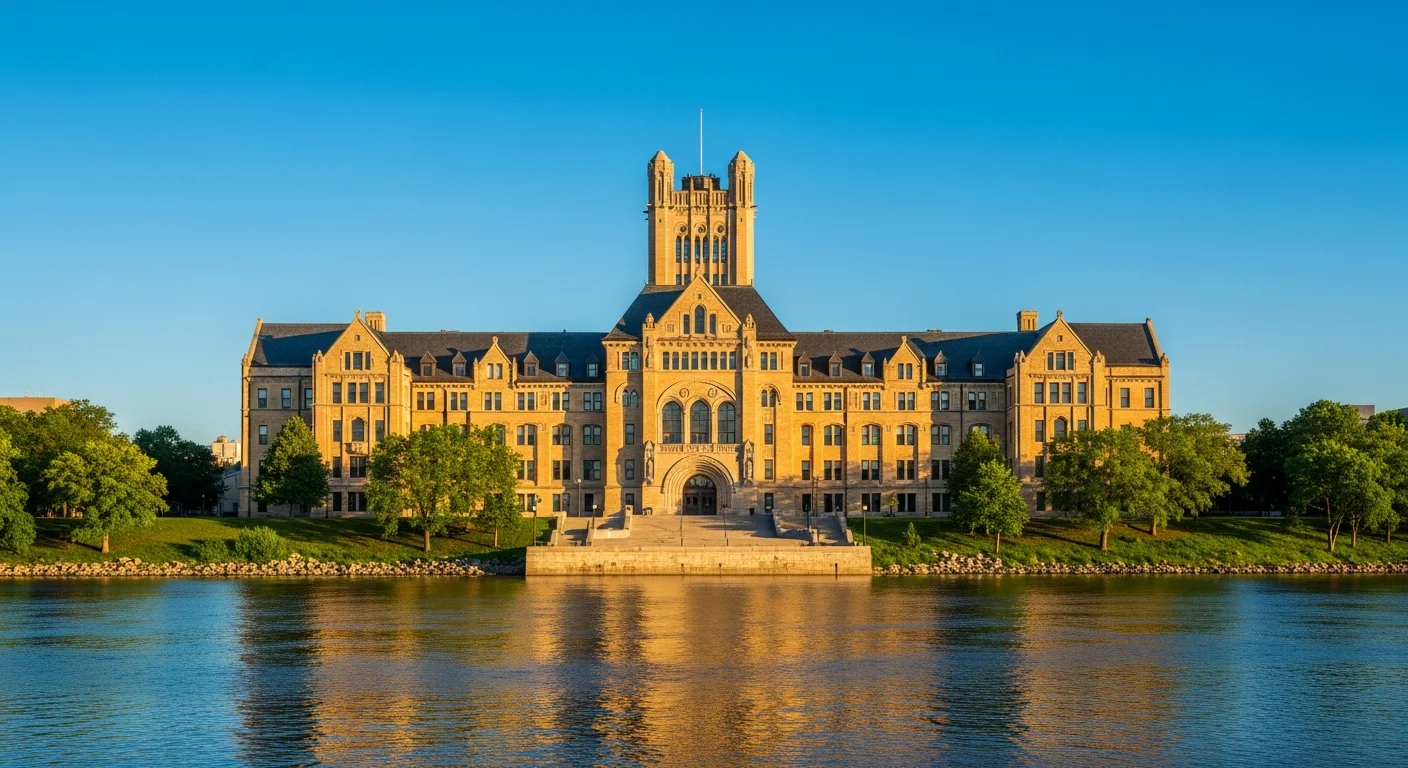
University of Minnesota-Duluth — Duluth, MN

Hakia Insight: UMN-Duluth's master's program benefits from proximity to the Twin Cities research ecosystem while serving students who need lower cost of living and smaller cohorts—an underrated advantage for deep collaborative thesis work.

Programs Offered
  • Master of Science in Artificial Intelligence — 1-2 years, on-campus
  • Master of Arts in Artificial Intelligence — 1-2 years, online

Location Advantages:

Best Doctoral Artificial Intelligence Degree Programs in Minnesota

University of Minnesota-Twin Cities — Minneapolis, MN

Key Distinction: UMN-Twin Cities is a top-tier research university where AI education is embedded within active NSF/DARPA-funded research labs, offering students unmatched depth in both foundational AI and applied systems.

Hakia Insight: UMN-Twin Cities' doctoral program operates within active DARPA and NSF funding cycles, meaning PhD students in Computer Vision and Machine Learning access six-figure research budgets from day one—a resource advantage that directly accelerates publication and job placement.

At the doctoral level, the University of Minnesota-Twin Cities houses one of the region's most research-intensive artificial intelligence ecosystems, with multiple departments (Computer Science & Engineering, Electrical & Computer Engineering, Industrial & Systems Engineering) contributing complementary expertise in deep learning, computer vision, natural language processing, autonomous systems, and AI safety. Graduate students and postdocs at UMN-Twin Cities work on foundational AI research alongside applied projects funded by federal agencies (NSF, DARPA, DOD) and industry partners, creating a dual pipeline of theoretical advancement and practical deployment. The Twin Cities location—home to a thriving tech sector including major presence from target, IBM, 3M, and numerous startups—means proximity to internship, collaboration, and employment opportunities is built into the program. Undergraduates can access upper-level AI electives and research experiences; graduate students lead significant research initiatives and often publish at top-tier conferences. Faculty include recognized experts in machine learning, robotics, and AI ethics, many with industry advisory roles or founded startups. Career outcomes reflect both research pathways (PhD programs, postdocs, research labs) and industry roles at major tech companies, defense contractors, and emerging AI firms.

Programs Offered
  • Doctor of Philosophy in Artificial Intelligence — 4-6 years, on-campus
  • Doctor of Science in Artificial Intelligence — 4-6 years, online
Research Labs and Institutes
  • Computer Vision Lab
  • Machine Learning Department Group
Industry Partners
  • Target (corporate)
  • IBM (corporate)
  • 3M (corporate)
Accreditations and Certifications
  • ABET accredited (engineering programs)

Location Advantages: Twin Cities tech hub with headquarters of Target, 3M, and major IBM campusAccess to DARPA, NSF, and DoD funding hubsProximity to Fortune 500 companies and emerging AI startups